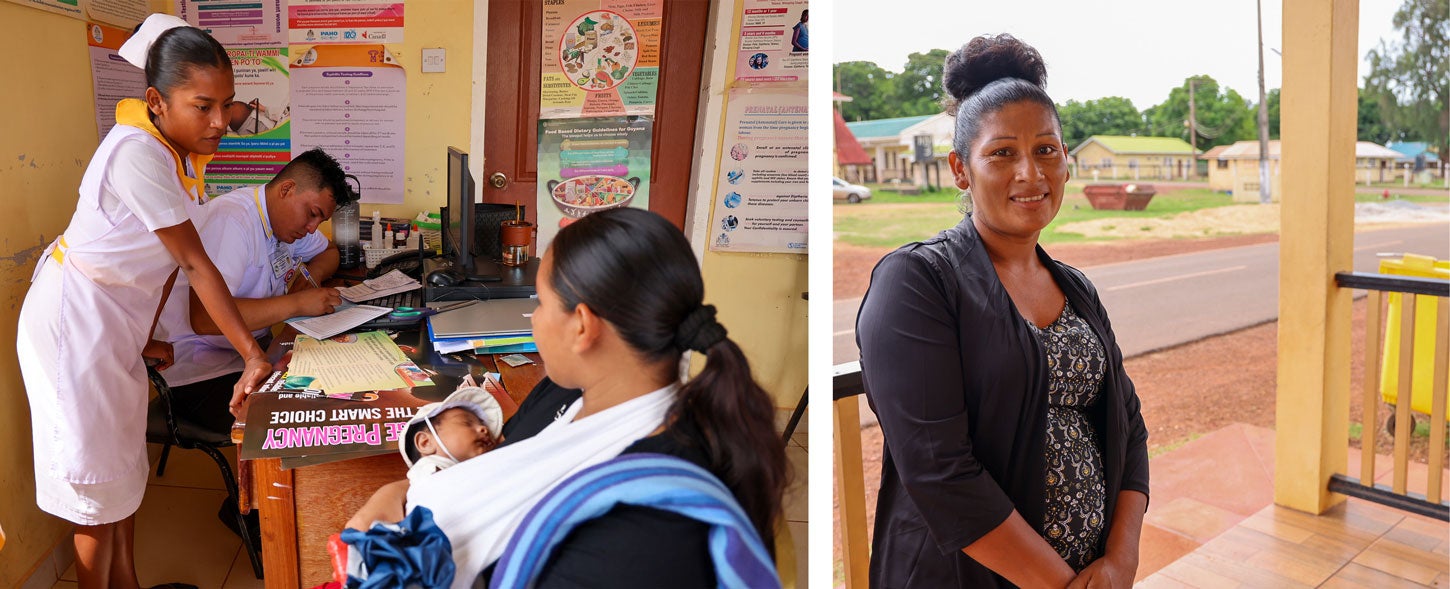
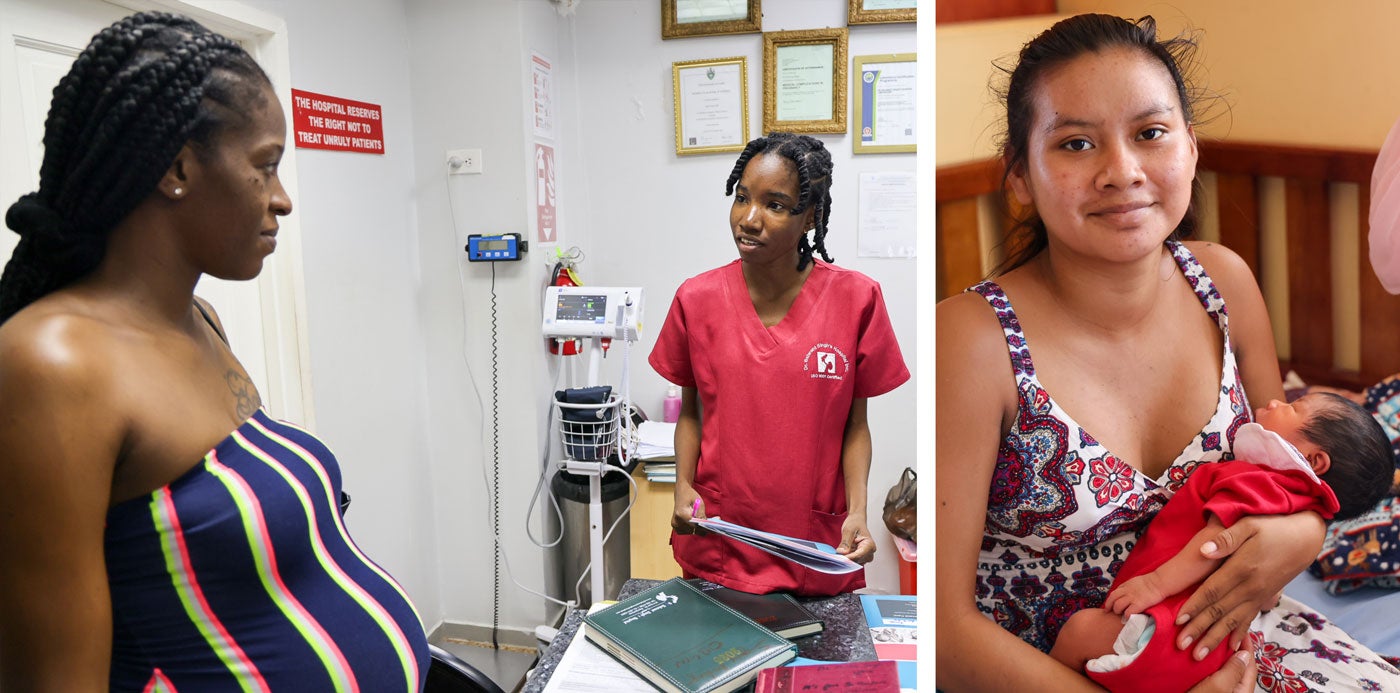
• Expectant mother in medical appointment

Every mother, every baby: Promoting safe motherhood in Guyana

August 2025

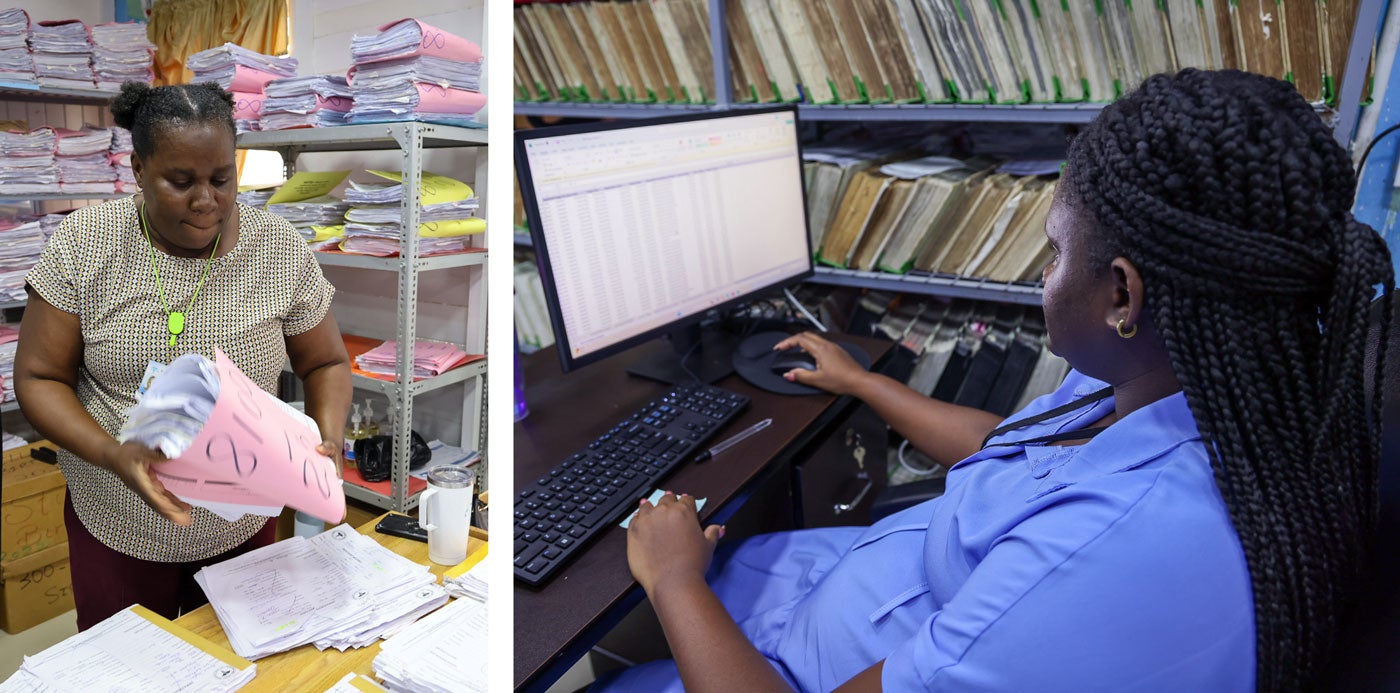
For years, maternal healthcare in Guyana relied on paper-based records, which made tracking patient histories challenging. Today, with the implementation of PAHO’s Perinatal Information System (SIP Plus), healthcare teams are able to access real-time health records that include comprehensive data from a mother’s first prenatal visit through delivery and beyond. This innovation is enhancing both the quality and delivery of evidence-based maternal care. 

Each morning in Georgetown, as the city begins to stir, Dr. Padmini Singh, Obstetrician and Gynecologist at the Corporation for Georgetown Public Hospital (GPHC), prepares for another day. By 7 a.m. she is already in the hospital’s handover meeting with her team, reviewing the most critical patients from the night before.

“In recent years, with the introduction of SIP Plus, something has changed in how these meetings have unfold,” said Dr. Singh. "Before, we worked entirely on paper. It was functional, but some information could be missed or misplaced,” she recalls. “Now, everything is centralized, updated in real time, and accessible from the moment a patient walks through the door.”

SIP Plus was introduced at GPHC and Balwant Singh Hospital in 2022 as part of the “Improved Health of Women and Adolescent Girls in Situations of Vulnerability” (IHWAG) Project, implemented by PAHO with support from the Government of Canada. 

From paper medical records  to digital records

The system has replaced paper records and digitally manages the entire continuum of maternal care—from the first prenatal visit to delivery and postnatal follow-ups—allowing healthcare providers to track, assess, and support each patient with unprecedented accuracy. At GPHC alone, where over 10,000 maternal patients are seen each year, the system ensures a level of continuity and quality of care that was hard to achieve with handwritten charts and file folders.   

Not only has the system impacted patient safety and outcomes by strengthening the evidence base and improving the quality of maternal health services, but it has also eased communication with patients, especially when health literacy is a barrier. “Sometimes women don’t recall a specific detail or understand the terminology. But with SIP Plus, we have everything documented and can guide them properly—even if they can’t explain it themselves,” said Dr. Singh.

The impact of SIP Plus extends beyond Georgetown, reaching Regions 2, 7, 8, and 9, where healthcare providers have adopted the system in healthcare centers, thanks to PAHO and the IHWAG Project.

In collaboration with the Ministry of Health (MoH) a hybrid training program was conducted for healthcare providers in these Regions. The training aimed to build the capacity of healthcare workers to input data into the electronic system and generate reports for informed decision-making.

Hospitals are then able to utilize this data to monitor outcomes, identify risks, and take proactive steps to prevent issues, ultimately helping to reduce maternal and neonatal mortality rates.

“Training healthcare workers has significantly contributed to reducing the number of maternal deaths due to postpartum hemorrhage,” said Dr. Janice Woolford, Family and Community Health Specialist at PAHO in Guyana. “It has also enabled health workers and birth attendants in remote areas of the country to become better advocates for maternal health.”

As of today, more than 170 healthcare providers have obtained experience with SIP Plus and enrolled in online courses available through the PAHO Virtual Campus for Public Health.

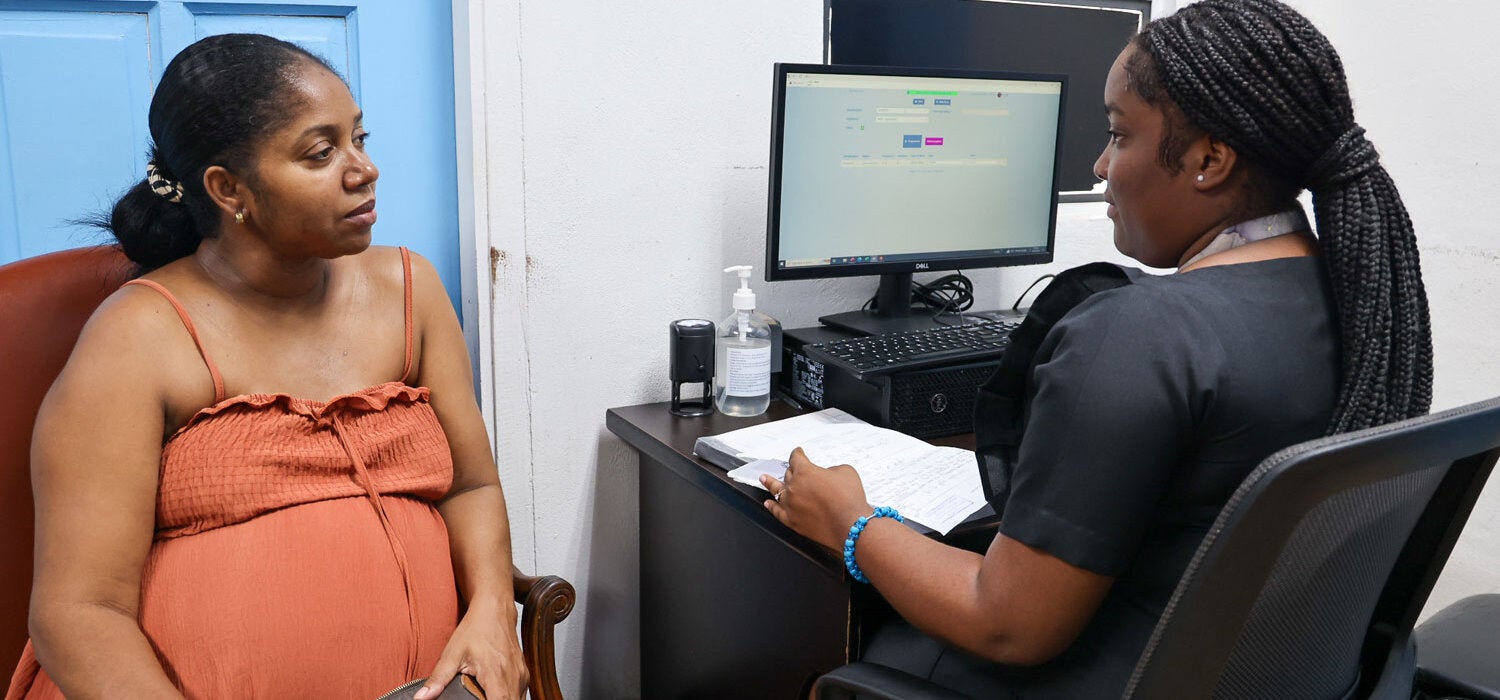
Medical follow up at the clinic for mothers and newborns

SIP Plus has proven to be a game-changer for both healthcare providers and patients in the country. “Anything that helps us deliver better care is worth it. But this system has gone beyond expectations. It’s helping us save lives,” reaffirms Dr. Singh.

According to the Trends in Maternal Mortality 2000–2023 report by the United Nations Maternal Mortality Estimation Inter-Agency Group (MMEIG), Guyana’s estimated maternal mortality ratio declined from 189.0 in 2021 to 74.7 in 2023. 

Pregnant women and women who just gave birth in medical appointments

Building on this progress, Guyana, with the support of PAHO, is now working to consolidate all perinatal records into a single national server—an important step that will allow health authorities to generate automatic reports and use key health indicators to make informed decisions at every level of the healthcare system. As that vision takes shape, SIP Plus will continue working quietly behind the scenes, capturing crucial data, supporting clinical care, and helping to build a healthier future for families across the country.

“Thanks to our efforts and help from partners, like Canada, we hope to sustain these gains,” concluded Dr. Frank Anthony, Minister of Health of Guyana.