• people receiving support
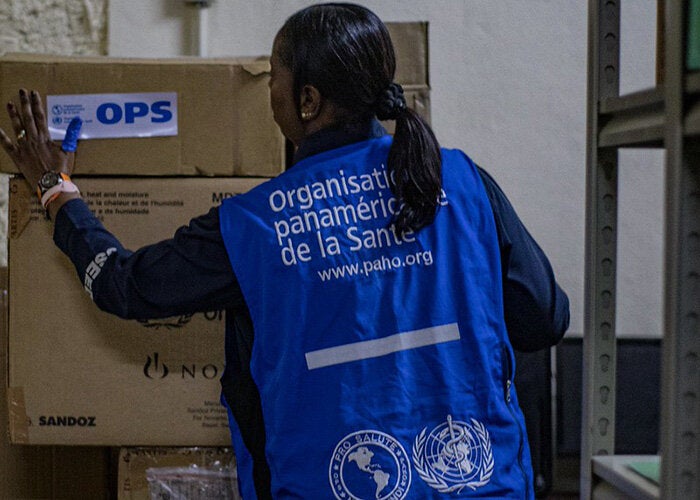
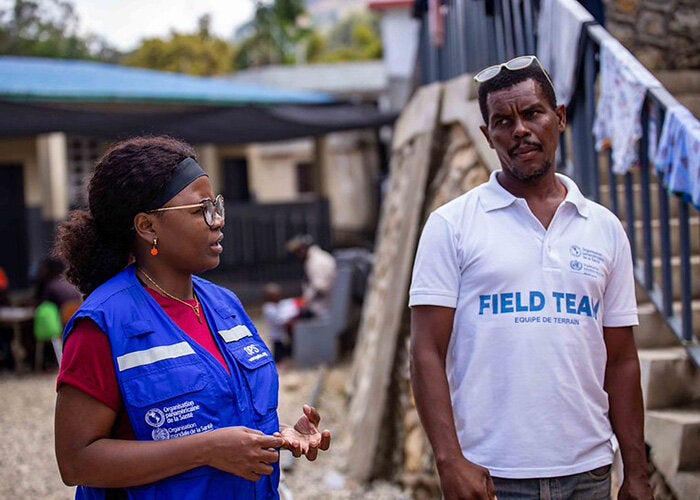
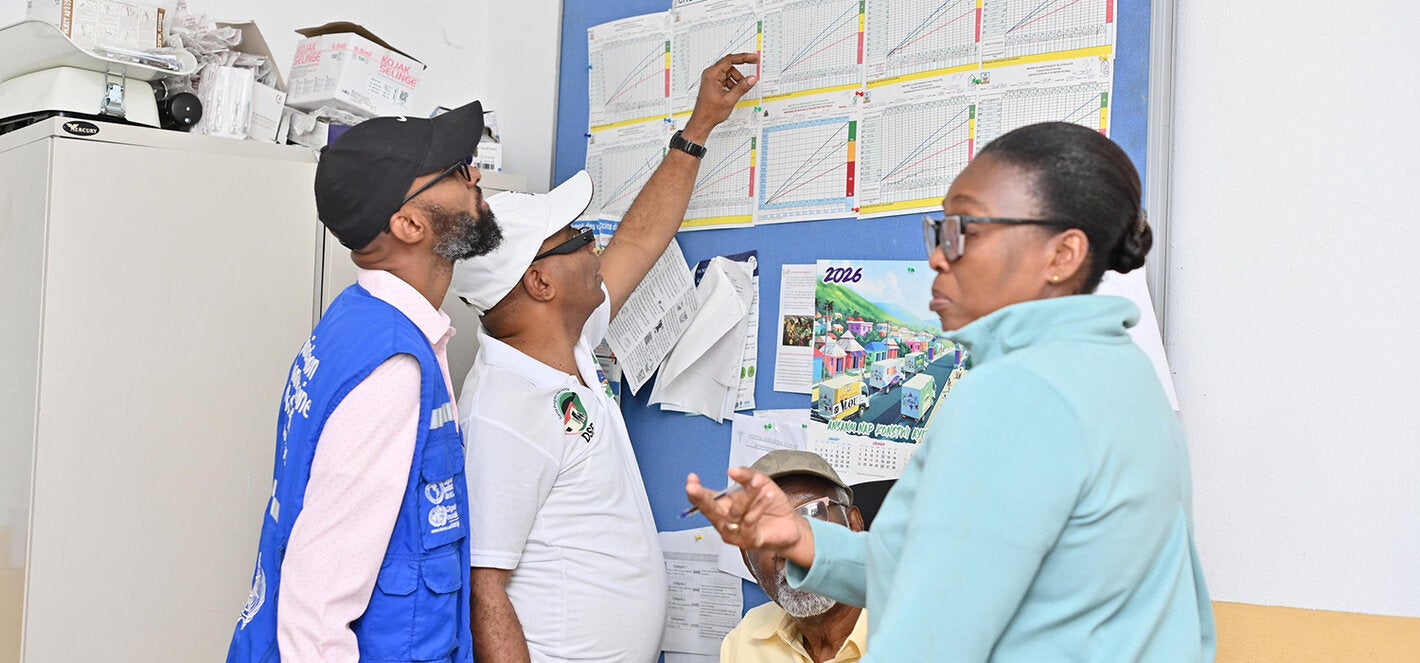
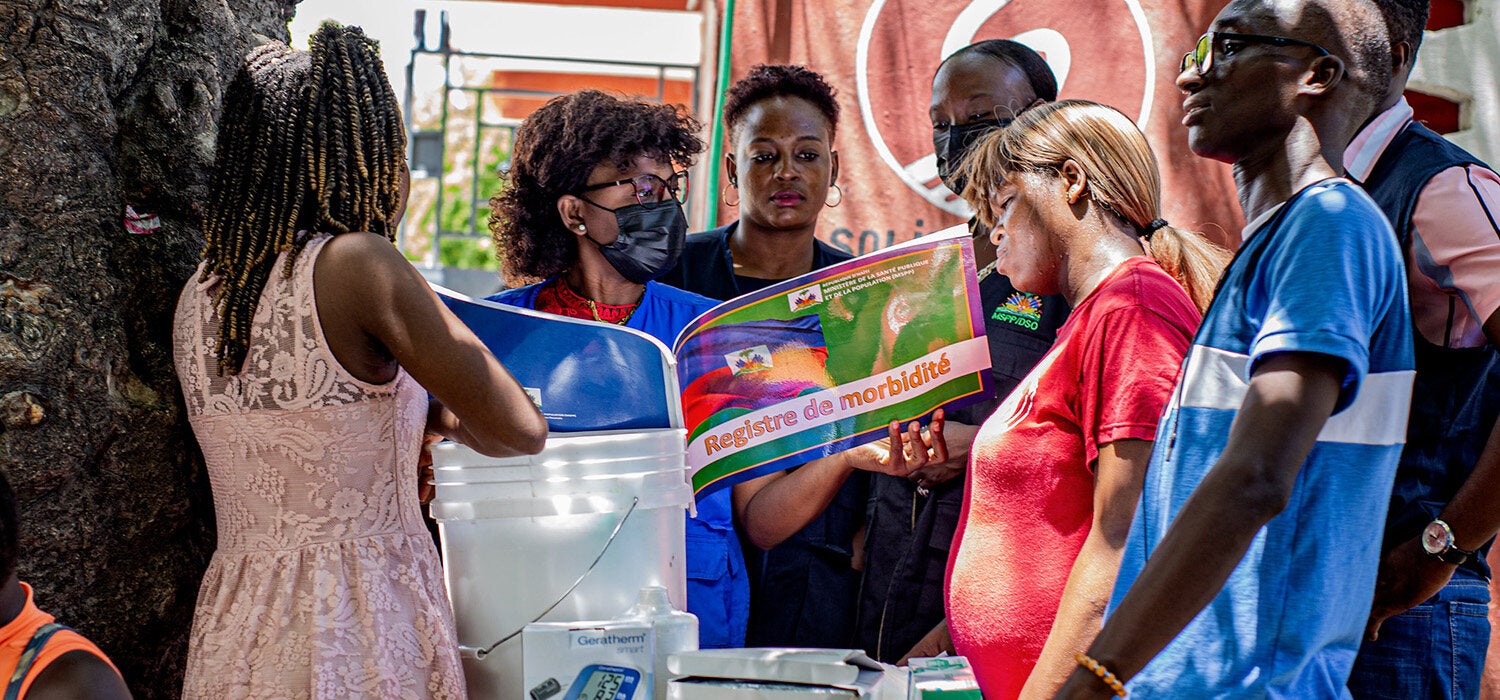
    Across Haiti, health workers and humanitarian teams continue to provide essential health, mental health and psychosocial support to people displaced by violence and insecurity. Their work helps ensure that vulnerable families can access care even in the most difficult circumstances. | PAHO/WHO
    Credit

In Haiti, health and psychosocial support help displaced families rebuild hope

As the world marks World Humanitarian Day on 19 August, the story of one displaced mother illustrates how access to health and mental health services can help people affected by violence recover and begin rebuilding their lives.

— August 2026 —

“Mwen te panse pèsonn pat wè mizè m, men m wè moun vle kenbe men mwen pou ede mwen,” Ms. Yolène [1] says in Haitian Creole.

“Before, I thought no one saw my suffering. Today, I know there are people who care about me and want to help me.”

Yolène, a 36-year-old mother of three and shopkeeper from Cornillon, a commune in Haiti's Ouest Department, is among the nearly 1.5 million people internally displaced by violence across Haiti, where ongoing insecurity has disrupted access to health and other essential services for many families.

After living for several years in the Mirebalais region (Center department), where she worked to support her family, Yolène was forced to flee the violence and insecurity with her youngest child. For the past year, she has been living at the internally displaced persons (IDP) site at the Résidence Médicale - Club Hôtel in Belladère (Center). She is separated from her family and faces significant challenges in rebuilding her life.
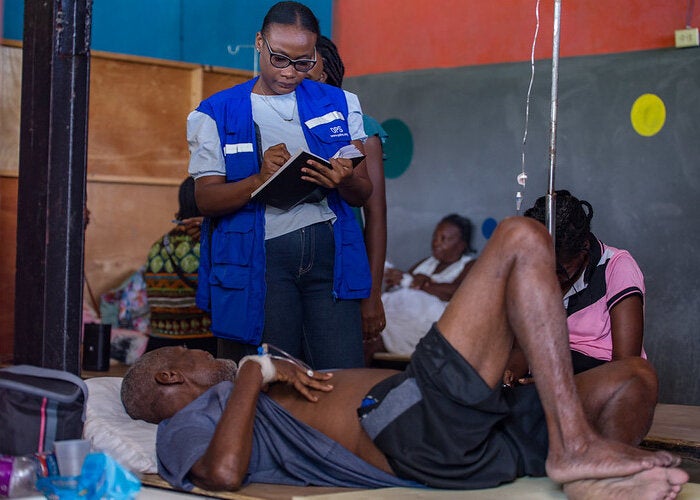
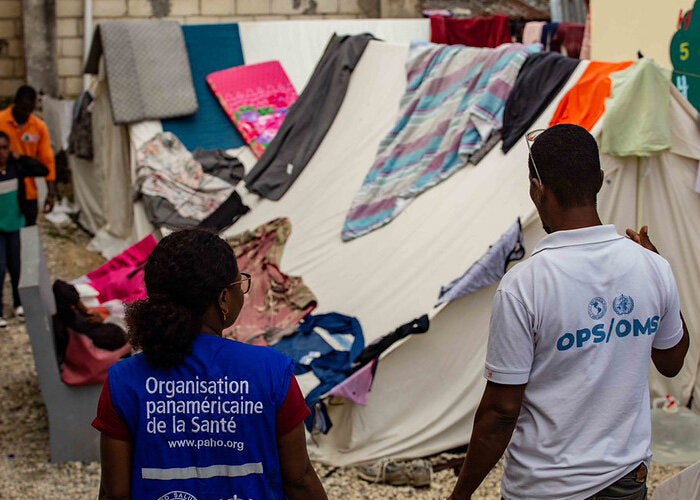
helping
evaluating

From isolation to care

Like many people displaced by the crisis in Haiti, Yolène arrived at the site with limited access to health services and psychosocial support, while coping with the emotional and economic consequences of displacement. Over time, her physical and emotional well-being deteriorated. She experienced a loss of appetite, insomnia, extreme fatigue, weight loss, deep sadness, and increasing social isolation. Residents at the site became concerned about her condition.

Her situation changed when a psychologist visiting the site identified the need for urgent support and follow-up care.

The Ministry of Public Health and Population (MSPP), with technical and logistical support from the Pan American Health Organization (PAHO), has deployed psychologists and social workers to IDP sites in Haiti’s Ouestest and Centre departments to strengthen access to mental health and psychosocial support services.

After an initial examination, the on-site psychologists determined her condition was severe and arranged an ambulance transfer to the hospital. Medical examinations identified severe vitamin deficiency, depression, and an infection requiring specialized care. Given the complexity of her condition, her care team developed an integrated approach combining medical treatment, psychological support, and social services.

To notice someone who is suffering is already the beginning of helping them,” says Claudet Michel, a psychologist working in IDP sites in Belladère, who identified Yolène’s case after being alerted by a fellow physician. “Behind every early intervention lies a life protected, a dignity restored, and a hope revived.

Since her hospitalization, she has received ongoing care from healthcare professionals and the field team, who accompany her to her medical appointments and help her access basic food to support her recovery.

supplies
reviewing

Signs of hope

Today, Yolène is showing significant signs of improvement. She has improved her communication with care providers and is increasingly engaged in her care. Her overall condition is stable, and she is gradually showing renewed interest in her surroundings and her future.

“Yolène’s story illustrates the major mental health challenges in Haiti, in a context marked by insecurity, forced displacement, and limited access to essential services. It shows the importance of early detection and close psychosocial support, as the most vulnerable people are not always able to seek help on their own,” explains Dr. Yanick Mwe Mutani, psychiatrist and Mental Health Consultant at the PAHO Office in Haiti.

Still, her journey is not over. Limited financial resources, the fragility of her family network, and her need for long-term support remain significant challenges. To help address these concerns, teams conducted a detailed socioeconomic assessment and are working with partners to identify additional sources of support that may contribute to her longer-term well-being and ability to rebuild her life.

On World Humanitarian Day, PAHO recognizes the health and humanitarian workers who continue to serve communities affected by violence and displacement across Haiti. Their work provides a vital link to health care and support for families facing profound uncertainty.

One story of many

Yolène’s story is one of many. Across Haiti, health workers, psychologists, social workers and humanitarian partners continue to support people displaced by violence and insecurity, helping them access essential health services during a time of profound uncertainty.

With operational assistance from PAHO and funding from the Regional Humanitarian Fund for Latin America and the Caribbean (RHPF LAC), these interventions are strengthening access to health, mental health and psychosocial support services for displaced communities.

On World Humanitarian Day, PAHO recognizes the dedication of frontline health and humanitarian workers who continue to serve vulnerable communities across Haiti, often under extremely challenging circumstances. Their work helps ensure that people affected by crisis are seen, supported and able to access the care they need — just as Yolène was when she needed it most.


[1] Yolène is a pseudonym used to protect the beneficiary’s anonymity.