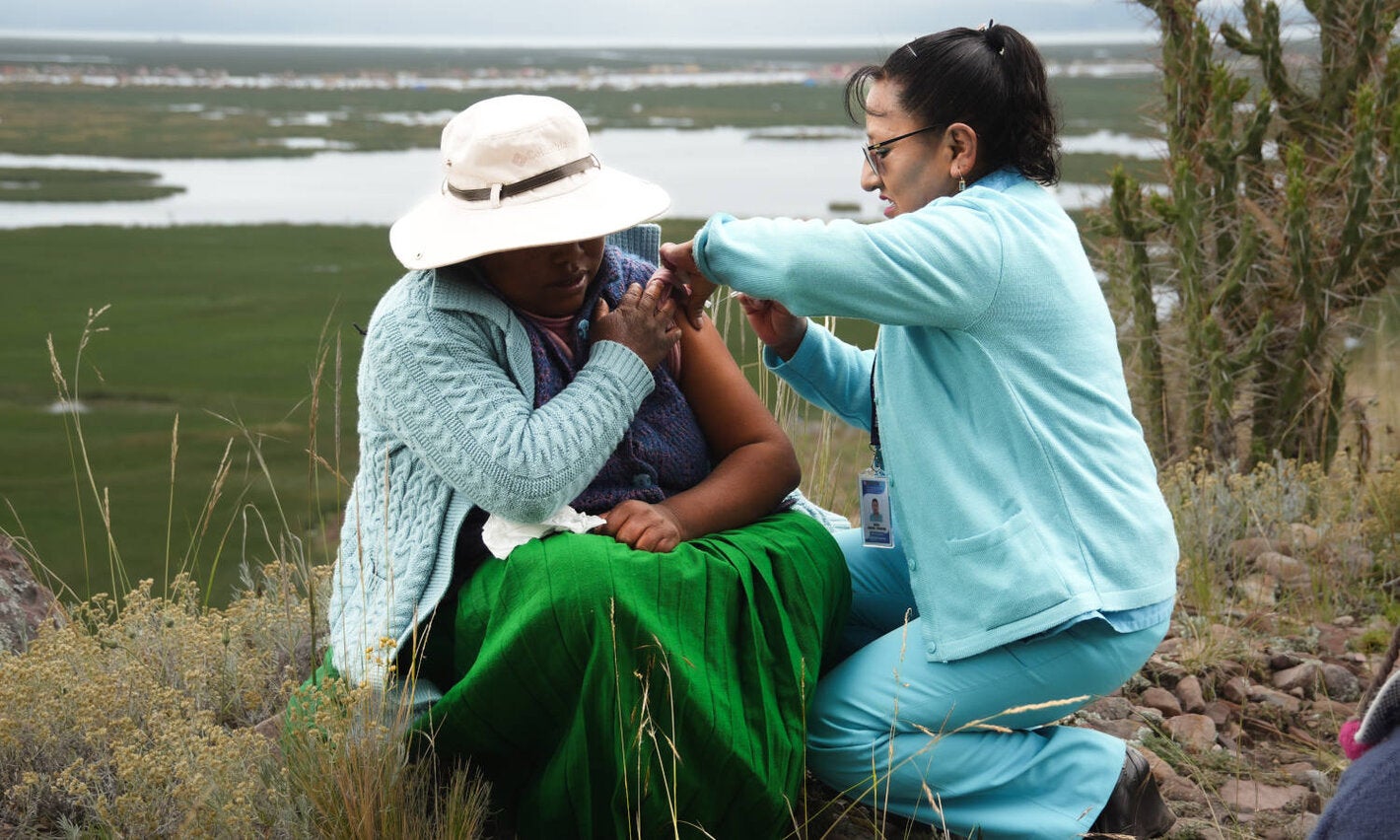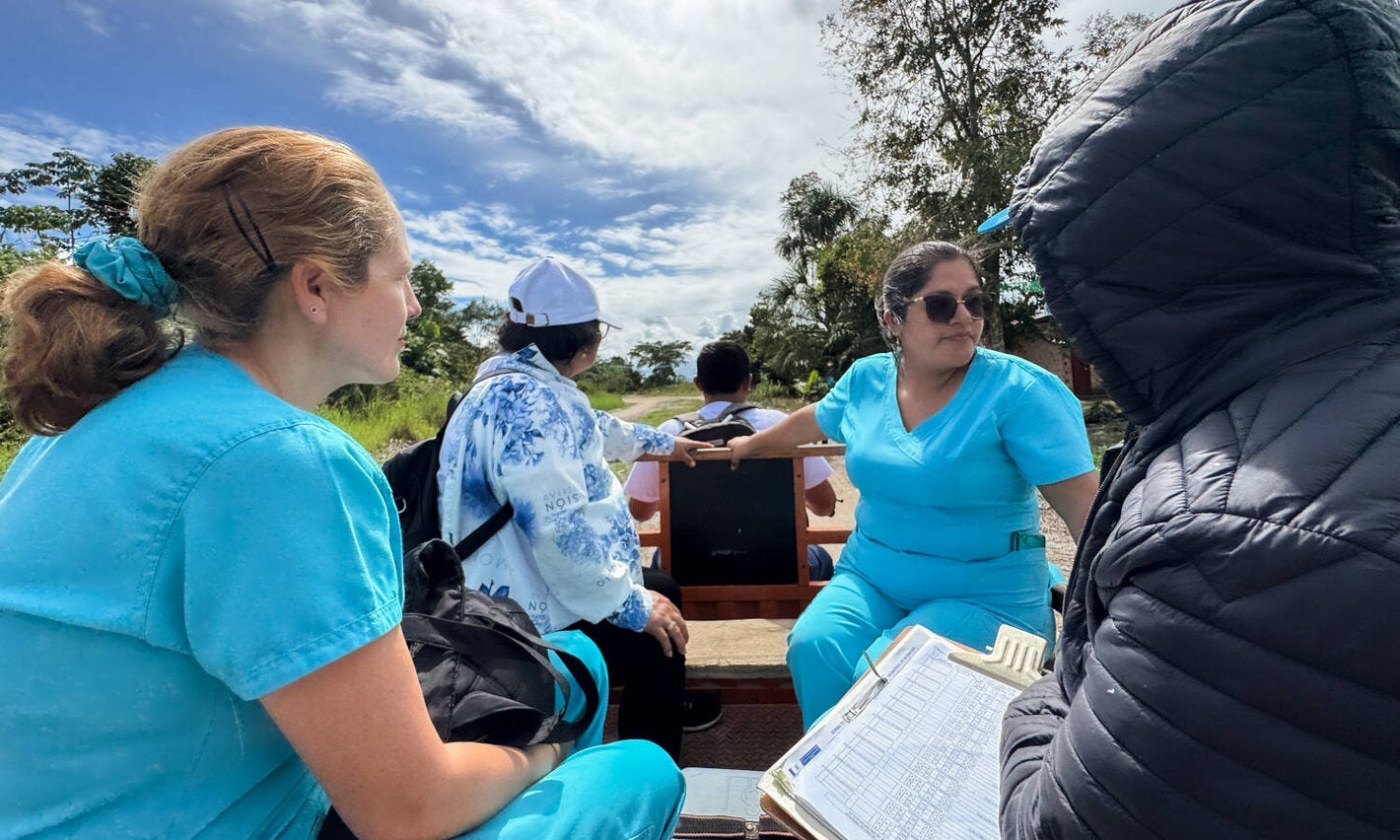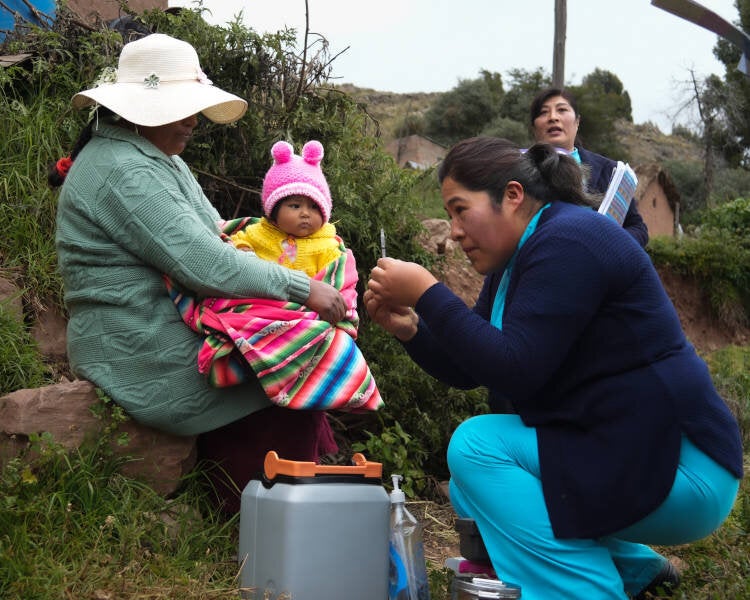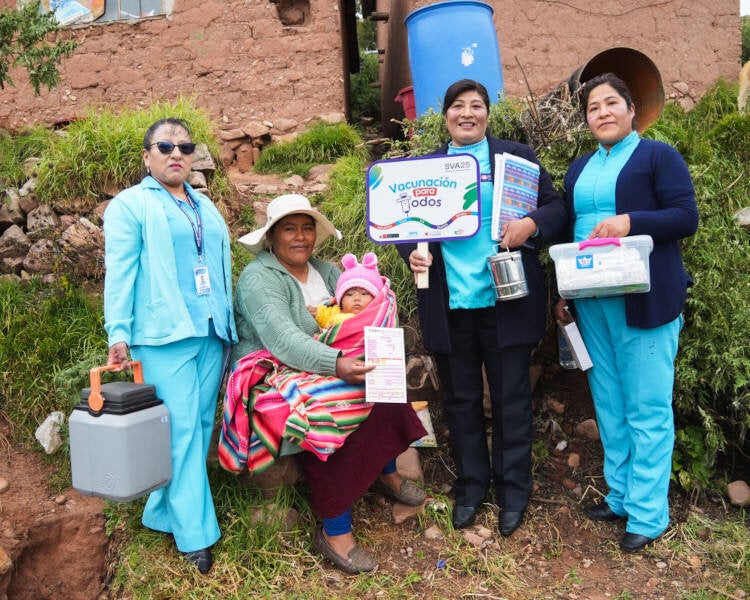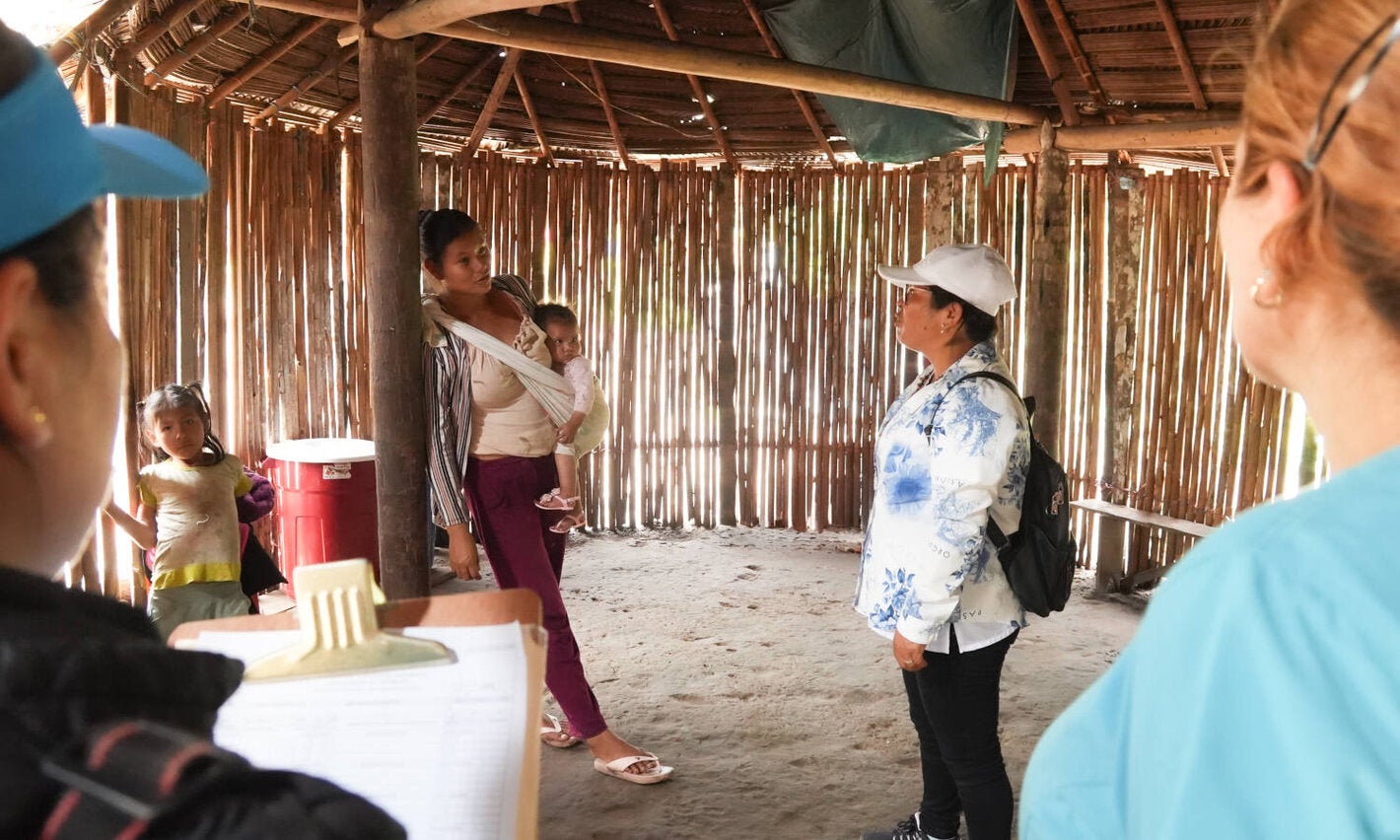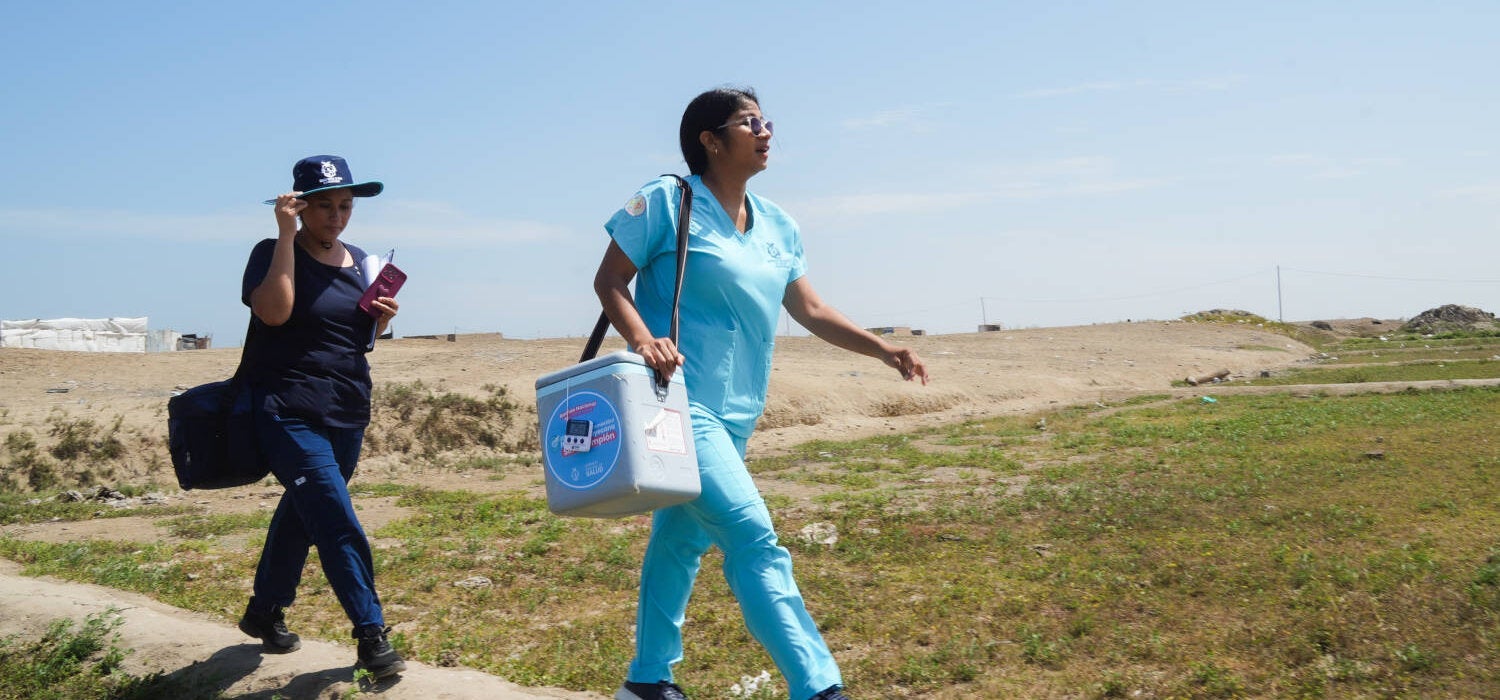
As soon as the vaccination brigade arrived in the remote community, some mothers hurried and closed their doors. From inside, voices could be heard—expressing fear: “I don’t want my child to get sick from that vaccine,” or “those vaccines don’t work.”
— February 2026 —
For licensed nurse Mariela López Román, who has spent a decade working with Indigenous communities in the Amazon rainforest in the department of San Martín, scenes like this are not new, but she tries not to let them discourage her. Experience has taught her that distrust is overcome with patience, face-to-face conversations, simple images, clear information, and above all, time devoted to listening and explaining how vaccines save lives.
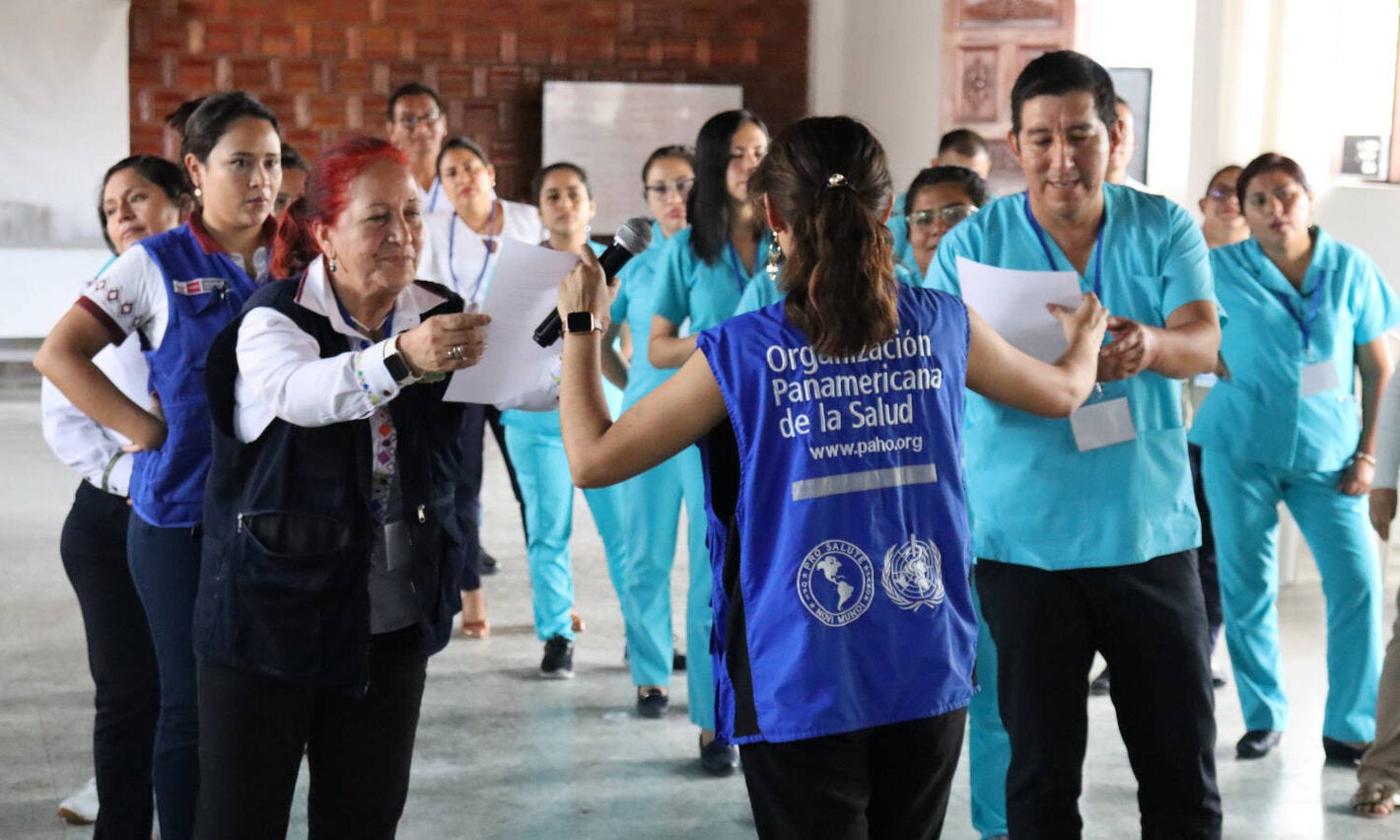
In Peru, the Pan American Health Organization (PAHO), with the support of strategic partners like the Government of Canada, provides technical assistance and works alongside the Ministry of Health in national vaccination campaigns. The goal is to close gaps and maintain coverage that protects children, pregnant women, older adults, and communities in vulnerable situations.
In 2025, during Vaccination Week in the Americas, Peru administered more than 1 million doses, exceeding its national target. The vaccines are part of the National Immunization Schedule, one of the most comprehensive in the Region of the Americas, with 18 vaccines that protect against 28 diseases.
Brigades reached children who had never received a vaccine. “The mother didn’t even know vaccines existed,” recalls a nurse who vaccinated a child in Puno who had never received a vaccine. Door-to-door visits made it possible to initiate vaccination schedules, although the greatest challenge was completing subsequent doses amid logistical complications and persistent misinformation.