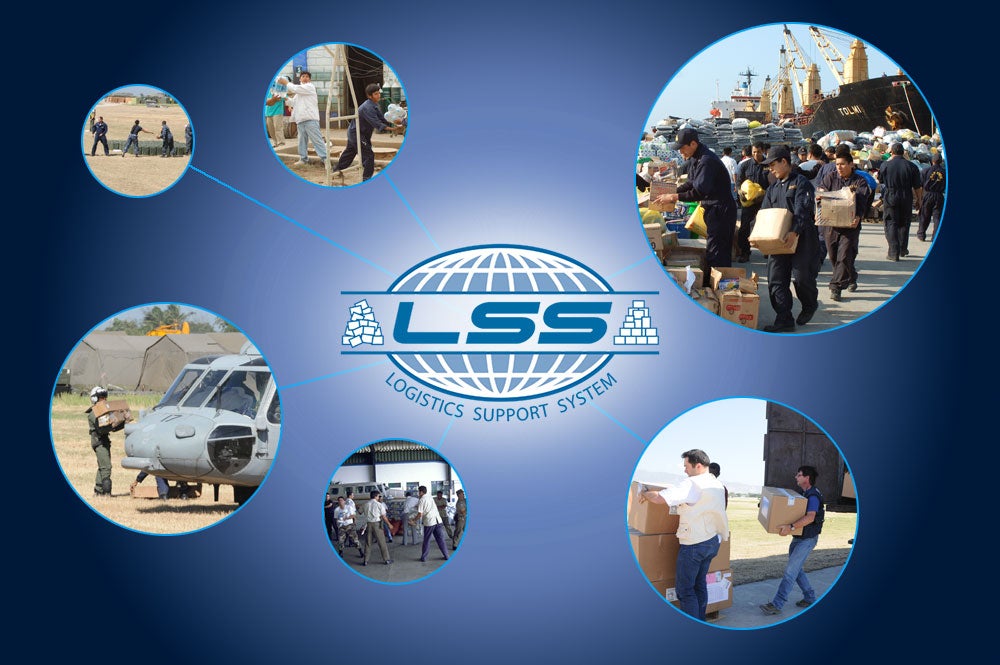
We create transparency for logistics and support system experience
The Logistics Support System (LSS) is an inter‑agency initiative led by PAHO/WHO with support from UNICEF, UNHCR, OCHA, and WFP. Building on PAHO’s SUMA experience in the Americas, LSS strengthens national capacities to manage humanitarian supplies transparently and efficiently before, during, and after emergencies. The system enables countries and response partners to track donations, inventories, and distributions across entry points, warehouses, and delivery sites, while generating clear reports for donors, authorities, humanitarian agencies, and the media. By ensuring traceability and accountability, LSS helps guarantee that relief supplies reach affected communities in a timely and appropriate manner.
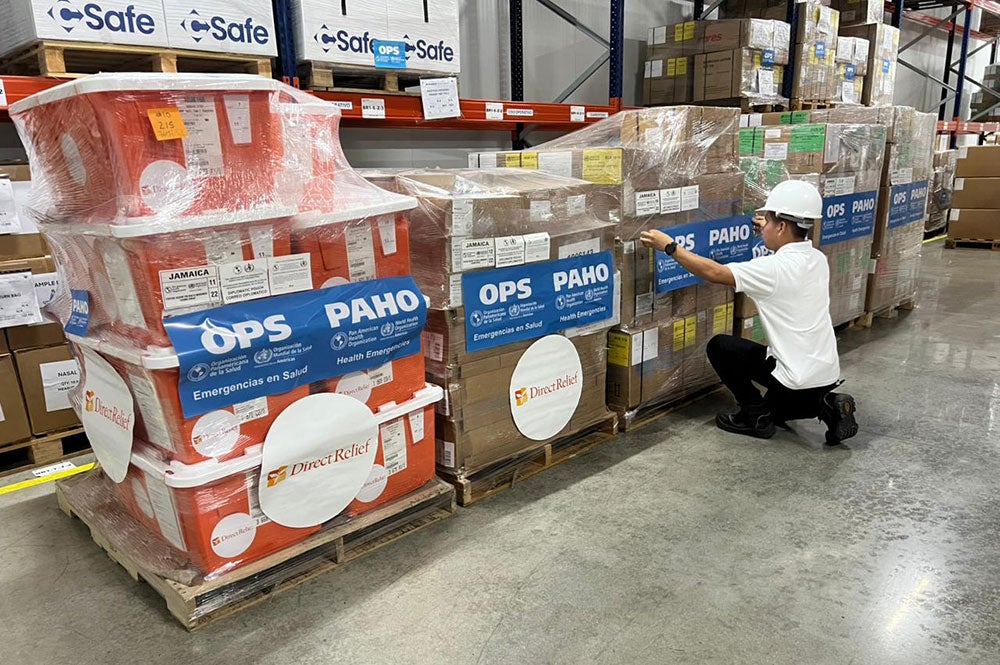
Logistics Support System (LSS)
Transparent, accountable humanitarian supply management—before, during, and after emergencies.
The Logistics Support System (LSS) helps countries and response partners manage humanitarian supplies efficiently and transparently across entry points, warehouses, and distribution sites. It supports preparedness and emergency response by enabling consistent tracking and clear reporting on what has been received, stored, requested, and delivered.
Overview
LSS strengthens national capacity for the effective management of relief supplies, ensuring that assistance reaches affected communities in a timely and appropriate way. Decision-makers can rely on accurate, up-to-date information to guide operations.
The system is supported by a network of national and regional professionals and is designed to generate clear, shareable reports for donors, national authorities, humanitarian agencies, and media stakeholders. This information management is crucial to guarantee transparency and efficiency in humanitarian logistics.
Inter‑Agency Effort
LSS is an inter‑agency initiative led by PAHO/WHO and supported by UNICEF, UNHCR, OCHA, and WFP, building on PAHO’s accumulated experience with SUMA in the Americas.
Its objective is to support the administration of supplies arriving at entry points during emergencies and to facilitate logistics management in both temporary and permanent warehouses.
System Capabilities
- Inventory and operational control software: Tracks the status of supplies, records movements, and monitors distribution to ensure traceability and efficiency.
- Reporting functions: Generates standardized reports for donors, authorities, humanitarian agencies, and the media.
- Data exchange: Allows information sharing between different sites using the LSS platform.
- Integration: Consolidates stock and pipeline data from agency and NGO commodity tracking systems using simple Excel files.
- Preparedness and response: Strengthens national capacities to manage humanitarian supplies effectively before and during emergencies.
Impact
By improving the management of humanitarian assistance, LSS enhances transparency, accountability, and efficiency in relief operations. It ensures that donations, deliveries, and requests are properly registered, supplies are traceable, and affected populations receive aid in an adequate and timely manner.
Addressing a Critical Challenge: The Arrival of Unsolicited Supplies
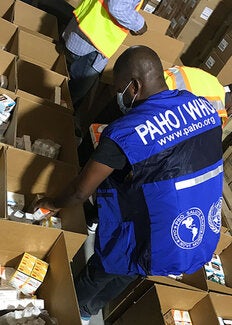
One of the main problems confronting national authorities is accurately identifying which relief supplies have arrived. In the aftermath of a disaster, one of the main problems confronting national authorities is accurately identifying which relief supplies have arrived, where they have been stored, and how useful they are. Often, well-meaning but misinformed donors send items that are not particularly useful, given the nature of the emergency as well as conditions on the ground.
Strictly speaking, this is a technical problem, but it has serious repercussions for policy implementation when taking into account the following factors:
- All too frequently, the storage space, transportation, and human resources dedicated to relief supply management are scarce, and thus must be allocated as efficiently as possible.
- Technical information about arriving supplies is often lacking, making it harder to distribute them.
Because of these problems, the donors and the media receive a negative impression of relief management efforts, through no fault of the disaster managers themselves.
Expanding Humanitarian Supply Management: From SUMA to LSS – An Interagency Effort
The Humanitarian Supply Management System (SUMA) was developed in Latin America and the Caribbean with PAHO/WHO support to strengthen national capacities for managing relief supplies and ensuring their timely delivery to affected populations. Over the years, SUMA expanded beyond the health sector, trained more than 3,000 volunteers, and became a recognized transparency tool endorsed by OCHA.
Building on this experience, the Logistics Support System (LSS) was created as a global platform to serve countries, agencies, NGOs, and donors. Its development was shaped through three international meetings sponsored by WFP, OCHA, WHO, and PAHO, with contributions from over 50 experts. Long-term financial support was provided by the Netherlands, complemented by England, the United States, Canada, Germany, and the European Union (ECHO).
The UN Joint Logistics Center (UNJLC), promoted by WFP and chaired by OCHA, also contributed valuable insights by consolidating supply data across agencies and NGOs, proving effective in crises such as Afghanistan and Iraq.
LSS consolidates the strengths of SUMA and UNJLC into a single system that improves coordination, strengthens local capacity, and facilitates information exchange among humanitarian partners. By integrating inventory control, reporting, and data sharing, LSS enhances transparency, minimizes duplication, and ensures that humanitarian assistance reaches affected communities efficiently and accountably.
About the Project
LSS/SUMA has demonstrated its efficiency and effectiveness, becoming a benchmark in humanitarian logistics through its invaluable contributions. LSS/SUMA has demonstrated its efficiency and effectiveness, becoming a benchmark in humanitarian logistics through its invaluable contributions. Ensuring logistical support for adequate supplies has proven to be a strategic aspect in handling emergencies, for without the necessary supplies, even with the best response systems and medical facilities to tend to the victims, the response will be neither adequate nor effective.
In light of this, since 1992 PAHO/WHO’s Emergency Program promoted LSS/SUMA as a tool for managing supplies and humanitarian assistance. More than twenty years after it was launched and widely implemented in and outside the Region, LSS/SUMA has become a proven methodology that can be used as the basis for logistical organization during the preparedness phase and as a tool in response activities.
The SUMA humanitarian supply management system was launched in 1992 under the auspices of PAHO/WHO as a joint effort by the Latin American and Caribbean countries. Since then, the system has evolved into LSS/SUMA, an initiative supported by five United Nations agencies (WFP, OCHA, UNICEF, UNHCR, and PAHO/WHO). This tool, deployed through a simple system that can be used by organizations large and small, makes it possible to oversee the entire supply chain when managing humanitarian assistance during emergencies and to properly manage humanitarian assistance on a day-to-day basis.
The LSS/SUMA system is based on practical and field experience acquired in dozens of emergencies of all types, natural and complex disasters, and public health crises. LSS/SUMA is used extensively not only in Latin America and the Caribbean but worldwide—not just for immediate emergency response, but as an ongoing logistics coordination system. In Pakistan, for example, LSS/SUMA is still being used —long after the 2005 earthquake— in the WHO and Ministry of Health warehouses not only in Islamabad, but in remote sites such as Muzafarabat, where users trained by PAHO/WHO have been replicating the system in other nearby localities. The same has happened in places such as Lebanon, Somalia, Gaza, Egypt, Libya, and Indonesia.
In the Region of the Americas, PAHO has worked over the years with a wide array of agencies, ministries of health, emergency management organizations, NGOs, the Red Cross, armed forces, United Nations agencies, etc. These entities have contributed to the organization of humanitarian assistance during emergencies or to the day-to day organization of supplies and logistics, as many of them manage assistance not only during emergencies.
The LSS/SUMA system has been used in every major emergency that has occurred in the Region in the last 20 years. Moreover, every country in the Region has received extensive training in the use of the system, enabling organizations and countries to take ownership of the tool and make it a standard part of their emergency preparedness and response plans. Some countries, such as Bolivia, Colombia, Costa Rica, the Dominican Republic, Ecuador, El Salvador, Mexico, Nicaragua, Panama, and Peru, have even issued official ministerial decrees making it an official tool for managing humanitarian assistance under their emergency response laws. In the Dominican Republic, the use of the LSS/SUMA system has resulted in the creation of an entire national warehouse system used in cholera response. In Panama, the Ministry of Health uses the system to manage supplies on a daily basis. Similarly, during major emergencies, such as the H1N1 outbreak in Mexico, the system complemented existing systems in the states.
The implementation of LSS/SUMA in the country’s 32 states supported the management of supplies needed for that particular emergency, enabling the authorities to consolidate and share information at the national level.
The National Emergency Committee must install and support teams at entry points and warehouses to collect information on incoming donations, as well as on requests and pledges. To do so, the Committee should have:
- Trained personnel
- Support materials
- Computers
- LSS software to manage information on incoming supplies
The first step is to train local human resources in the organization and management of emergency supplies, and in the use of the LSS software to classify, organize, and assign priority levels. When a disaster occurs, these teams will be able to install and operate the system at the different supply management sites.
In cases of major disasters, or in locations where LSS has not yet been established, an international team can provide initial support with the goal of training local staff and transferring system management in the shortest possible time, ensuring self‑sufficiency.
Additionally, sub‑regional teams —currently mobilized by WHO/PAHO— can be deployed to assist in the implementation of the system.
Finally, it is essential to incorporate supply management into the national emergency management policy, ensuring institutional coherence and sustainability in humanitarian response.
The Logistics Support System (LSS) is designed to strengthen transparency and efficiency in the management of humanitarian supplies. Its primary function is to facilitate the collection, classification, and analysis of data related to donations, requests, deliveries, and inventory movements, enabling authorities to make faster and better‑informed decisions during emergencies.
All information entered and processed in the system belongs to the affected country and remains under the direct responsibility of the national institutions in charge of emergency management. This ensures that the data accurately reflects the reality of operations and that it is used exclusively for the benefit of the affected population.
National ownership of the information means that:
- Competent authorities are responsible for safeguarding, validating, and disseminating official data.
- Reports generated by LSS may be shared with donors, humanitarian agencies, media, and other stakeholders, but always under the authorization of the affected country.
- Information sovereignty is respected at all times, preventing duplication or external interpretations that could distort emergency management.
- Transparency and accountability are reinforced, as the data demonstrates how supplies are received, stored, and distributed.
In cases of international cooperation, support teams (sub‑regional or global) may assist with system implementation, but the ownership and control of the information always remain with the receiving country. Thus, LSS is not only a technical tool but also a governance instrument that strengthens national capacity to coordinate humanitarian assistance in an efficient and accountable manner.
About the Technical Features of LSS
The LSS Windows Application can operate in a stand‑alone environment (single user/computer) or in a networked/enterprise environment (two or more computers) using a client‑server structure with SQL Server databases.
The application is designed to function both independently and in a networked setting, utilizing SQL Server for database management. The LSS Windows App can be downloaded from this website.
If you represent a National Authority with multiple warehouses, you may request support from PAHO. An LSS Web version (currently known as Sistock) is also available. PAHO technical staff can assist you in selecting the most suitable version of LSS for your operational needs.
Possible Configurations for the LSS Windows App
- Stand‑alone computer with databases in MSDE
- Networked computers sharing a database in MSDE
- Stand‑alone computer with databases in SQL
- Networked computers sharing a database in SQL
All databases in this application are stored on the client computer.
Note: The LSS Web version (currently known as SISTOCK) is hosted by PAHO as part of its technical cooperation with countries.
Contact / Call to action
Minimum Requirements
- Processor: Pentium IV or better (any Celeron, Intel, or compatible processor)
- RAM: 512 MB or higher
- Operating System: Any Windows version
- Hard Disk: 2.5 GB of free space
- Printer: Recommended for reporting purposes
Network Requirements
- For local networks: a router and connecting devices such as Ethernet cables
- For enterprise environments: your own Microsoft SQL Server with a public IP, or a hosting service that provides Microsoft SQL Server database management
Technical Support
PAHO technical staff are available to assist you in:
- Selecting the most suitable version of LSS for your operational needs
- Configuring the LSS Windows App in a networked or enterprise environment.
Download the LSS Installation Manual
This manual provides the technical guidance required to install and configure the Logistics Support System (LSS), a PAHO/WHO‑led platform designed to support transparent and efficient management of supplies and logistics information. It is intended for institutions and partners preparing to deploy LSS in operational environments.
The Logistics Support System (LSS) is not a shipment‑tracking tool like DHL or FedEx. It does not aim to replace the internal supply management systems used by agencies, NGOs, or institutions. Instead, LSS is a complementary system, designed specifically for use during emergencies or in contexts where no other supply management system is available. Its purpose is to strengthen national logistics capacities and to support the establishment of transparent policies for managing humanitarian supplies.
Entries (Available in both LSS Windows App and LSS Web App)
Records supplies or items sent from one sender to one recipient, arriving at the same time and via the same mode of transport. Items may be received on consignment, as a purchase, or as a donation from an external source. Entries can also represent transfers from another warehouse.
Deliveries (Available in both LSS Windows App and LSS Web App)
Shipments of items from stock or consignments to a specified location.
Pipeline (Available in LSS Windows App only)
A list of items in the database that are pledged, promised, expected, or available to the warehouse or LSS site.
Requests (Available in LSS Windows App only)
Sites can record requests for needed items. This information supports planning and allocation of goods to areas most in need.
Stock Basket (Available in LSS Windows App only)
Allows grouping of items for reporting purposes. Users can generate reports on specific groups of items without selecting each item individually.
Importing/Exporting (Available in LSS Windows App only)
Enables data exchange between LSS sites and integration of stock or pipeline information from external systems, such as CTS (Commodity Tracking Systems) used by UN agencies and major NGOs.
Reporting (Available in both LSS Windows App and LSS Web App)
Reporting is a core function of LSS. The system generates standardized, transparent, and shareable reports that provide decision‑makers, donors, humanitarian agencies, and the media with accurate information on:
- What supplies have been received, stored, requested, and delivered
- Current stock levels and pipeline commitments
- Distribution flows across entry points, warehouses, and delivery sites
- Trends in requests and allocations to areas of greatest need
- These reports are designed to be clear, consistent, and comparable across institutions (when is requested), ensuring accountability and minimizing duplication. By consolidating data from multiple actors, LSS reporting strengthens coordination, supports evidence‑based decision‑making, and reinforces trust among national authorities, international partners, and affected communities
Training is available to a broad range of actors. This includes staff from national government entities responsible for emergency coordination, as well as personnel from public institutions, private organizations, NGOs, and other groups engaged in or related to emergency relief. Members of the international community—such as international NGOs, UN agencies, and bilateral cooperation agencies—are also eligible to participate.
The promotion and coordination of LSS training is managed through national entities responsible for emergencies and disasters, such as Ministries of Health, National Emergency Committees, and Red Cross affiliates. Institutions interested in receiving training should contact the national disaster management authority within the Ministry of Health or the local PAHO/WHO office.
The LSS system was designed with particular emphasis on the participation of Ministries of Health, National Emergency Committees, and NGOs, recognizing their essential role in humanitarian logistics and supply management. Training ensures that all actors—governmental, non‑governmental, and international—can operate under a shared framework of transparency, accountability, and efficiency.
Although LSS was originally created for emergency contexts, it can also be applied in non‑emergency situations as a routine warehouse management tool. Its flexibility allows institutions to strengthen logistics capacity in everyday operations, including:
- Warehouses (national or institutional)
- Hospitals (medical supply management)
- Health Districts (regional distribution)
- NGOs (program supply chains)
- Distribution Points (community or field operations)
One of the key added values of LSS is its reporting capability. The system generates standardized and transparent reports that provide institutions and decision‑makers with reliable information to:
- Monitor supplies received, stored, requested, and delivered
- Track stock levels and pipeline commitments
- Document distribution flows across entry points, warehouses, and delivery sites
- Identify trends in requests and allocations to areas of greatest need
Reports can be shared upon request, reinforcing accountability, minimizing duplication, and supporting evidence‑based decision‑making. By consolidating data from multiple actors, LSS reporting strengthens coordination, enhances operational clarity, and builds trust among national authorities, international partners, and affected communities
Since its launch, the system has been downloaded and used by multiple humanitarian actors. PAHO/WHO has implemented it in its different versions —SUMA, LSS Windows App, and LSS Web App (Sistock)— during humanitarian emergencies in Latin America and the Caribbean, employing it both in the Strategic Reserve in Panama and in country offices to manage inventories, ensure traceability, and oversee the distribution of medical and humanitarian supplies.
Likewise, WHO offices have applied it in complex emergencies in Somalia, Iraq, and Yemen.
Training sessions have been conducted across the five WHO regions (AMRO, SEARO, WPRO, EMRO, and AFRO), strengthening institutional capacities for the logistical management of supplies in crisis contexts.
A summarized list of the main contexts in which the system has been used is presented below:
- Bahamas, Hurricane Andrew, 1992 - Software Version: SUMA Windows
- Nicaragua, Tsunami, 1992 - Software Version: SUMA Windows
- Costa Rica, Earthquake, 1993 - Software Version: SUMA Windows
- Peru, Nasca Earthquake, 1996 - Software Version: SUMA Windows
- Dominican Republic, Hurricane George, 1997 - Software Version: SUMA Windows
- Mexico, Hurricane Pauline, 1997 - Software Version: SUMA Windows
- Honduras/Salvador/Nicaragua, Hurricane Mitch, 1998 - Software Version: SUMA Windows
- Mexico, Floods in Chiapas, 1998 - Software Version: SUMA Windows
- Bolivia, Earthquake, 1998 - Software Version: SUMA Windows
- Colombia, Earthquake, 1999 - Software Version: SUMA Windows
- Venezuela, Flood, 1999 - Software Version: SUMA Windows
- East Timor, 1999 - Software Version: SUMA Windows
- El Salvador, Earthquake, 2000 - Software Version: SUMA Windows
- Mexico, Colima Volcano, 2003 - Software Version: SUMA Windows
- Angola MoH, 2003 - Software Version: SUMA Windows
- Jamaica, Hurricane Luis, 2004 - Software Version: SUMA Windows
- Dominican Republic , Floods in Jimani, 2004 - Software Version: SUMA Windows
- Haiti, Humanitarian Crisis, 2004 - Software Version: SUMA Windows
- Paraguay, 2004 (Urban Fire, Icua Bolanos) - Software Version: SUMA Windows
- Argentina, Floods, 2004 - Software Version: SUMA Windows
- Panama, Floods, 2005 - Software Version: SUMA Windows
- Costa Rica, Floods, 2004, 2005 - Software Version: SUMA Windows
- Banda Aceh, 2005 - Software Version: SUMA Windows
- Guatemala, Hurricane Stan, 2005 - Software Version: LSS Windows
- Pakistan, Earthquake, 2005 - Software Version: LSS Windows
- Maldives, 2005 - Software Version: LSS Windows
- Lebanon Humanitarian Crisis, 2006 - Software Version: LSS Windows
- Bolivia, Floods, 2007, 2008 - Software Version: LSS Windows
- Somalia, Sudan, Kenya (WHO offices 2007) - Software Version: LSS Windows
- Opt (Ramallah, 2007) - Software Version: LSS Windows
- Nicaragua, Hurricane Felix, 2007 - Software Version: LSS Windows
- Peru, Ica, Earthquake, 2008 - Software Version: LSS Windows
- Mexico, Tabasco, Floods, 2008 - Software Version: LSS Windows
- Colombia, Landslide Páez, 2008 - Software Version: LSS Windows
- Panama, 2008 - Software Version: LSS Windows
- Bolivia, Dengue Outbreak, 2009 - Software Version: LSS Windows
- Gaza, 2009 - Software Version: LSS Windows
- Mexico, H1N1, 2009 - Software Version: LSS Windows
- El Salvador, Hurricane Ida, 2009 - Software Version: LSS Windows
- Haiti, Earthquake 2010 - Software Version: LSS Windows
- Haiti, Dominican Republic, Cholera, 2011, 2012 - Software Version: LSS Windows
- Pakistan Floods (2012) - Software Version: LSS Windows
- Typhoon Yolanda (2013) - Software Version: LSS Windows
- Iraq, ISIS Crisis, Protracted Emergency, started using in 2014 - Software Version: LSS Windows
- Venezuela, Protracted Emergency, started using in 2018 - Software Version: LSS Windows
- Yemen, Protracted Emergency, started using in 2019 - Software Version: LSS Windows
PAHO Warehouses - Panama PSR and PAHO Venezuela - Software Version: LSS Web App
The creation and evolution of the SUMA and LSS systems have been made possible through the contributions and collaboration of UN agencies, international partners, governments, technical networks, and organizations that supported coordination, workshops, documentation, and implementation.
The support of the Government of the Netherlands enabled the establishment of the SUMA system in 1990 and was subsequently strengthened with the support of agencies from the United States, Canada, the United Kingdom, Sweden and the European Union for its implementation in the Americas.
The Logistics Support System (LSS) has been developed thanks to the active participation of agencies such as WHO, PAHO, UNICEF, WFP, OCHA, and UNHCR. Recognition also extends to the countries that contributed their logistics experience in disaster management, and to the following organizations that dedicated time and personnel to technical meetings and workshops on humanitarian supply management: CARE, World Economic Forum, Médecins Sans Frontières (MSF), OXFAM UK, IFRC, HAP, AHA, USAID/OFDA, DFID, Fritz Institute, All Russian Disaster Medicine Centers, World Bank, VOICE, Interaction, ICRC, BIOFORCE, U.S. Defense Logistics Agency, Zacshta Center, among others. Their contributions also supported the design and development of software and technical documentation through FUNDESUMA and the UNJLC.
Financial support was provided by the Swedish International Development Agency (SIDA), the UK Department for International Development (DFID), the Office of Foreign Disaster Assistance of the United States (USAID/OFDA), the Canadian International Development Agency (CIDA), the European Union Directorate General for Humanitarian Aid (ECHO), and the Ministry of Foreign Affairs of the Dutch Government.