El Niño and La Niña are climate patterns in the Pacific Ocean that affect weather worldwide. Under normal conditions, trade winds in the Pacific Ocean blow westward along the Equator, carrying warm water from South America toward Asia. To replace that warm water, cold water rises from the depths in a process known as upwelling. El Niño and La Niña are two opposing climate patterns that disrupt these normal conditions. Scientists refer to these phenomena as the El Niño-Southern Oscillation (ENSO) cycle.
In general, El Niño occurs more frequently than La Niña and develops when the trade winds weaken, allowing surface waters in the central and eastern Pacific Ocean to become warmer than normal.
El Niño can increase the frequency and intensity of extreme weather events such as droughts, floods, heatwaves, wildfires, and storms. These changes can affect water availability, agricultural production, food security, and critical infrastructure, while also having significant public health impacts, particularly among the most vulnerable communities.
El Niño and La Niña occur irregularly every 2 to 7 years and vary considerably in intensity and geographic extent.
Episodes typically develop between April and June, reach peak intensity between November and February, and last on average 9 to 12 months, although some events may persist longer.
Historically, El Niño conditions have been associated with drier conditions in parts of Central America, the Caribbean, northern South America, northern Brazil, and areas of Colombia and Peru.
In contrast, El Niño is typically associated with wetter conditions along parts of the Pacific coast of South America, southern Brazil, Paraguay, Argentina, the Bahamas, and the southern United States.
Experience from previous El Niño events has shown that the phenomenon can have significant impacts on water availability, food security, livelihoods, the continuity of essential services, and public health.
El Niño and La Niña can have significant public health impacts. Variations in temperature, rainfall, and water availability can promote the spread of vector-borne, water-borne, and food-borne diseases, as well as increase the risk of disease outbreaks. Experience across the Americas has shown that these phenomena can also affect food security, nutrition, and access to basic services, particularly in vulnerable communities.
In addition, extreme events such as droughts, floods, extreme heat, and wildfires can contribute to heat-related illnesses, respiratory conditions associated with wildfire smoke, and population displacement. These events can also disrupt health services and place additional pressure on health systems. Historically, El Niño and La Niña events have been associated with outbreaks of cholera, dengue, Zika, and other diseases, as well as damage to health facilities and disruptions to health services in countries across the Region.
More than 5.2 million people in the Americas are affected, exposed to risks, or experiencing acute food insecurity associated with the impacts of El Niño.
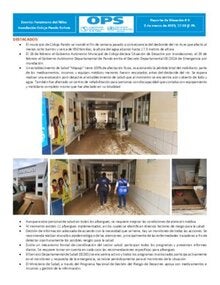
During a recent coastal El Niño event in Peru, between December 2025 and August 2026, 70 deaths were reported and 633 health facilities were affected.
For more information on the public health impacts of El Niño and the situation in the Americas, consult PAHO’s Situation Reports and Public Health Situation Analyses.
El Niño is a naturally occurring climate phenomenon that originates in the Pacific Ocean and can alter rainfall and temperature patterns in different parts of the world. It occurs when the winds that normally blow from east to west across the equatorial Pacific weaken, allowing sea surface temperatures in the central and eastern Pacific Ocean to become warmer than normal. These changes can contribute to drought conditions in some areas and heavier rainfall in others.
El Niño and La Niña are opposite phases of the same naturally occurring climate cycle that originates in the Pacific Ocean. During El Niño, sea surface temperatures in the central and eastern Pacific Ocean are warmer than normal; during La Niña, they are cooler than normal. Both phenomena can alter rainfall, temperature, and other weather patterns, but their effects vary depending on the region and time of year.
ENSO stands for El Niño-Southern Oscillation and is the term scientists use to describe a naturally occurring climate cycle involving interactions between the Pacific Ocean and the atmosphere. El Niño is its warm phase, La Niña is its cool phase, and there are also periods when neither phase predominates, known as neutral conditions.
No. El Niño and climate change are different phenomena, although their effects can reinforce one another. El Niño can exacerbate some of the impacts associated with climate change, such as higher temperatures. At the same time, long-term warming may amplify some of the risks associated with El Niño, including extreme heat, droughts, wildfires, and their impacts on health.
El Niño does not follow a fixed schedule. El Niño and La Niña events occur irregularly, generally every two to seven years. An El Niño event typically develops between April and June, reaches its peak intensity between November and February, and lasts between 9 and 12 months, although some events may persist for longer.
It can cause both, depending on the location. El Niño alters normal temperature and rainfall patterns, meaning that some areas may experience drier conditions and droughts, while others may receive above-normal rainfall and face flooding or landslides. The impacts are not the same in every country or during every event.
Historically, El Niño has been associated with drier-than-normal conditions in parts of Central America, the Caribbean, northern South America, northern Brazil, and some areas of Colombia and Peru. In contrast, wetter-than-normal conditions have been observed more frequently along the Pacific coast of South America, southern Brazil, Paraguay, Argentina, the Bahamas, and the southern United States. These patterns may vary depending on the season, the location within each country, and the intensity of the event.
Conditions associated with El Niño can increase a variety of health risks. Heavy rainfall and flooding can create favorable conditions for mosquito breeding and increase the risk of diseases such as dengue and malaria. Flooding can also contaminate water sources and food supplies, while droughts can reduce access to safe water and lead households to store water, creating new mosquito breeding sites if storage practices are inadequate.
Extreme heat can cause heat-related illnesses, and wildfires can degrade air quality and increase respiratory conditions. In addition, crop losses and disruptions to livelihoods can worsen food insecurity and malnutrition. Emergencies such as storms and other disasters can damage infrastructure, affect mental health, and make it more difficult for people to access health services.
The level of risk depends on the type of hazard and the conditions within each community. People living in areas exposed to droughts, floods, extreme heat, or wildfires may be particularly affected, as well as those with limited access to safe water, food, sanitation, or health services. Groups that may face greater risks include children, older adults, pregnant women, people with chronic illnesses, outdoor workers, and some communities with limited access to health services, including rural, Indigenous, migrant, and displaced populations.
Yes. Floods, heavy rainfall, droughts, wildfires, and other events associated with El Niño can damage health facilities, disrupt water and power supplies, hinder the transport of patients, and limit access to health care. At the same time, increases in illnesses and injuries can place additional pressure on health services and health systems.
Early preparedness can help reduce some of the health risks associated with El Niño. It is important to follow information and alerts issued by national and local authorities, protect water sources and reserves, eliminate mosquito breeding sites, maintain safe hygiene and food-handling practices, and follow public health recommendations during periods of extreme heat, floods, droughts, or wildfires. The measures needed may vary depending on the risks present in each location.