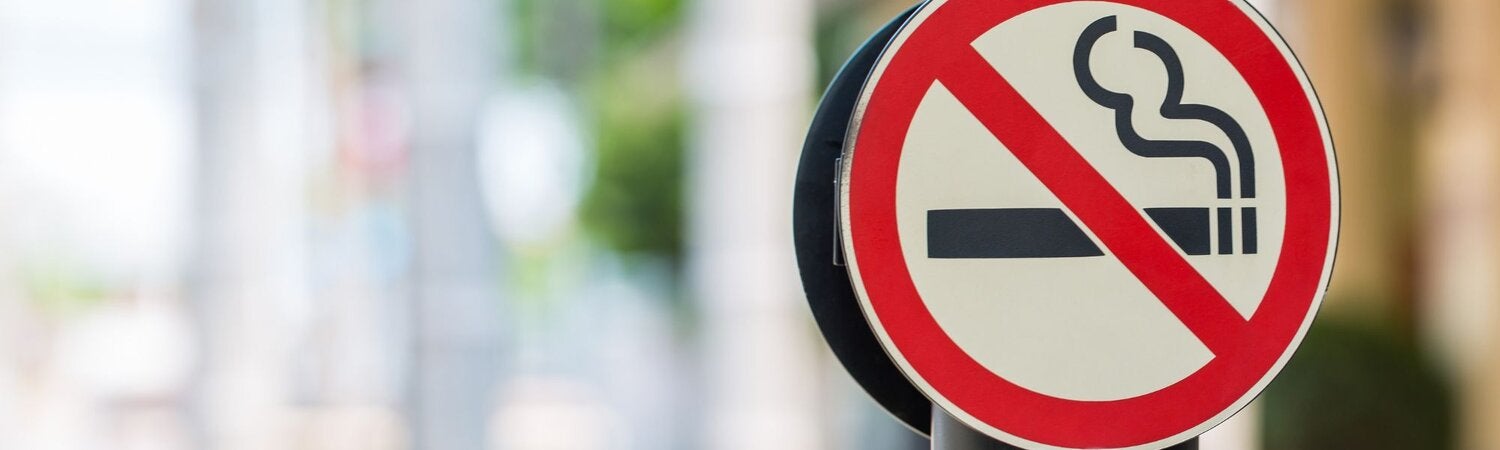

• A sign of smoking forbidden

Tobacco control

The tobacco control team works to reduce the burden of disease, death, and economic consequences caused by tobacco use and exposure to secondhand smoke in the Region of the Americas. Tobacco is currently the leading cause of preventable death worldwide. As its consumption rises in many parts of the globe, it becomes increasingly important for governments to work with civil society to implement the mandates of the WHO Framework Convention on Tobacco Control to protect their citizens and educate them about the dangers associated with its use.

The WHO Framework Convention on Tobacco Control (WHO FCTC) is the first international public health treaty negotiated under WHO auspices and contains guidelines and requirements for the implementation of the most cost-effective tobacco control measures available necessary for reducing the smoking epidemic. Key provisions that parties to the WHO FCTC will be required to implement include:

  • Article 6: Raising taxes on tobacco products.
  • Article 8: Protection from secondhand smoke in all indoor workplaces and public places and in public transportation.
  • Article 11: Large graphic health warnings on the packaging of tobacco products.
  • Article 13:  A comprehensive ban on tobacco advertising, sponsorship and promotion

These measures can be considered the starting point for comprehensive implementation of the Convention. The treaty also addresses a number of other issues, including the disclosure and regulation of ingredients in tobacco products, sale of tobacco products by or to minors, treatment for tobacco addiction, research and exchange of information among countries and promoting public awareness. 

WHO FCTC webpage

  • In the Region of the Americas, there are nearly 115 million tobacco consumers, 111 million of whom are smokers.
  • Tobacco kills more than 700,000 people every year, which is equivalent to one death every 43 seconds.
  • Globally, there are 1.202 billion tobacco consumers.
  • Tobacco kills 7 million people every year (6 million active smokers and more than one million non-smokers affected by exposure to tobacco smoke), including nearly 736,000 in the Americas.
  • The life expectancy of smokers is at least 10 years shorter than that of non-smokers.
  • Mortality attributable to tobacco consumption in the Region accounts for 12% of deaths from cardiovascular diseases, 16% from cancer, and 29% from chronic respiratory diseases.
  • Tobacco is the only legal consumer product that kills up to half of its users when used exactly according to the manufacturer's instructions.
  • Half of all smokers will die from a tobacco-related disease, losing an average of 10 to 15 years of life.
  • Tobacco product companies spend more than US$ 8 billion annually on marketing and advertising.
  • The total economic cost of smoking worldwide (derived from associated healthcare expenditures and productivity losses) is estimated at US$ 1.4 trillion, which is equivalent to 1.8% of the global annual GDP in 2012.
  • Children and adolescents who use electronic cigarettes are at least twice as likely to smoke conventional cigarettes later in life.

Explore the data on the ENLACE data portal

Prevalence of Tobacco Use

The WHO Framework Convention on Tobacco Control (WHO FCTC) is the first international public health treaty negotiated under the auspices of the WHO; it contains guidelines and requirements for the implementation of the most cost-effective tobacco control measures available that are necessary to reduce the tobacco epidemic.
Key provisions that Parties to the WHO FCTC are obliged to implement include:

Article 6: Raising taxes on tobacco products.
Article 8: Protection against exposure to second-hand tobacco smoke in all indoor workplaces, indoor public places, and public transport.
Article 11: Strong health warnings on cigarette packaging covering at least 30% (and ideally 50%) of the exposed surfaces within three years.
Article 13: A comprehensive ban on tobacco advertising, promotion, and sponsorship.

PAHO’s objective is to accelerate the implementation of the FCTC in the Region, particularly those articles that the WHO considers to be the best investments—or "best buys"—for the prevention and control of NCDs.

Strategic lines of action include:

  1. Implementation of effective measures to regulate the consumption and marketing of conventional and emerging tobacco products; this includes establishing environments that are 100% free of tobacco smoke and emissions in all indoor public places and workplaces, as well as in public transport; adopting legislation regarding the packaging and labeling of tobacco products; and implementing a comprehensive ban on tobacco advertising, promotion, and sponsorship.
  2. Implementation of pricing and taxation measures to reduce the demand for tobacco, with the aim of reducing the affordability of tobacco products by increasing consumption taxes.
  3. Provision of comprehensive, high-quality services that promote effective measures for cessation and the appropriate treatment of tobacco dependence, through the offering of comprehensive, high-quality services to quit tobacco use.
  4. Ratification of the FCTC and the Protocol to Eliminate Illicit Trade in Tobacco Products by those Member States that have not yet done so.
  5. Strengthening the capacity of Member States regarding public health policies to counter attempts at interference by the tobacco industry and those who defend its interests.
  6. Assisting Member States in the preparation, review, and implementation of tobacco control regulations and policies, regardless of whether they are Parties to the FCTC.
  7. Promoting technical cooperation with and among countries to share best practices and lessons learned.
  8. Strengthening technical cooperation to enhance Member States' capacities to promote policy coherence between trade and public health in the context of tobacco control, in order to protect health from interference by the tobacco industry.
  9. Promoting partnerships with other international organizations and subregional entities, as well as with members of civil society at the national and international levels, for the implementation of this Strategy and Plan of Action.

The Better Care for NCDs initiative encourages tobacco cessation. Discover how we're transforming the approach to NCDs in primary health care.

ACCESS BETTER CARE FOR NCDs

World No Tobacco Day 2025
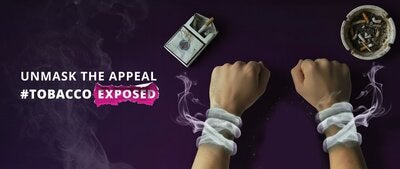
An adolescent with a back-pack and a yellow hoodie, seen from her back, standing in the middel of a bear trap sorrounded by tobacco products, in a blue background with white smoke

Unmasking the Appeal: Exposing Industry Tactics on Tobacco and Nicotine Products

WHO has announced the theme for the 2025 World No Tobacco Day (WNTD) campaign: “Unmasking the Appeal: Exposing Industry Tactics on Tobacco and Nicotine Products.” In 2025, the campaign will focus on revealing the tactics that the tobacco and nicotine industries use to make their harmful products seem attractive.

ACCESS THE CAMPAIGN PAGE


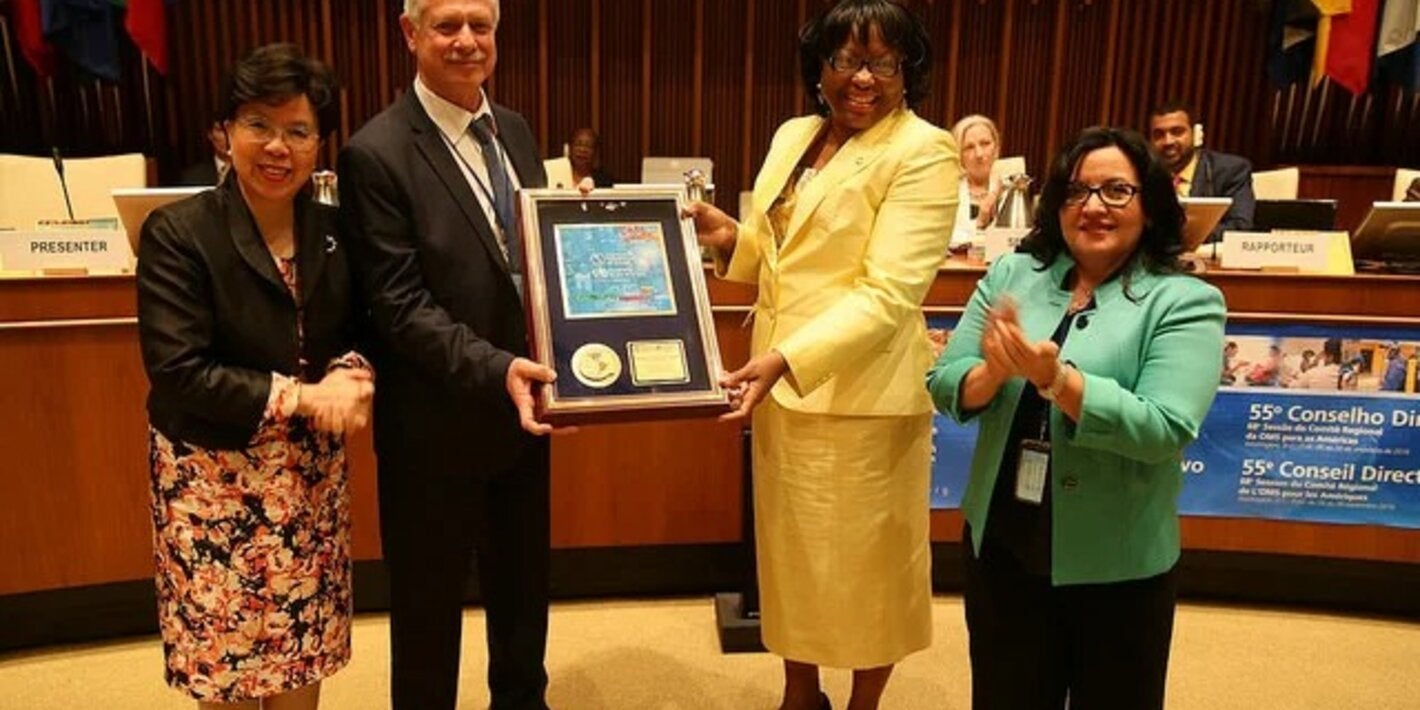
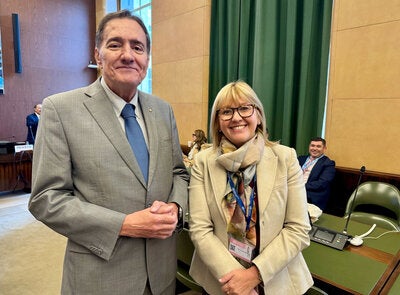
Brazil was recognized for its pioneering tobacco control regulations and steadfast resistance to industry interference. Dr. Tedros poses for a photo with Health Minister Alexandre Padilha.

World No Tobacco Day Awards 2025

The World Health Organization organizes the World No Tobacco Day Awards each year, recognizing individuals or organizations for their achievements in the area of ​​tobacco control. Meet this year's winners:

Six initiatives from the Americas awarded for their contributions to tobacco control


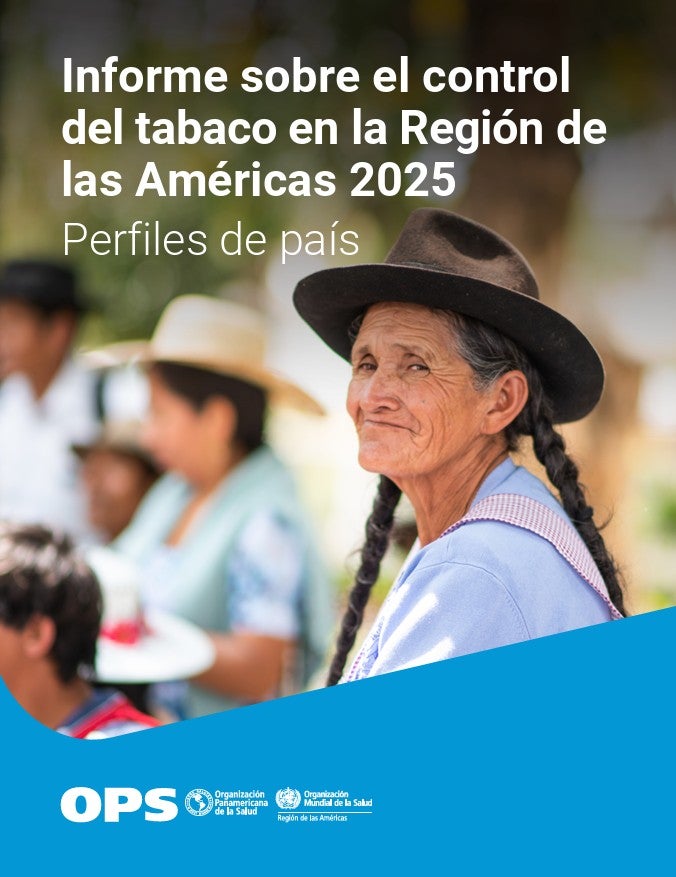
Report on Tobacco Control for the Region of the Americas

Report on Tobacco Control for the Region of the Americas 2022

The Report on Tobacco Control of the Region of the Americas 2022 presents the progress of the implementation of the MPOWER technical package during the period of 2018-2021. While there has been significant progress noted, the report also highlights the gaps in the acceleration of the tobacco control agenda both at the global and regional levels.


Resources

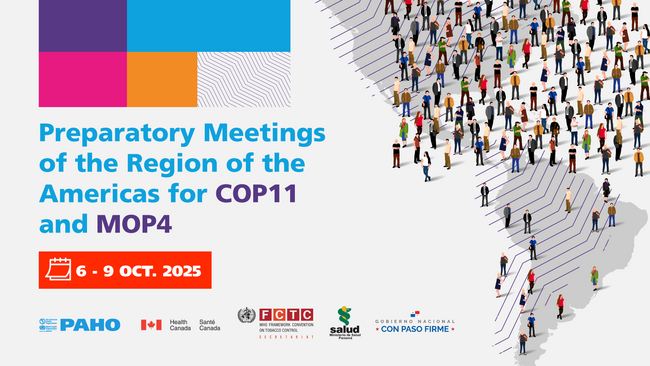
Pre-COP11 y la Pre-MOP4 

Promotional poster for the 'Preparatory Meetings of the Region of the Americas for COP11 and MOP4,' scheduled from October 6 to 9, 2025. The left side features a colorful grid with blue, pink, purple, and orange squares, the event title in large text, and a calendar icon with the dates. Logos of PAHO, Health Canada, FCTC Secretariat, Salud Panamá, and Gobierno Nacional Con Paso Firme appear at the bottom. The right side shows an illustration of people standing on a stylized map of South America with contour


The preparatory meetings for the 11th session of the Conference of the Parties to the WHO Framework Convention on Tobacco Control and for the 4th session of the Meeting of the Parties to the Protocol to Eliminate Illicit Trade in Tobacco Products for the Region of the Americas will be held virtually, from October 6 to 9. The objective of these meetings is to provide State Parties to the FCTC and the Protocol in the Region with the opportunity to review and discuss the issues to be addressed in the upcoming COP11 and MOP4. 


Click on the following button to find useful resources for these meetings.


USEFUL RESOURCES

MPOWER

The Parties of the WHO Framework Convention have committed themselves to protecting the health of their populations in a battle against the global tobacco epidemic.  In order to assist the countries fulfill their commitments under the Framework Convention, en 2008, the WHO established MPOWER,  a plan consisting of the six most important and effective tobacco control methods.

The six MPOWER strategies include:

M: Monitor tobacco use and prevention policies
P: Protect people from tobacco smoke
O: Offer help to quit smoking
W: Warn about the dangers of tobacco
E: Enforce bans on tobacco advertising, promotion and sponsorship
R: Raise taxes on tobacco

These measures have demonstrated their effectiveness at reducing tobacco use.

In a report published at the end of 2009, the WHO reported that while some countries have advanced rapidly in the implementation of tobacco control measures, others are moving more slowly.  The report shows that in 2008 400 million people benefited from tobacco control policies.  Nonetheless, there remains much room for progress, as less than 10% of the world population is covered by any of the suggested tobacco control measures.

The purpose of this training material is to provide technical support to governments of the Member States and public health organizations in developing regulation of tobacco product contents, design and emissions to reduce product attractiveness in accordance with Articles 9 and 10 of the WHO Framework Convention on Tobacco Control (WHO FCTC) and the Partial Guidelines for the implementation of Articles 9 and 10.

The material consist of a Facilitator's Guide, 7 PowerPoint presentations (with notes to guide the presentation), exercises to be used during the workshop and a final evaluation form. Additionally, two factsheets have been developed as complementary materials. There is also a module summarizing the information of the workshop that can be used to support individual training.

Download the files: Training Toolkit Regulation of Tobacco Products

For individual training, access to the module on Tobacco Product Regulation to Reduce Attractiveness


Surveillance

Surveillance is a systematic ongoing collection, collation, and analysis of data and the timely dissemination of information to those who need to know so that action can be taken. 

It is important to have an effective and sustained surveillance system to monitor the tobacco epidemic and evaluate the impact of tobacco control interventions. Empirical evidence shows that the most successful national tobacco control policies are supported by an effective surveillance and evaluation system.

Article 20 of the WHO FCTC addresses surveillance as follows: 
"...2. The Parties shall establish, as appropriate, programs for national, regional and global surveillance of the magnitude, patterns, determinants and consequences of tobacco consumption and exposure to tobacco smoke. Towards this end, the Parties should integrate tobacco surveillance programs into national, regional and global health surveillance programs so that data are comparable and can be analyzed at the regional and international levels, as appropriate."

Through surveillance, it is possible to monitor and evaluate regional tobacco-related issues.


Global Tobacco Surveillance System (GTSS)

The World Health Organization (WHO), the Centers for Disease Control and Prevention (CDC), and the Canadian Public Health Association (CPHA) began development of the Global Tobacco Surveillance System (GTSS) in 1999.   The purpose of the GTSS is to enhance the capacity of countries to design, implement, and evaluate their national comprehensive tobacco action plan and to monitor the key articles of the WHO Framework Convention on Tobacco Control (WHO-FCTC). The GTSS includes the collection of data through four surveys:

Currently, the GTSS includes GYTS, GATS and Tobacco Questions for Surveys (TQS) a standard set of questions on tobacco use that can be incorporated into any adult survey and TQS-Youth a standard set of survey questions on tobacco use for youth surveys. The purpose of TQS is improve survey comparability over time and harmonize questions across global surveillance and monitoring efforts.

These components provide a consistent framework for surveillance including standard sampling procedures, core questionnaire items, training in field procedures, data analysis, and consistent reporting across all participating countries.

GTSS Data: Interactive web application for global tobacco surveillance

More on Surveillance and Tobacco Control


Research

Environmental Nicotine Levels in the Americas

With the aim of supporting smoke-free environment policies and programs tor reducing the exposure to secondhand smoke in the Americas, the Pan American Health Organization (PAHO) and the Johns Hopkins University Institute for Global Tobacco Control developed a study to estimate exposure to secondhand smoke in Latin American countries and the Caribbean and designed a specific method for measuring secondhand tobacco smoke in public places.  The main results were published in the scientific paper  Secondhand Tobacco Smoke in Public Places in Latin America, 2002-2003.

Other results (in Spanish):

 

Available only in Spanish:

Ilustración de un cigarrillo quemándose, y la ceniza que va cayendo con forma de la silueta de personas de distintas edades y sexos

Ciclo de conferencias virtuales realizado de junio a septiembre de 2020 con el fin de presentar y discutir paquetes de medidas para reducir el consumo de tabaco y otros factores de riesgo, y disminuir la carga de ENT en los países de América Latina.

Organizado por la Organización Panamericana de la Salud (OPS/OMS), Campaign for Tobacco-Free Kids (CTFK), La Unión Internacional contra la Tuberculosis y Enfermedades Respiratorias (La Unión), Corporate Accountability, Framework Convention Alliance (FCA) y Fundación InterAmericana del Corazón (FIC)

Las grabaciones de las sesiones están disponibles en el siguiente enlace: 

Más información

Available only in Spanish:

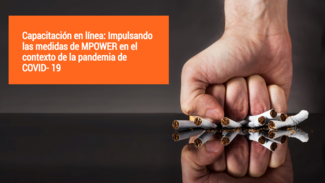
Foto de un puño aplastando un grupo de cigarrillos sobre una mesa. A la izquierda, un recuadro con el título de la capacitación

Serie de seis sesiones de capacitación online dirigida a funcionarios de gobierno para fortalecer la capacidad del control del tabaco en la aplicación de las medidas del paquete de medidas MPOWER contenidas en el CMCT en el contexto de la pandemia de COVID19. El proyecto fue desarrollado por la Organización Panamericana de la Salud (OPS) con el apoyo del Centro de Investigación para la Epidemia de Tabaquismo (CIET), Uruguay.

Más información

Latest news

Documents

All

Communication Materials

All

Mandates and Strategies

All