
Midwifery in the Region of the Americas 2026. Infographic
|
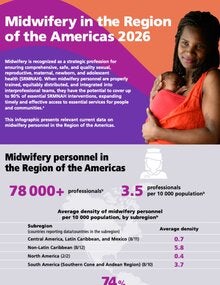
Midwifery is a strategic profession for strengthening health systems and ensuring comprehensive, safe, and quality sexual, reproductive, maternal, newborn, child and adolescent health. The evidence shows that midwifery professionals have the potential to cover up to 90% of essential interventions across the continuum of care, expanding timely and effective access to essential services, in particular in the most vulnerable settings. This infographic presents an up-to-date overview of key data on the midwifery workforce in the Region of the Americas, including availability, demographic profile, training, current regulation, and service delivery. With more than 78 000 midwifery professionals in the Region and considerable variation in workforce density across subregions, significant progress has been made in strengthening midwifery. Notable advances include the recognition of midwifery as a distinct profession in most countries, the availability of high-quality direct-entry training programs, and regulatory frameworks that, in many contexts, enable autonomous professional practice and the provision of essential services, including contraception. At the same time, the data reveal persistent challenges related to regulation, professional governance, and capacity-building that require priority action to consolidate and expand the contribution of midwifery to health systems. |