
Webinar Objectives:
- To present the Action Guide and the steps for its implementation.
- To provide key strategies to health stakeholders and decision-makers to promote global health priorities without leaving people with disabilities behind.
- To share experiences and practical examples of implementing the Action Guide and to create networks to accelerate measures aimed at promoting health equity for people with disabilities.
RECORDING
How to Participate
Agenda
Contexto
People with disabilities have the same rights as everyone else to enjoy the highest attainable standard of health. This right is inherent, universal, and inalienable, and is enshrined in international law through human rights treaties and national legal frameworks, including national constitutions. However, there is evidence that people with disabilities suffer serious health inequalities. Compared to people without disabilities, people with disabilities may die up to 20 years earlier and are more than twice as likely to develop conditions such as depression, diabetes, or stroke.
The health inequalities faced by people with disabilities are the result of avoidable, unjust, and unequal conditions, including structural factors such as stigma and discrimination; social determinants such as poverty and lack of education; risk factors for disease such as tobacco, alcohol, and substance use, and unhealthy diets; and the attitudinal, institutional, and physical barriers they face at all levels of health systems.
Substantial progress has been made in many countries of the Americas. Despite these efforts, the United Nations Convention on the Rights of Persons with Disabilities is still far from being fully implemented.
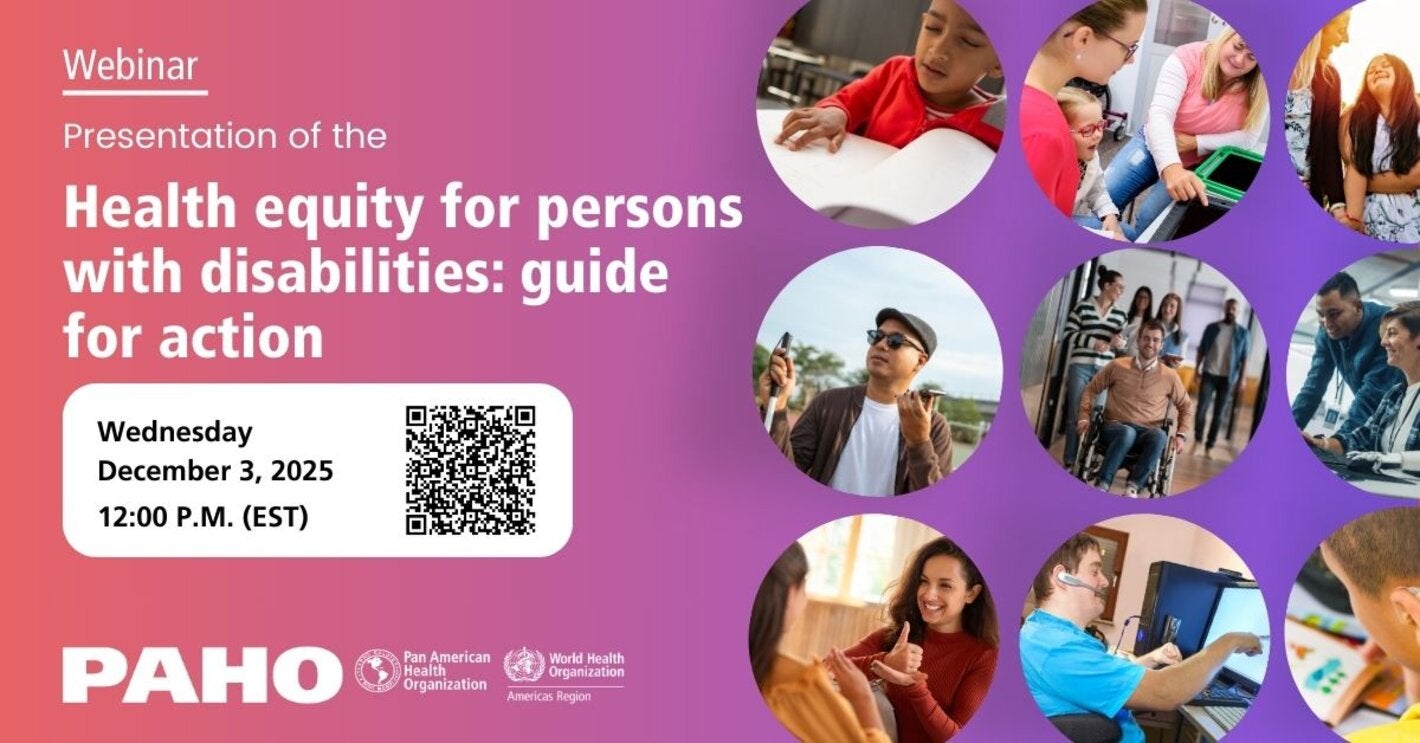
The Guide for Action on Health Equity for Persons with Disabilities (hereinafter, the Guide) offers practical guidance on the process that ministries of health should follow to integrate the inclusion of persons with disabilities into the governance, planning, and monitoring processes of health systems. It is a fundamental resource that enables ministries of health and their partners to implement the recommendations outlined in the World Report.
Time in other cities
- 9:00 a.m. – Los Angeles, Vancouver.
- 11:00 a.m. - Belmopan, Guatemala City, Managua, Mexico City, San Salvador, San José (CR), Tegucigalpa.
- 12:00 p.m. - Bogotá, Havana, Kingston, Lima, Port-au-Prince, Nassau, Ottawa, Panama City, Quito, Washington D.C.
- 1:00 p.m. – Bridgetown, Caracas, Castries, Georgetown, La Paz, Port of Spain, San Juan, Santo Domingo, Saint George´s Saint John´s.
- 2:00 p.m. - Asunción, Buenos Aires, Brasilia, Montevideo, Paramaribo, Santiago.
- 6:00 p.m. – Geneva, Madrid.
For other cities, please refer to the local time at this link.