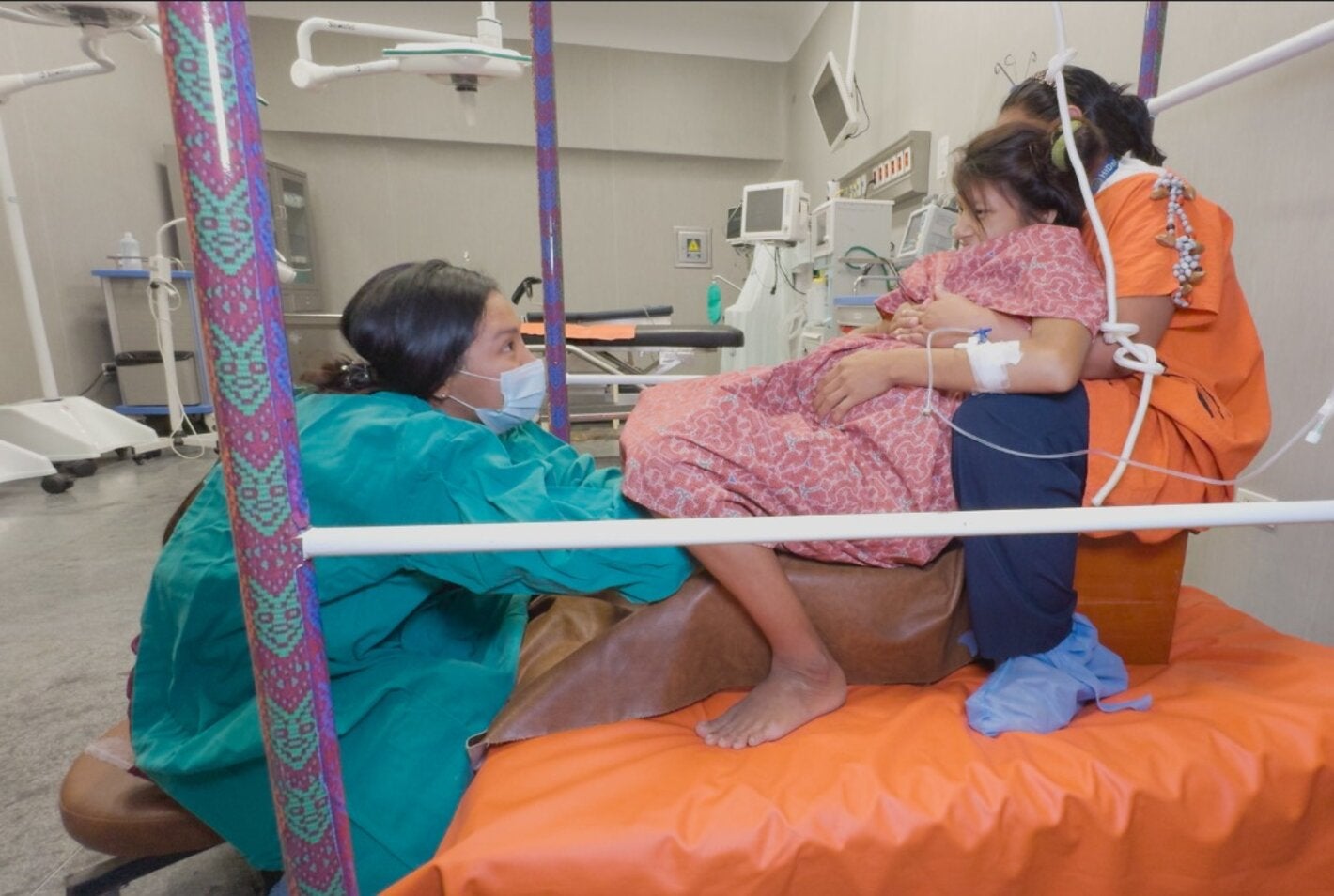
Washington, D.C., 19 October 2026 (PAHO) – Health experts, government authorities, representatives of international organizations, and stakeholders from across countries participated in the international webinar “Global Guidelines and Governance for the Integration of Traditional, Complementary and Integrative Medicine (TCIM) into Health Services and Health Systems through an Intercultural Approach.” The webinar marked the first session of an international series organized by the Complementary Medicine Department of EsSalud Peru, designated as the PAHO/WHO Collaborating Center for Traditional and Complementary Medicine (CC PER-10), in collaboration with the Traditional, Complementary and Integrative Medicine Network of the Americas (TCIM Americas Network) and the Brazilian Academic Consortium for Integrative Health (CABSIN).
The event addressed the main directions outlined in the WHO Traditional Medicine Strategy 2025–2034 and the challenges involved in advancing the integration of TCIM into health services and health systems, including issues related to governance, regulation, interculturality, research, human resources development, and institutional strengthening.
Representing the Pan American Health Organization (PAHO), Gustavo Rosell de Almeida, Regional Advisor with the Primary Health Care and Integrated Service Delivery Unit (PH/HSS), highlighted that the integration of traditional, complementary and integrative medicine into health services can contribute to strengthening primary health care, expanding its reach, improving access to care, and advancing universal health coverage.
Rosell emphasized that TCIM serves as a bridge between communities, primary health care, and integrated health services networks. In this regard, he stressed that health service organization should be grounded in an understanding of people, communities, and their territories, while fostering dialogue and collaboration among different systems of health knowledge and care.
The webinar also featured contributions on interculturality and health. PAHO’s Cultural Diversity team presented regional frameworks related to ethnicity and health and shared approaches and tools designed to facilitate dialogue among different knowledge systems. One example is the knowledge dialogues methodology, which promotes exchange and joint knowledge-building among stakeholders, communities, and medical systems.
During the opening session, speakers also highlighted the role of the TCIM Americas Virtual Health Library, coordinated by BIREME/PAHO/WHO together with the institutions and collaborative networks that make up the TCIM Americas Network, as a platform for expanding access to information, evidence, and experiences related to traditional, complementary and integrative medicine across the Region.
The event also included presentations from the WHO Global Traditional Medicine Centre and the WHO TCIM Unit on the new WHO Traditional Medicine Strategy and the WHO Global Framework for the Integration of Traditional, Complementary and Integrative Medicine into Health Systems. These key documents provide guidance for countries seeking to advance the integration of TCIM into health systems. Participants also learned about experiences integrating traditional medicine in Thailand and in countries across the WHO African Region.
In a second session, CC PER-10 presented the results of a regional assessment aimed at identifying key advances, enabling factors, and challenges related to the regulation and integration of TCIM within health systems and services. Representatives from the Ministries of Health of Chile, Cuba, and Mexico then participated in a panel discussion reflecting on the strengths and challenges encountered in developing public policies related to TCIM and implementing the WHO Traditional Medicine Strategy. Panelists also shared proposals to strengthen TCIM integration across the Americas.
This event marked the beginning of a four-part international webinar series aimed at promoting the exchange of experiences and strengthening institutional and technical capacities for the integration of TCIM into health systems and services throughout the Americas. Upcoming sessions will focus on experiences and advances in North America, Central America and the Caribbean, and South America.
Access the recording of the first webinar:
Global Guidelines and Governance for the Integration of TCIM into Health Services and Health Systems through an Intercultural Approach