Bogotá, January 30, 2026 – As part of the regional project funded by the European Union to strengthen yellow fever prevention, the Pan American Health Organization/World Health Organization (PAHO/WHO) in Colombia supported efforts to strengthen effective communication skills among technical personnel involved in Vector-Borne Disease (VBD) control activities in the department of Caquetá. The initiative aimed to help build community trust in the context of vector control interventions during the yellow fever outbreak, through a Risk Communication and Community Engagement (RCCE) approach.
Yellow fever is an acute viral hemorrhagic disease transmitted by infected mosquitoes. Clinical manifestations can range from mild, nonspecific symptoms to severe illness involving jaundice and bleeding. Vaccination remains the primary prevention measure, providing lifelong immunity with a single dose, and is complemented by epidemiological surveillance and vector control actions as key pillars of the public health response, according to Colombia’s National Institute of Health (INS).
Colombia continues to face areas of sylvatic yellow fever transmission across large parts of the country, particularly in regions below 2,200 meters above sea level. This situation has prompted efforts to strengthen the technical and operational capacities of departments at risk. In Caquetá, confirmed outbreak-related events have included a case in the municipality of El Doncello and a reported death in Cartagena del Chairá, requiring intensified prevention, surveillance, and control measures.
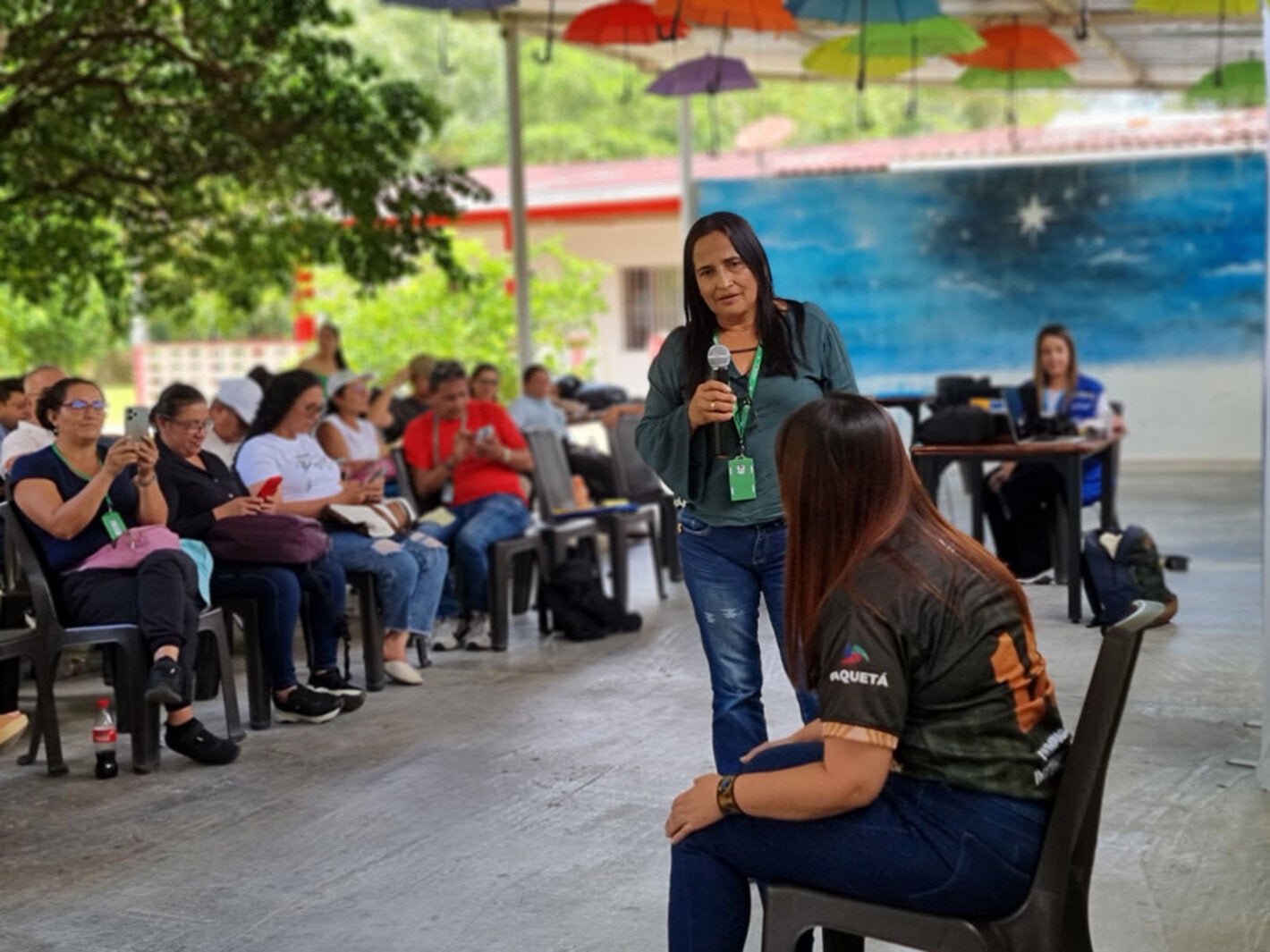
In response to this context, and in coordination with the Caquetá Departmental Health Secretariat, PAHO/WHO supported the implementation of the in-person workshop “Effective communication for Vector-Borne Disease (VBD) control technicians,” aimed at strengthening the capacities of personnel from the VBD/Zoonoses and Entomology program. The training included technical modules on integrated vector management, entomology, vector control, and insecticide application equipment, along with a dedicated Risk Communication and Community Engagement (RCCE) component designed to strengthen interaction between technical teams and communities.
As a cross-cutting approach, RCCE plays a critical role in the effective implementation of vector control measures, particularly in settings where community resistance, rumors, cultural beliefs, or material barriers may hinder the adoption of preventive practices. This component helped strengthen participants’ understanding of the communication role associated with vector control activities in the context of the yellow fever outbreak. Results showed progress in the conceptual understanding of communication as a gradual, relationship-based process focused on building trust with communities.
The workshop — which brought together 35 participants linked to the Vector-Borne Disease (VBD) Program from municipalities including Florencia, Cartagena del Chairá, and San Vicente del Caguán, among others — helped strengthen both conceptual and practical foundations for more empathetic and effective community engagement. It also generated valuable inputs to support the territorial response to the yellow fever outbreak and guide future training processes under the VBD Program.