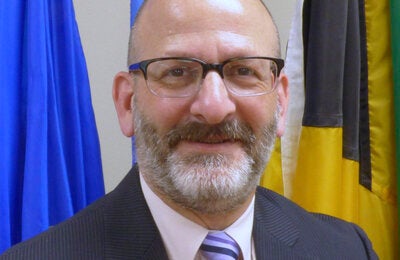
Q&A with Ian Stein, PAHO/WHO Representative in Jamaica
Three months after Hurricane Melissa made landfall in Jamaica on October 28, 2025, as a Category 5 storm —the strongest ever to strike the island—, the country’s health system continues to recover amid widespread damage and ongoing public health risks. Recovery requires careful prioritization, coordination with partners, and constant calibration between needs and available resources. In this interview, Pan American Health Organization / World Health Organization (PAHO/WHO) country representative in Jamaica, Ian Stein, reflects on the realities of recovery, the lessons learned, and what success looks like in a complex emergency.
What has been the biggest challenge in Jamaica’s recovery so far?
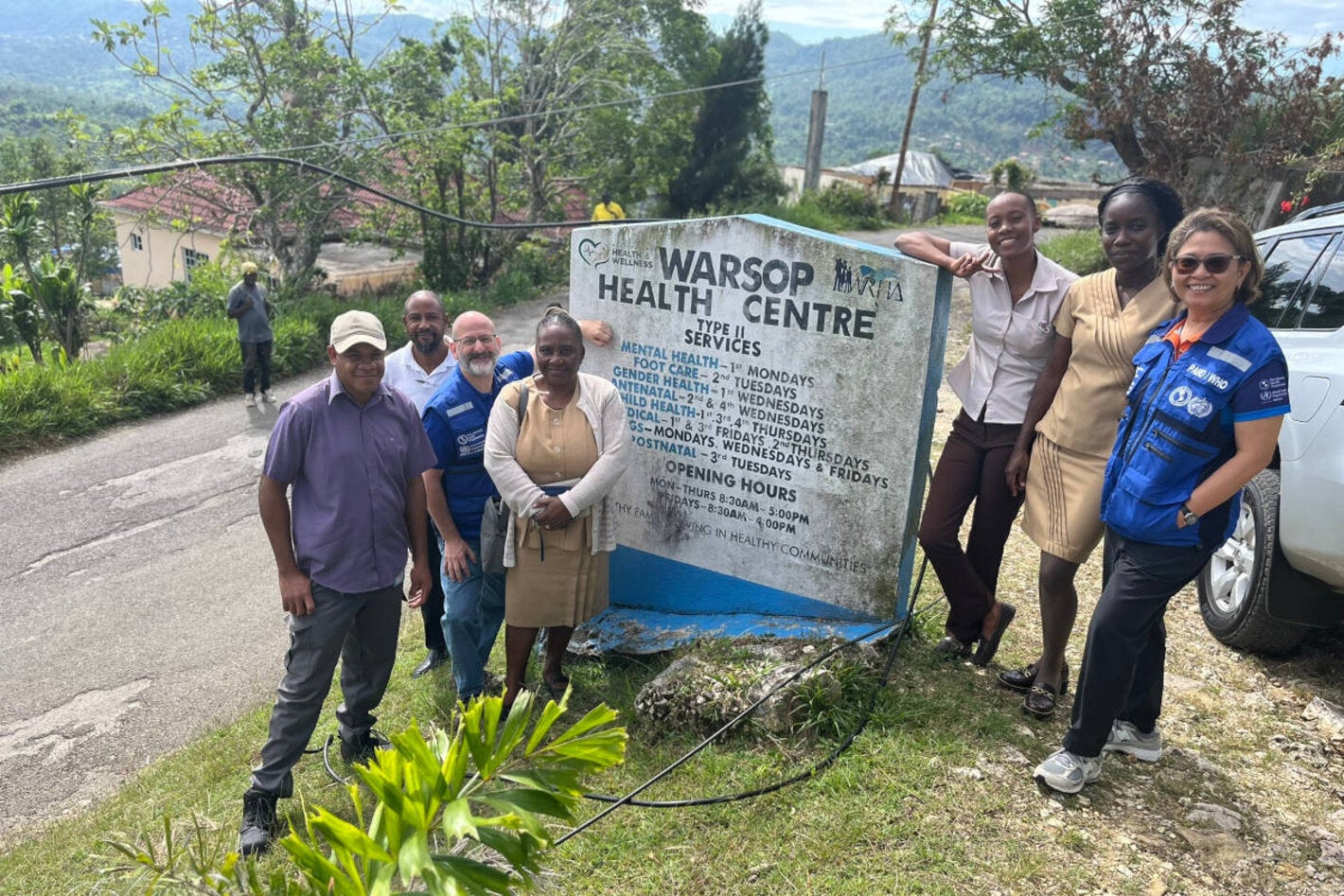
One enormous challenge still affecting us is the scale of destruction. When you’re in a situation where five hospitals have been severely affected including one decommissioned, and 60 primary health care centers have major damage—for example, no roof—it’s a whole different level of complexity than when this affects one hospital and three health centers. We must be mindful of what can make a difference and be realistic about what resources are available to make that difference.
How has that scale affected PAHO’s ability to respond?
Expectations are high, and that’s challenging. This Organization has a long history of responding to emergencies; however, it is now a different time and context. Some of the partners typically associated with providing support to emergency response are channeling their resources through different mechanisms, and that affects the Organization's ability to meet some of the high expectations.
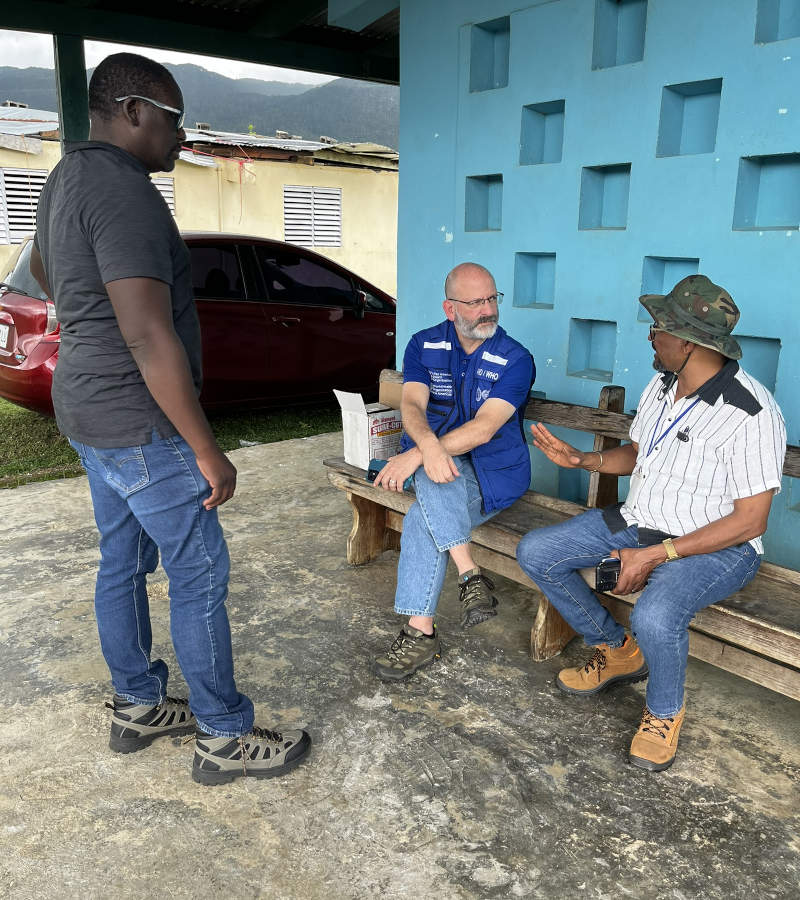
Data and evidence are the foundation for decision making; however, it’s one type of effort to collect information from ten health centers, and it’s a substantively different effort to assess 101 health centers. One needs people, time, and money. Additionally, one should be mindful of the challenges to reach many parts of Jamaica, isn’t as small as one may perceive. To reach some locations, it is easily nine hours of travel round trip to one location - The scale is daunting.
Emergency medical teams played a major role early on. What were the challenges there?
One of the challenges with international teams is calibrating expectations with reality. When you have an event on the scale of Melissa, everybody shows up—the meeting rooms don’t hold all the partners for coordination discussions. But many partners’ duration in the country is modest, and few stay for the recovery stage.
Seventeen Emergency Medical Teams were deployed in Jamaica —12 international and five national teams. Partners set up systems and, in some cases, full hospitals. However, there can be a misunderstanding that these colleagues will stay until everything is fully stable. Unfortunately, that’s not typical. EMTs frequently deploy for four to six weeks, and then they’re off to another emergency.
How did Jamaica manage the integration of those teams into its health system?
In many places, emergency medical teams are very independent. In Jamaica, the Ministry of Health and Wellness’ demonstrated substantial leadership in the governance of health services and ensured that international teams integrate with the public health system. While this may not be typical, it ensured continuity of care to make sure Jamaica’s health system could follow patients after their consultations. That national leadership was a real success.
What has gone well from a public health perspective?
Despite substantive communication challenges arising from damage to core infrastructure, Jamaica has a strong surveillance capacity, and that helped the country address the leptospirosis outbreak. I’ve seen how PAHO’s support to laboratory systems is exceptionally well leveraged. PAHO provided training, reagents, and logistical support —it’s not expensive, but it’s essential. Without this type of support, samples would need to be sent outside the country for confirmation, and one loses time. Support to laboratory systems made a difference.
Recovery often comes down to logistics. What does that look like in practice?
In emergencies like this, part of the response is procuring materials. While the Government and the Organization can deploy emergency medicines and supplies, reestablishing operating theatres is a different effort. Organizations do not typically have this type of equipment in storage, and don’t buy it on-line through routine purchasing. This requires careful consideration of what’s needed, matching it with available resources, establishing the corresponding technical specifications, going to the market, and ensuring the equipment meets standards.
Looking back, how do you define success in a recovery like this?
Success is learning the lesson—not just observing it and making the same mistake. Jamaica really leveraged lessons from COVID-19. They’re thinking about indicators for success, governance, and accountability—about how to act quickly in emergencies without regret, but also within systems that will stand up later. At times we need to adjust our risk tolerance to see tangible, early results, but not everyone feels empowered to take the risks. Early collaboration with proven partners who move nimbly, can be very rewarding. Coordination is hard work—everybody likes coordination, but nobody wants to be coordinated. Nonetheless, when it works, it makes a real difference, and PAHO remains committed to supporting Jamaica and the region in building back stronger, with sustained international support for resilience and preparedness.
What role do climate-resilient health systems play in preventing future impacts?
Climate‑resilient health systems help prevent future disaster impacts by keeping essential services functioning during extreme weather, reducing secondary outbreaks, protecting health workers, and maintaining care for chronic conditions even when infrastructure is disrupted. By reinforcing facilities, strengthening disease surveillance, and safeguarding supply chains, these systems limit both immediate and long‑term harm, making communities safer and recovery, faster.
How can the international community best support Jamaica's long-term resilience?
Jamaica’s experience with Hurricane Melissa reveals that long‑term health resilience, and its corresponding effect on universal access to health, depends on climate resilient infrastructure, reinforced disease surveillance, and sustained attention to country’s efforts to strengthen primary health care. International partners can make the biggest difference by investing in climate‑resilient facilities, supporting public‑health systems, and ensuring Jamaica has the resources to manage both immediate crises and chronic health needs.