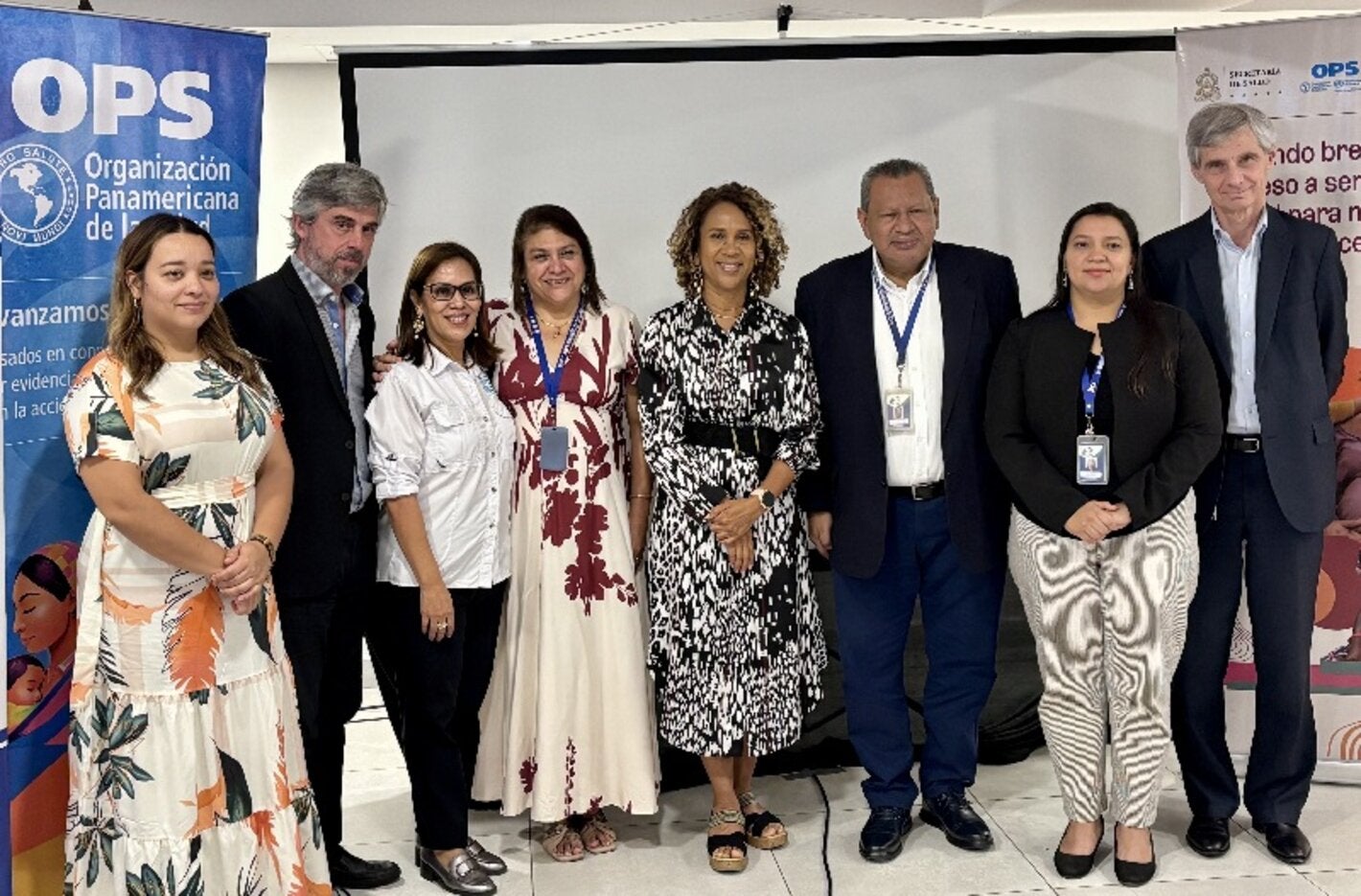
Tegucigalpa, 20 October 2026 (PAHO/WHO). The Honduran Ministry of Health (SESAL), with technical cooperation from the Pan American Health Organization/World Health Organization (PAHO/WHO), is holding the National Workshop on the Implementation and Use of SIP Plus in Honduras from 20 to 22 October. The workshop aims to strengthen the country’s capacity to record, analyze, and use information to improve care for women during pregnancy, childbirth, and the postpartum period, as well as for newborns.
The Perinatal Information System (SIP Plus), developed by PAHO/WHO, integrates clinical information and generates indicators and reports to support management, surveillance, and decision-making. Strengthening its use in Honduras aims to ensure the availability of complete, timely, high-quality, individual-level information to support the continuum of care, identify gaps, and guide resource allocation from primary-level health facilities to hospitals.
Honduras has previous experience implementing SIP Plus, including hospitals that have participated in initiatives such as the MUSA Network and the registration of severe maternal morbidity, or near-miss cases. SESAL aims to build on and strengthen this experience, expand national capacities, and integrate the use of data into the management of Integrated Health Services Networks (RISS). Planned activities include a demonstration project connecting a hospital with primary-level facilities within a network, as well as the use of georeferencing to analyze access, referrals, continuity of care, and outcomes for women and their newborns.
From recording information to using it to improve care
During the three-day workshop, clinical, statistics, information technology, and management personnel are participating in technical sessions and practical exercises on recording and analyzing maternal, newborn, and sexual and reproductive health information. The methodology includes system installation and configuration, review of databases and information flows, and exercises to generate and analyze indicators.
The agenda covers the Basic Perinatal Clinical Record and other clinical records and modules related to obstetric complications, severe maternal morbidity, women experiencing abortion, EMTCT Plus, immediate postpartum family planning (IPPFP), adolescence, and violence against women. It also includes functionalities for cross-referencing variables, generating reports, georeferencing, and interoperability.
PAHO/WHO is providing technical cooperation for this process through regional and national specialists to strengthen the capacities of teams responsible for SIP Plus. The program includes the participation of Rodolfo Gómez, PAHO Regional Advisor on Maternal, Sexual and Reproductive Health; Luis Mainero and Amalia Ayala; as well as the Organization’s technical team. The workshop also provides an opportunity to share experiences from the Honduran Social Security Institute and hospitals using the system.
This work has received financial support from MSD for Mothers, Canada’s C-Gaps Project, and the UHC Project, helping to strengthen the use of quality information to guide care and health decision-making.
Information to advance the reduction of preventable maternal deaths
Strengthening SIP Plus is particularly important as Honduras works to sustain its progress in maternal health. According to official data, the maternal mortality ratio reported for 2025 was 38 maternal deaths per 100,000 live births, moving closer to the national target of 24 per 100,000 by 2030. Consolidating this progress requires intensified efforts to identify risks early, ensure timely responses, analyze severe maternal morbidity, and continuously improve quality of care.
In this context, SIP Plus can support the identification of geographic and population-level gaps and help target interventions. The initiative is aligned with the National Health Model based on Primary Health Care and the organization of services through Integrated Health Services Networks, and contributes to monitoring progress toward the Sustainable Development Goals related to maternal and neonatal mortality and universal access to sexual and reproductive health services.
A roadmap to consolidate and expand SIP Plus
The workshop will conclude with the development of an agreed national roadmap for the implementation of SIP Plus. It will include prioritized health facilities, designated responsible teams, user profiles and permissions, training needs, support mechanisms, monitoring indicators, and an implementation timeline.
Expected results also include an updated map of hospitals and focal points for SIP Plus, the MUSA Network, and near-miss surveillance; trained national and health facility teams; completion of prioritized system installations and configurations or agreement on a technical plan for their implementation; a functional design for implementation in priority Integrated Health Services Networks; and a matrix of indicators, reports, and georeferencing requirements.
The 2026–2027 roadmap will guide the consolidation, sustainability, and progressive expansion of SIP Plus in Honduras, bringing together national efforts, PAHO/WHO technical cooperation, and partner support to strengthen the use of timely, high-quality information to improve maternal and newborn health.