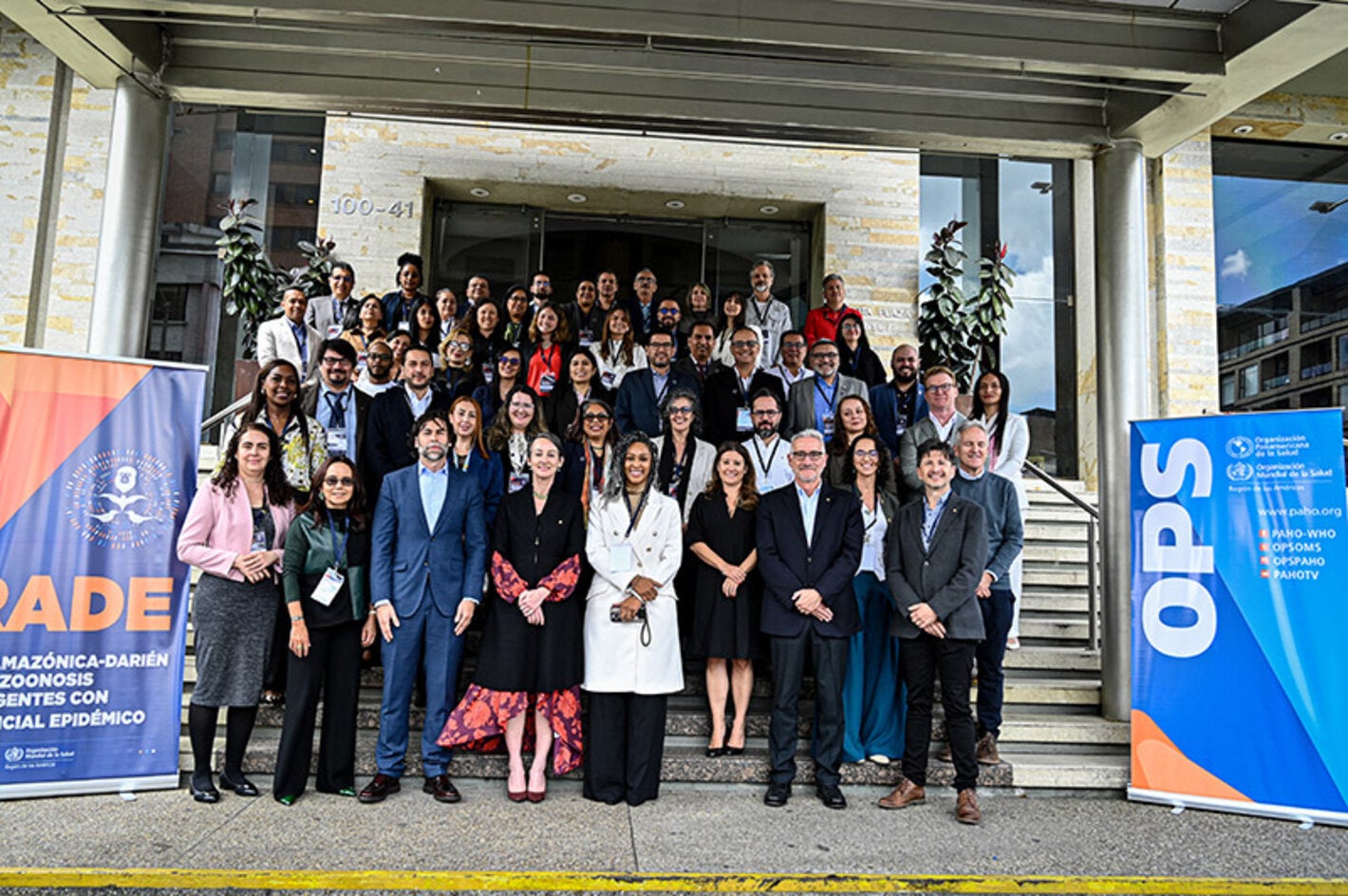
Bogota, Colombia, 19 November 2026 (PAHO) - Representatives from nine countries in the Amazon and Darién regions met in Bogotá from 17 to 19 November for the Second General Assembly of the Amazon-Darién Network for Emerging Zoonoses with Epidemic Potential (RADE) to review the 2026–2028 Action Plan. The meeting was organized by the Pan American Health Organization (PAHO), in collaboration with Colombia’s Ministry of Health and Social Protection.
Regional cooperation remains essential to strengthening surveillance, preparedness and response capacities for zoonotic threats in the Amazon and Darién, where the circulation of people, animals, vectors and infectious agents requires coordinated action across countries and sectors.
During the meeting, Manuel Sánchez, Director of the Pan American Center for Foot-and-Mouth Disease and Veterinary Public Health (PANAFTOSA/PAHO), highlighted the importance of sustaining this cooperation. “Network activities should not depend on a single source of funding, but should also be sustained through technical leadership, institutional commitment, in-kind contributions and the active participation of countries,” he said. Examples include the contribution of experts to technical working groups, the sharing of reference laboratory capacities, and the participation of professionals from other countries in national training activities.
RADE brings together Bolivia, Brazil, Colombia, Ecuador, Guyana, Panama, Peru, Suriname and Venezuela. During the meeting, delegations shared successful experiences, endorsed the proposed activities for 2027 and agreed to review the implementation of the Action Plan every six months.
Jairo Méndez Rico, PAHO Regional Advisor on Viral Diseases, emphasized the importance of collaboration among laboratories and mechanisms for information exchange between countries, linking laboratory networks with surveillance systems and regional preparedness and response mechanisms. “We may have the best laboratory platforms, but if they are not integrated into a surveillance system and a preparedness and response strategy, they are of little use,” he said.
Priorities for strengthening regional cooperation
As part of the next steps, countries plan to hold a workshop on cross-border surveillance in 2027 to determine what information should be shared across sectors when a signal of common concern is detected. The 2027–2028 agenda includes strengthening laboratory diagnostic and sequencing capacities, with a particular, but not exclusive, focus on yellow fever and hantaviruses, as well as conducting simulation exercises to assess how teams coordinate their response to zoonotic emergencies. In the area of epidemiological intelligence and modeling, a meeting is planned to identify priority surveillance questions and determine what data countries can share to support joint analyses and decision-making.
During the General Assembly, PAHO also presented recommendations to strengthen the implementation and sustainability of RADE. These include integrating the network’s priorities into national policies and programs, strengthening coordination across the human health, animal health and environmental sectors, engaging local and border authorities, and establishing mechanisms for information exchange and joint risk assessments. The recommendations also encourage countries to incorporate the network’s activities into national planning and resource mobilization processes to support its long-term sustainability.
Interested in collaborating with RADE?
Experts and institutions interested in learning more about RADE or exploring opportunities for collaboration are invited to contact the network’s Technical Secretariat at rade@paho.org.