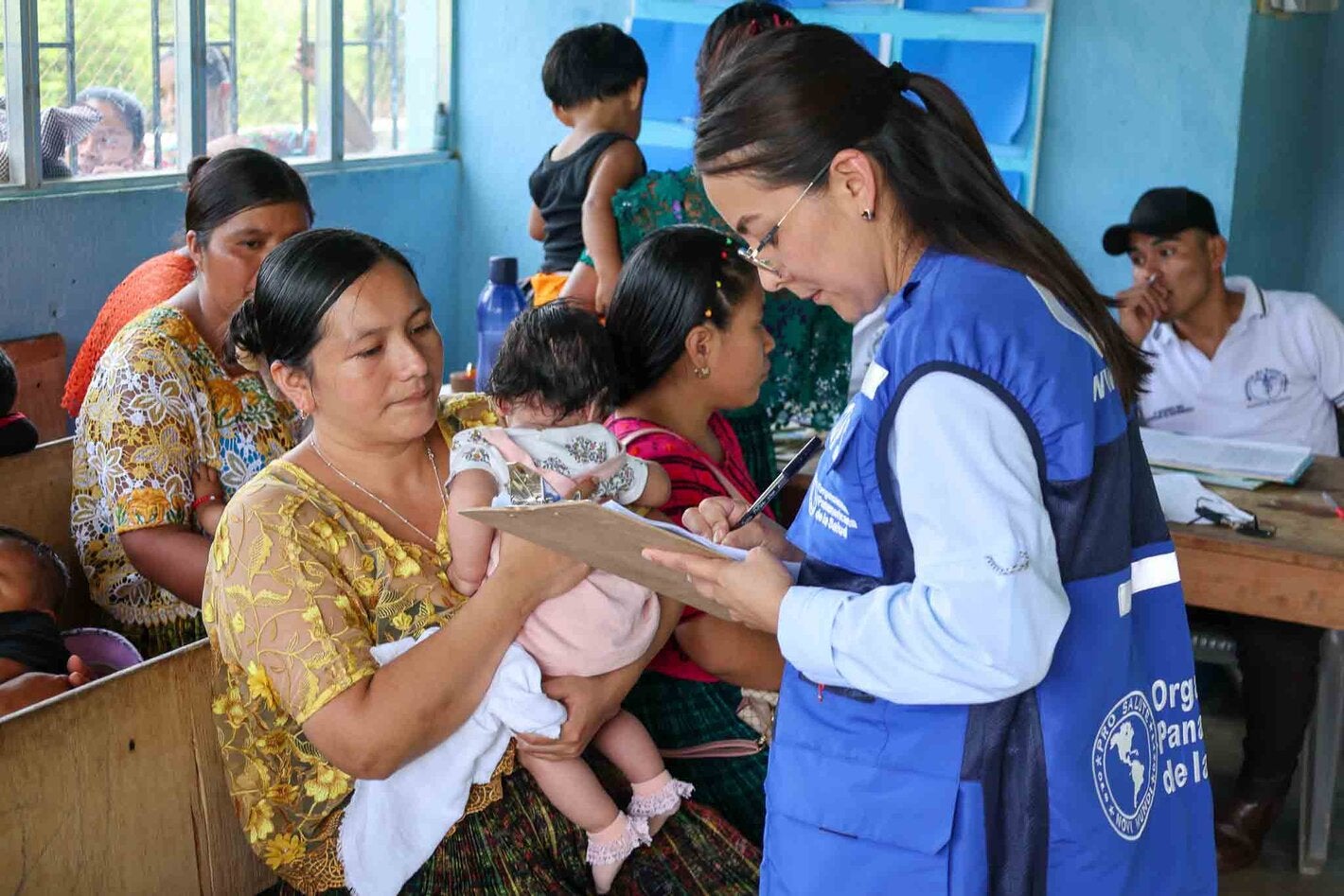
Guatemala, October 15, 2026 (PAHO) — Traditional midwives, birth attendants, community leaders, Community Development Councils (COCODEs), health and water committees, and other local stakeholders are helping plan interventions to improve health facilities and essential health services in communities affected by drought across Alta Verapaz, Chiquimula, Huehuetenango, and Quiché.
The initiative is supported by the Guatemala Humanitarian Fund and implemented by the Pan American Health Organization (PAHO) in coordination with the Ministry of Public Health and Social Assistance (MSPAS) at the national and local levels.
Across the four departments, community participation is helping identify urgent needs, prioritize interventions, and coordinate repairs to water supply systems at health facilities, as well as the delivery of essential supplies and equipment.
PAHO personnel also participate in meetings of Municipal Development Councils (COMUDEs) and other local coordination bodies. These forums provide opportunities to assess barriers to accessing health facilities, the condition of local water sources, and the needs of affected families. They also help mobilize communities, share information, and monitor the implementation of planned activities.
Edy Manolo Barillas, National Disaster Response Adviser with the United Nations Office for the Coordination of Humanitarian Affairs (OCHA), emphasized the importance of involving community stakeholders, who help connect residents, health services, and institutions supporting the project.
This coordination helps ensure that interventions reflect local knowledge, priorities, and community structures.
In San Antonio Cabañas III, Senahú, Alta Verapaz, local authorities and community leaders helped identify needs and facilitate communication with families.
According to Rolando Xuc, a local community leader, communicating in the local language has been particularly important because some residents do not fully understand Spanish. Receiving information in their own language helps community members better understand the interventions and participate in decisions affecting their communities.
Having PAHO personnel who speak the local language has also helped facilitate direct dialogue with residents, allowing teams to explain planned activities and hear community members' needs, concerns, and perspectives.
In La Majada, San Jacinto, Chiquimula, community organizations and local authorities supported efforts to improve the local health post. Milvya Concepción Sánchez Martínez, president of the Community Development Council (COCODE), recalled that the previous lack of water had affected restroom facilities, made handwashing difficult, and limited the work of health personnel.
“Today, I feel happy and reassured because I know the nurses will be able to do their work with greater confidence. Conditions at our health post have improved,” she said. Sánchez Martínez also thanked the Guatemala Humanitarian Fund and PAHO for placing their trust in the community.
Although needs and local organizational structures vary across the four departments, community engagement remains central to ensuring that humanitarian health interventions respond to the specific circumstances of each area.
Through this collaborative approach, the Ministry of Public Health and Social Assistance, PAHO, and community stakeholders are working together to improve health facility operations and address the needs of drought-affected populations, with funding from the Guatemala Humanitarian Fund.