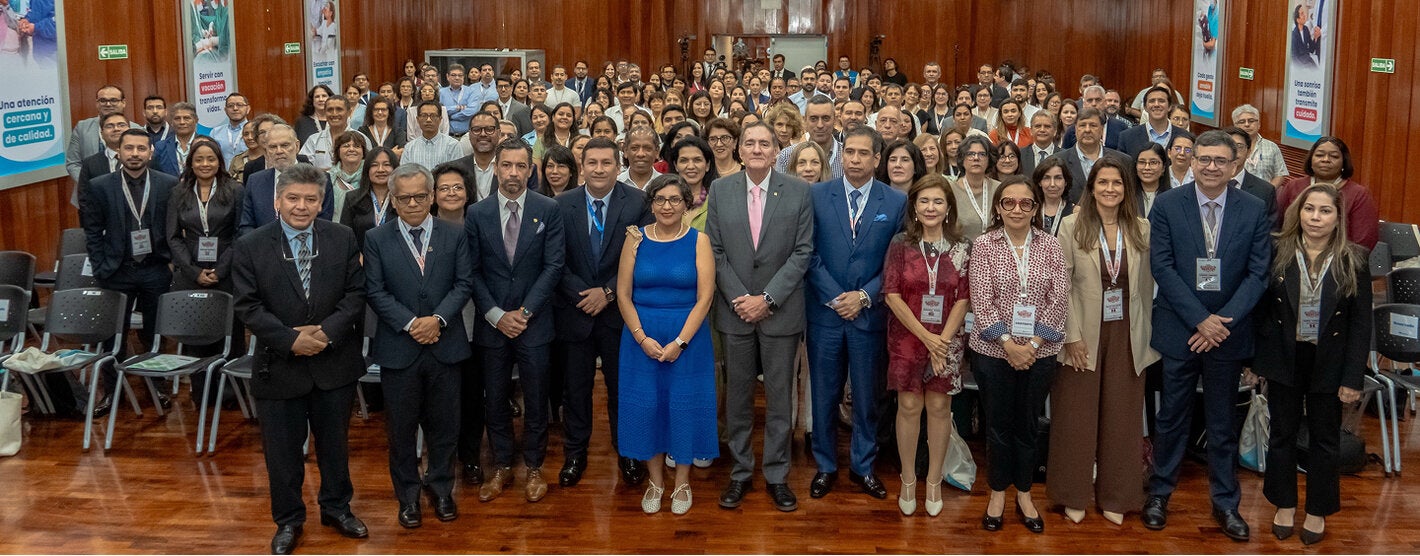
Lima, Perú, november 20, 2026.- More than 200 representatives from ministries of health, social security institutions, health technology assessment agencies, regulatory authorities, universities, and international organizations from 21 countries took part in the 17th Meeting of the Health Technology Assessment Network of the Americas (RedETSA) in Lima, Peru. The meeting commemorated the network’s 15th anniversary and reaffirmed its role as the leading regional platform for collaboration in promoting evidence-informed health decision-making.
Organized by the Health Technology Assessment Network of the Americas (RedETSA) together with Peru’s National Health Technology Assessment Network (RENETSA), the meeting brought together policymakers, health technology assessment (HTA) experts, researchers, and international partners to exchange experiences and discuss the challenges facing health systems amid the growing complexity of technological innovation and the need to ensure equitable and sustainable access to health technologies.
Established in 2011 with the support of the Pan American Health Organization (PAHO/WHO) as its Secretariat, RedETSA currently brings together 44 institutions from 21 countries and has contributed to strengthening the generation and use of evidence to support decision-making on health technologies across the Region. Over the past fifteen years, the network has promoted technical cooperation, knowledge exchange, and capacity building, consolidating its position as a regional and international reference in health technology assessment.
In his opening remarks, PAHO Director Jarbas Barbosa highlighted that the anniversary provides an opportunity to recognize the network’s achievements while looking ahead to the future of health technology assessment in the Americas: “Health systems continue to face pressure to respond to population needs with limited resources, while technological innovation advances at an unprecedented pace. HTA is a fundamental tool for coverage decision-making, supporting access to cost-effective technologies.”
He noted that health systems face increasingly complex challenges driven by the rapid evolution of digital technologies, artificial intelligence, and advanced therapies, making HTA even more relevant in guiding decisions that promote efficiency, equity, and the sustainability of health systems.
Under the theme “Celebrating 15 Years of Regional Collaboration in Health Technology Assessment”, the meeting focused on prioritization and value frameworks in HTA, tools considered essential for supporting transparent, consistent, and country-tailored decision-making. Scientific sessions included panels and discussions on health technology prioritization, value frameworks, collaboration between regulatory agencies and HTA bodies, medical device assessment, rare diseases, high-cost health technologies, the impact of HTA, judicialization, health system sustainability, and the application of artificial intelligence to health technology assessment.
In addition to the scientific sessions, RedETSA member institutions held working meetings to review ongoing initiatives and define the network’s strategic priorities for the coming years. The event concluded with capacity-building workshops on HTA prioritization, the use of artificial intelligence in systematic reviews, and the assessment of technologies for rare diseases.
At the close of the event, participants reaffirmed their commitment to strengthening health technology assessment as a strategic capacity for shaping health systems and contributing to their sustainability, improving the quality of health decision-making, and promoting equitable access to safe, effective, and cost-effective technologies. They also underscored the importance of continuing to strengthen the regional cooperation that has characterized RedETSA throughout its first fifteen years.