Kingston, Jamaica, September 23, 2026 (PAHO) – Every road traffic crash tells a story. For decades, those stories were captured through handwritten notes, paper reports, and lengthy data-entry processes. While these methods provided valuable information, they often delayed the availability of data needed to prevent future tragedies.
Jamaica is taking a major step forward.
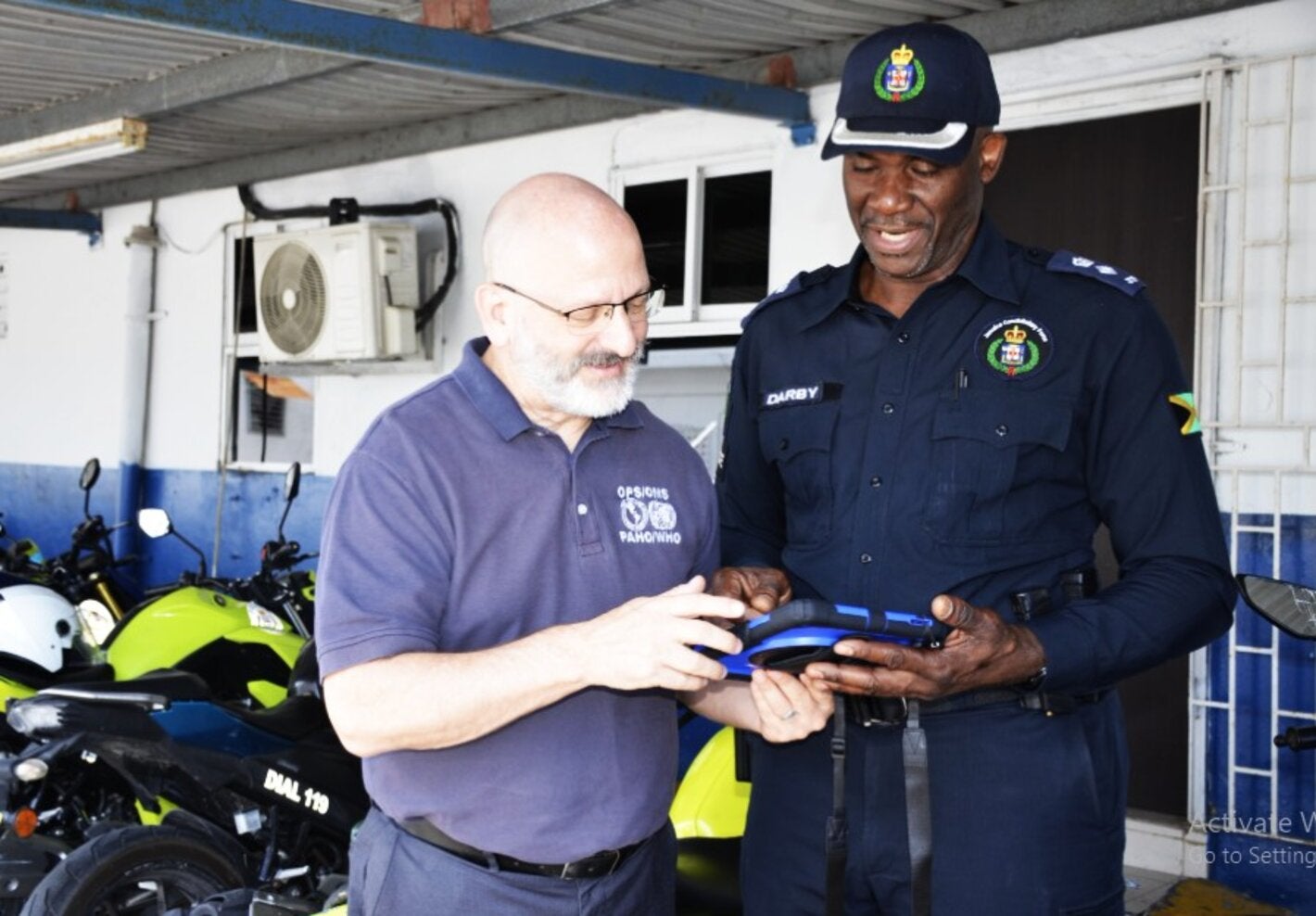
Through the support of the Pan American Health Organization/World Health Organization (PAHO/WHO), the United Nations Road Safety Fund (UNRSF), the National Road Safety Council (NRSC), the Island Traffic Authority (ITA), and the Jamaica Constabulary Force (JCF), the Public Safety and Traffic Enforcement Branch (PSTEB) is advancing the operationalization of a digital crash investigation system that is transforming how road traffic crashes are investigated, analysed, and used for decision-making. More than 200 police officers have been trained in the digital platform, and 115 tablets have been deployed to support electronic data collection in the field.
The latest milestone is the integration of the digital crash investigation tool with Jamaica's national road crash data management system, enabling information collected at crash scenes to flow more efficiently into a centralized platform for analysis and reporting. This integration strengthens the country's ability to identify high-risk locations, understand crash patterns, and support evidence-based interventions that can save lives.
For officers on the ground, the change is significant. Instead of relying solely on paper-based processes, investigators can now record crash details electronically at the scene, improving the quality, completeness, and timeliness of information. Digital data capture reduces delays associated with manual processing and allows stakeholders to access more reliable information for planning and action.
"Road traffic injuries remain a significant public health challenge, and reliable data are essential to preventing them," said Ian Stein, PAHO/WHO Representative for Jamaica, Bermuda and the Cayman Islands."This initiative is helping Jamaica build a stronger, more data-driven road safety system that can inform action and ultimately save lives."
The initiative forms part of the broader UNRSF-supported project,"A Safe Systems Approach for Safer Roads in Jamaica," which seeks to strengthen road safety management, improve road user behaviour, enhance enforcement, and support better post-crash care. PAHO/WHO has worked closely with national partners to support capacity building, equipment procurement, and the modernization of crash data systems as part of Jamaica's commitment to reducing road traffic deaths and injuries.
According to national stakeholders, accurate and timely crash data are critical for understanding why crashes occur and for designing interventions that protect road users. The digitalization of crash investigations represents a major shift from fragmented, paper-based processes to an integrated system capable of generating actionable information for road safety decision-makers.
"This new capability is transforming how we collect and use crash information," said Assistant Commissioner of Police Dr. Gary McKenzie, Head of the JCF Public Safety and Traffic Enforcement Branch." By improving the quality and speed of data collection, we are strengthening our ability to identify risks, target interventions, and work with our partners to make Jamaica's roads safer."
Beyond technology, the initiative reflects the power of partnership. The collaboration among the JCF, PSTEB, ITA, NRSC, PAHO/WHO, and the UNRSF demonstrates a shared commitment to protecting lives through innovation, evidence, and coordinated action. More than simply digitizing forms, the effort is helping to create a culture of data-driven road safety management, where information gathered at the scene of a crash can be transformed into insights that prevent future injuries and fatalities.
As Jamaica continues to strengthen its road safety systems, the operationalization of the digital crash investigation tool marks an important achievement. It is an investment not only in technology, but also in safer roads, stronger institutions, and the wellbeing of all Jamaicans.
Every crash investigated digitally is another step toward a safer Jamaica.