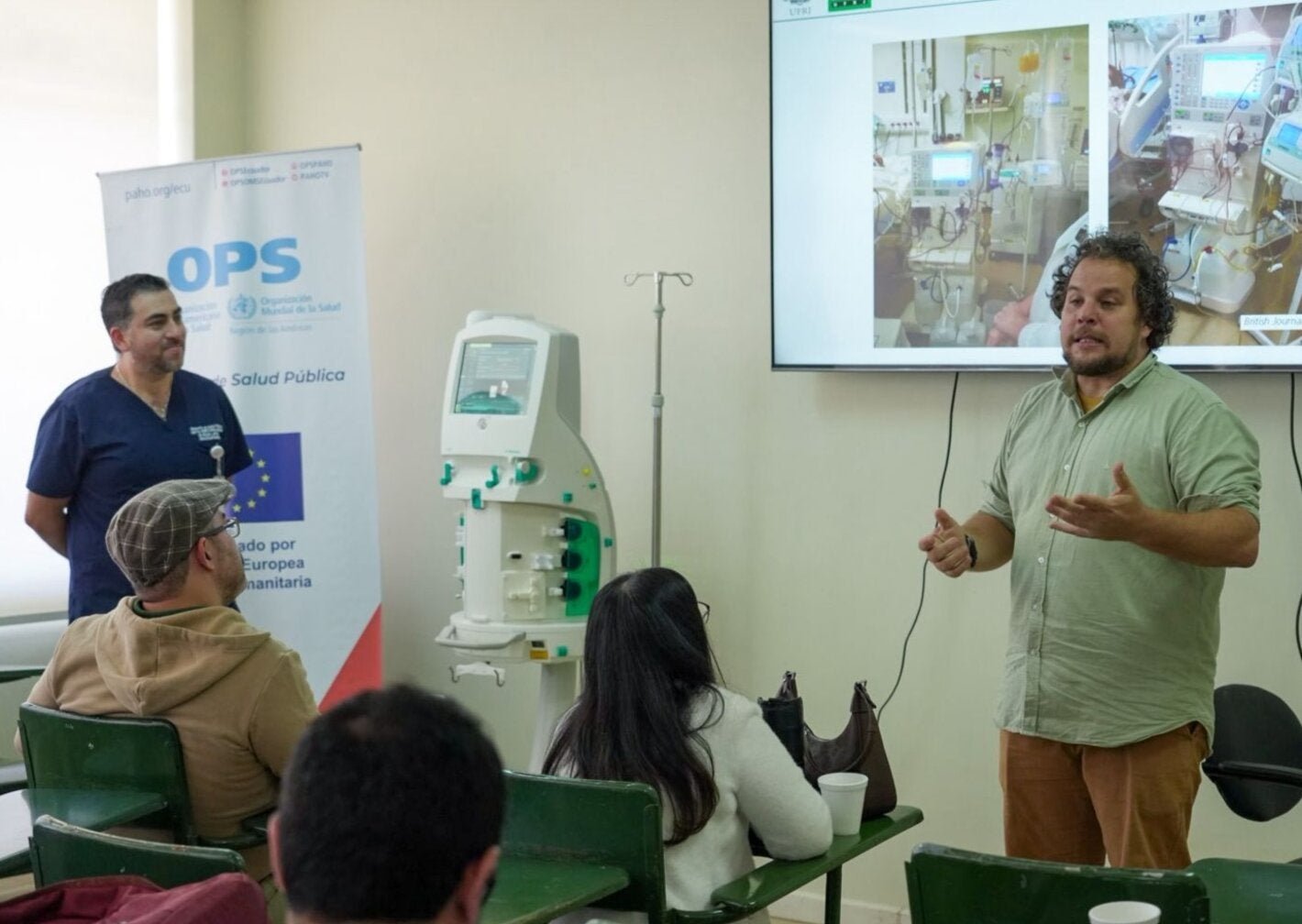
Quito, March 25, 2026 – A mission of national and international specialists traveled to Ecuador and visited referral hospitals in Quito, Guayaquil, and Cuenca to strengthen the technical knowledge of more than 500 health professionals on the clinical management of severe yellow fever cases.
The activities, funded by the European Union and aimed at intensive care unit teams, also engaged specialists from other areas such as laboratory services, with the goal of fostering multidisciplinary technical discussions.
During the first meeting held at the Eugenio Espejo Specialty Hospital in Quito, Sonia Quezada, Representative of the Pan American Health Organization / World Health Organization (PAHO/WHO) in Ecuador, reiterated that yellow fever remains a significant public health threat in the Americas.
“In recent years, the Region has experienced a resurgence of the disease, with outbreaks primarily affecting countries in South America. The high fatality rate, which can exceed 40% in severe cases, underscores the importance of having health systems prepared to respond in a timely manner,” said Dr. Quezada.
In Ecuador, although no locally acquired cases had been reported for several years, new cases linked to occupational activities in jungle areas were identified again in 2025.
Several cases and deaths were confirmed in this context, prompting intensified epidemiological surveillance, vector control measures, and vaccination efforts, which remain the main preventive measure.
At the same time, strengthening clinical care for severe cases is essential to reducing mortality. “Strengthening hospital capacities — including prepared intensive care units, trained clinical teams, clear protocols, and referral networks — is a key component of the health response,” emphasized the PAHO Representative in Ecuador.
These field activities, aimed at improving clinical care capacity to protect lives and strengthen health security, particularly in Amazonian populations, are being carried out in coordination with the Ministry of Public Health (MSP) and experts from PAHO/WHO’s regional and country offices, with support from European Union.