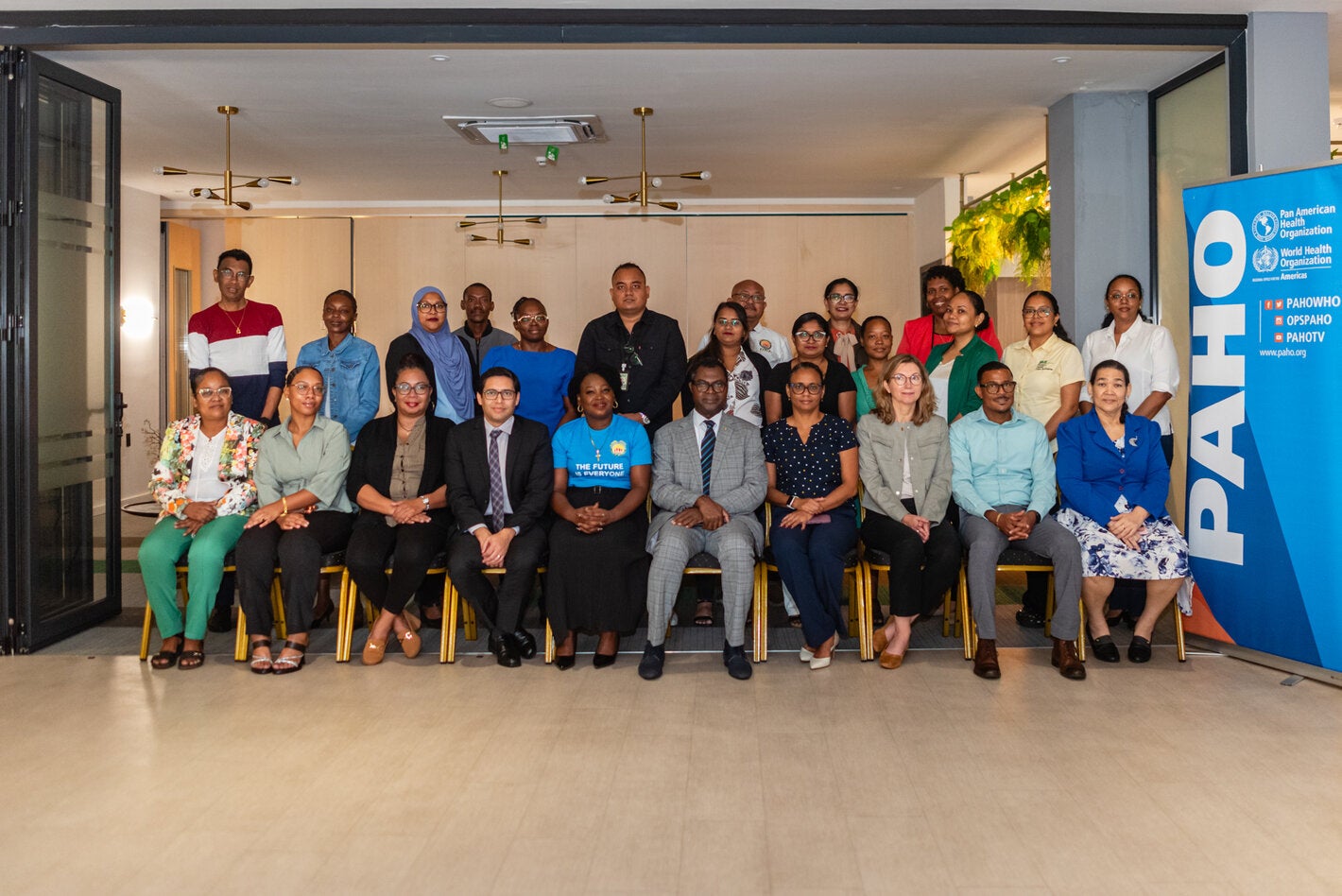
Paramaribo, Suriname, 19 November 2026 – The Ministry of Health, Welfare and Labour of Suriname, in collaboration with the Pan American Health Organization/World Health Organization (PAHO/WHO), convened a three-day technical workshop from 17 to 19 November to strengthen the production, quality, and use of national core health indicators, with particular emphasis on Civil Registration and Vital Statistics (CRVS) as an essential source of population health information.
The workshop brought together representatives from the Ministry of Health, Welfare and Labour, the Bureau of Public Health, Medical Mission Primary Health Care Suriname, the Regional Health Service Foundation, the Central Bureau for Civil Affairs, and the General Bureau of Statistics. The initiative aimed to enhance interinstitutional coordination and promote a systematic approach to producing reliable, timely, and comparable health indicators that support national health priorities and evidence-informed decision-making.
Civil registration and vital statistics systems provide essential data on births, deaths, and causes of death. Together with information from health services, surveillance systems, and other national sources, these data support the production of health indicators to monitor population health, identify inequalities, and inform public health policies.
During the workshop, participants examined how health data are collected, managed, validated, and transformed into indicators for decision-making. Through practical exercises, they mapped data flows and institutional responsibilities, reviewed indicator definitions and data requirements, and identified opportunities to improve data quality, standardization, and coordination among institutions involved in producing and using health information. Discussions also addressed the growing role of artificial intelligence in health and the importance of robust data systems and governance as foundations for AI readiness.
As a key outcome, participating institutions agreed to work toward establishing a national set of core health indicators aligned with Suriname's health priorities, while strengthening the coordination and processes needed for their routine production and use. With artificial intelligence becoming increasingly integrated into health systems, AI readiness requires data-ready systems built on reliable, complete, consistent, disaggregated, and well-governed health data.
The initiative contributes to Suriname's broader efforts to strengthen its national health information system and aligns with PAHO's regional work on core health indicators, CRVS, data governance, and Information Systems for Health (IS4H). PAHO/WHO will continue supporting national institutions in advancing this work to improve the availability and use of reliable health information for monitoring national priorities, informing policies, and improving population health.