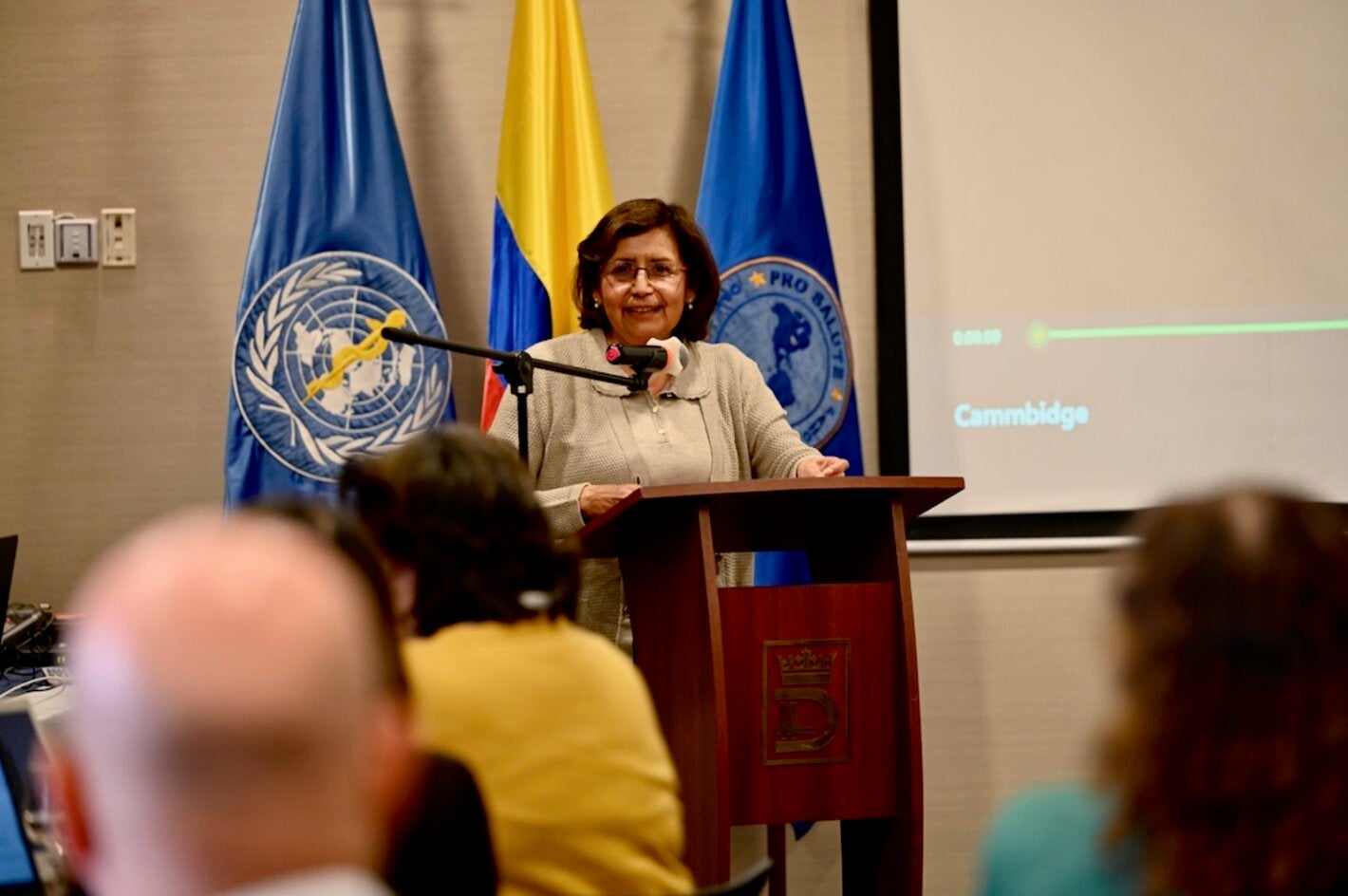
Bogotá. May 2026. The workshop of the PAHO Initiative “Better Care for Non-Communicable Diseases,” organized by the Ministry of Health and Social Protection and the Pan American Health Organization (PAHO/WHO), has concluded in Colombia. It served as a forum for reflecting on the challenges posed by chronic diseases to the health system, individuals, families, and communities.
Through this gathering, the aim was to strengthen strategic dialogue and technical cooperation between Colombia and PAHO/WHO in order to improve care for non-communicable diseases (NCDs)—with a particular emphasis on addressing them through Primary Health Care (PHC)—as well as to generate inputs for the development of Colombia’s Ten-Year Plan for NCD Management.
Regarding this workshop, Gina Tambini, PAHO/WHO Representative in Colombia, stated: “Addressing non-communicable diseases is an imperative of social justice, health system sustainability, and a commitment to people's well-being. In light of this reality, the technical cooperation provided by PAHO/WHO in Colombia has enabled the development of a broad portfolio of activities aligned with national priorities, with a focus on prevention and control, the reduction of risk factors, the strengthening of primary care, and the social determinants of health.”
The workshop also featured the participation of Dr. Anselm Hennis, Director of Non-Communicable Diseases and Mental Health at the PAHO/WHO Regional Office in Washington, D.C. Dr. Hennis highlighted the work currently being undertaken by Colombia to identify key gaps and needs regarding NCD care within the country—particularly with respect to addressing social determinants and risk factors, such as food labeling.
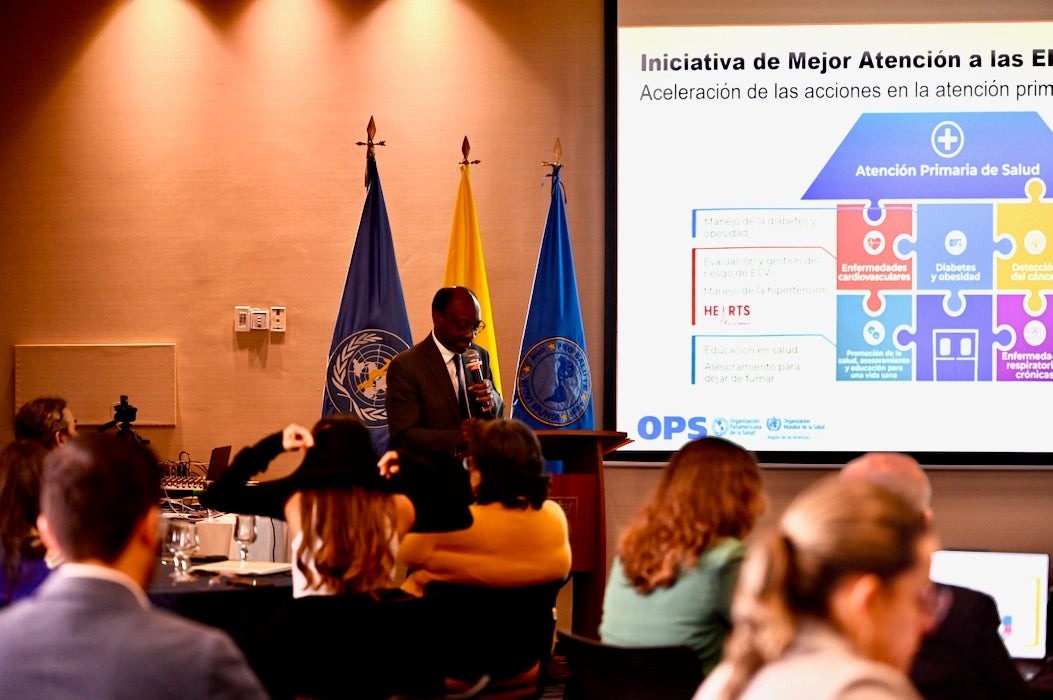
Cardiovascular diseases remain one of the leading causes of mortality in Colombia. Meanwhile, new cases of cancer in the country exceed 70,000 per year. Gatherings such as the one held today provide an opportunity to share experiences and best practices, as well as to establish roadmaps for national and regional collaboration to improve care for non-communicable diseases.