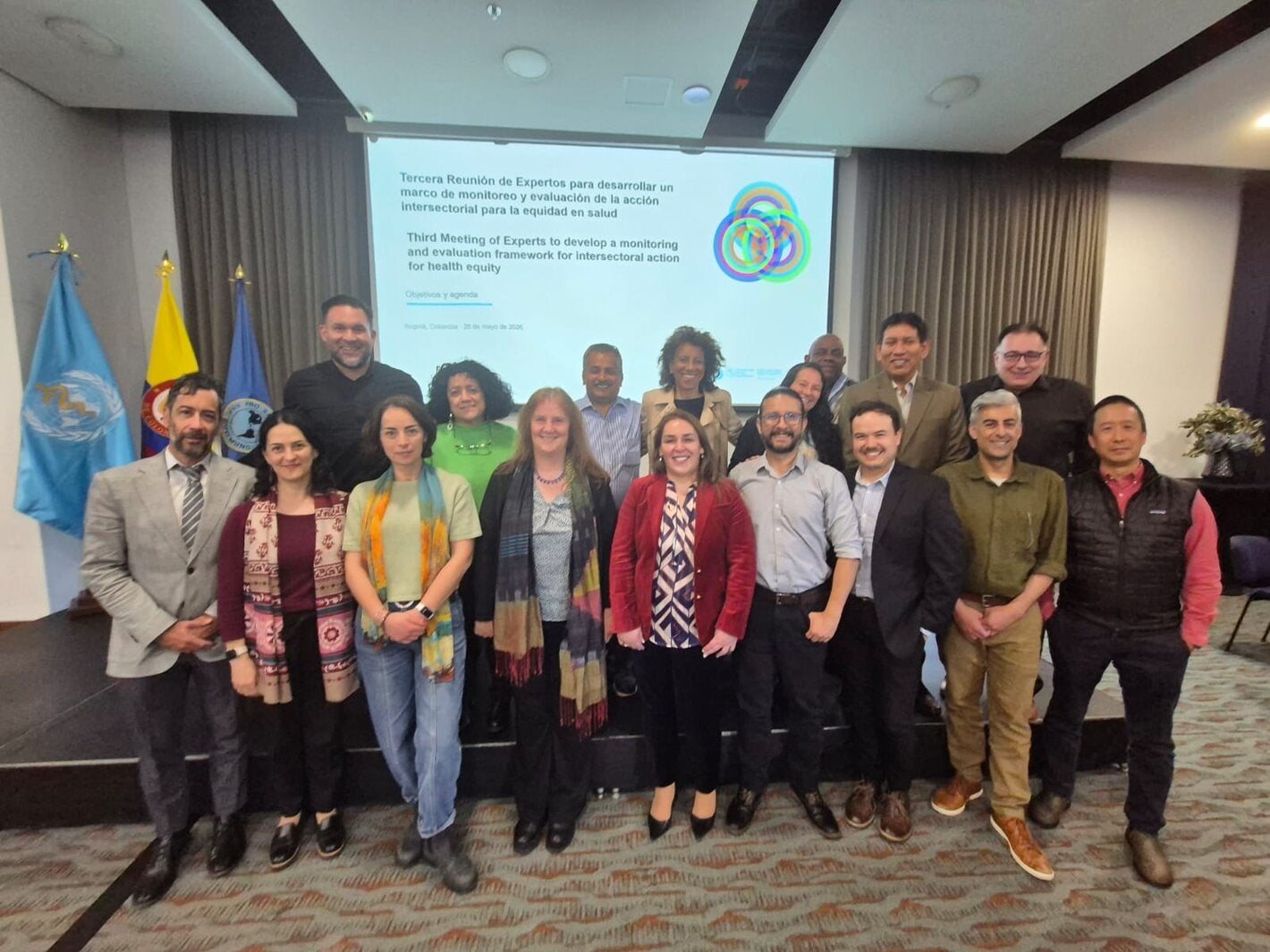
Experts on intersectoral action and Health in All Policies held a workshop in Bogotá
Bogotá, Colombia, 29 May 2026 ― The Pan American Health Organization (PAHO) concluded in Bogotá the third meeting of experts on monitoring and evaluation of intersectoral action, achieving key results such as the validation of a set of regional indicators, the planning of their piloting at different levels of government, and progress on the roadmap for a future framework to assess the impact of intersectoral action on equity in health and well-being.
One of the main achievements of the workshop was the agreement on indicators for each domain and dimension of the intersectoral monitoring framework. This consensus will provide a common basis for measuring progress in intersectoral actions across countries in the region, considering different administrative levels such as national, subnational, and local.
The piloting of the monitoring framework is planned for the second half of 2026 and will be implemented in various intersectoral action experiences across the region, allowing validation of the system’s practical usefulness in real-world contexts.
To facilitate its application, the development of a digital dashboard is planned, where teams will be able to record and analyze their results, thereby strengthening evidence generation for decision-making.
This meeting marked the starting point for developing the roadmap for an intersectorality evaluation framework, complementary to the monitoring system. Around 15 experts from about ten countries participated in the meeting, contributing their experience to consolidate this regional effort led by PAHO.
The organization of this workshop in Bogotá reflects the efforts led by PAHO and WHO, with support from the Swiss Agency for Development and Cooperation (SDC) and the Public Health Agency of Canada (PHAC), to develop tools, strategies, methodologies, and capacities in Member States for the monitoring and evaluation of intersectoral actions and Health in All Policies (HiAP) aimed at promoting health equity.
The development of an analytical framework for monitoring and evaluating intersectorality and Health in All Policies is preceded by initiatives such as the Plan of Action on Health in All Policies 2014–2019 (PAHO, 2017), the Special Initiative on Social Determinants for Health Equity, the Urban Governance for Health and Well-being Initiative, and the Intersectoral Work and Social Participation Network for Health Equity in the Americas (TIPSESA), in which PAHO/WHO serves as the technical secretariat.