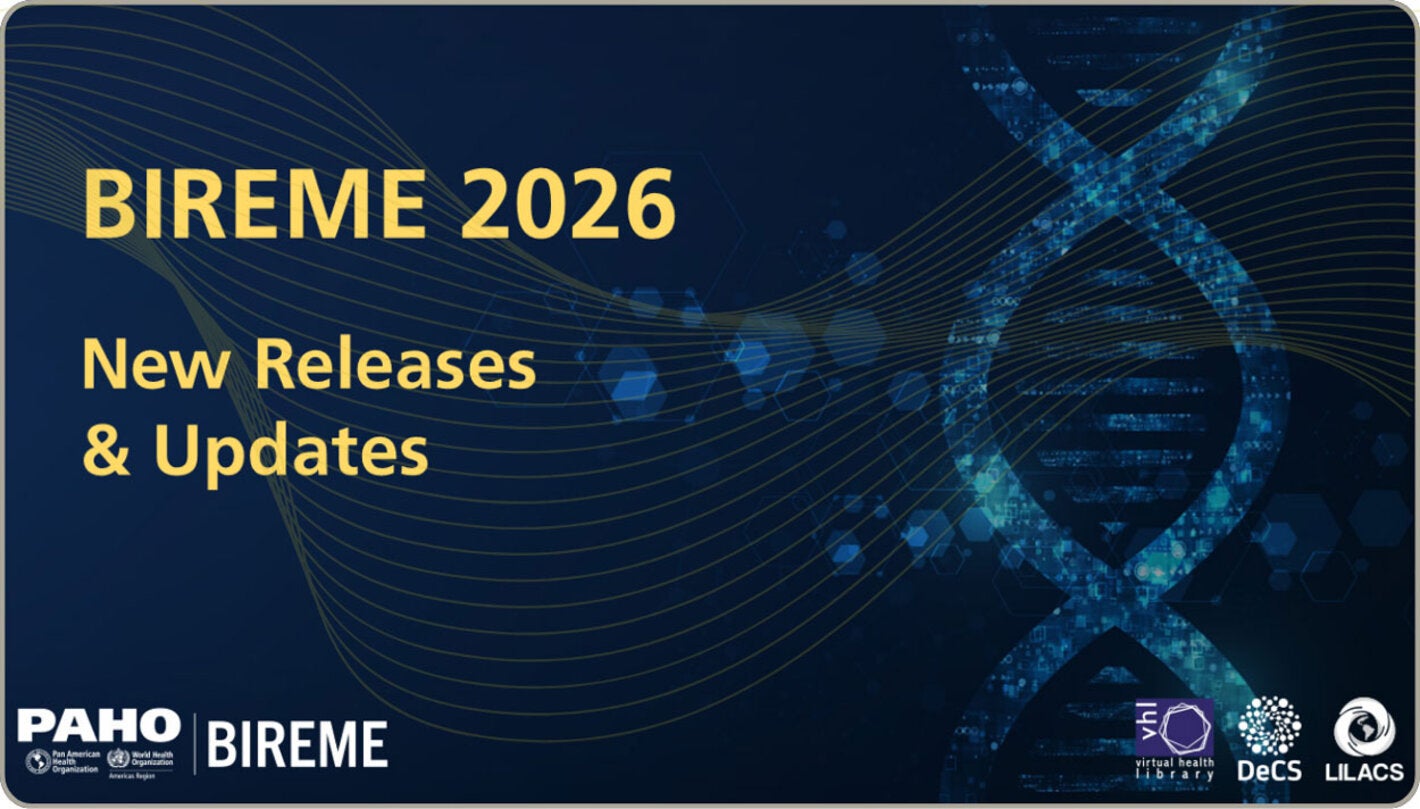
The series “BIREME 2026: New Releases and Updates” has been establishing a regular platform to present BIREME’s products, services, innovations, and technical cooperation outcomes, as well as to foster exchange with professionals, partner institutions, and cooperation networks in the Region of the Americas. Between March and June, the first five webinars attracted a total of 1,481 registrations and 759 unique participants, including managers, information professionals, researchers, librarians, and other audiences interested in health information and knowledge management.
For João Paulo Souza, Director of BIREME, these meetings provide an opportunity to share results and, at the same time, look ahead to the upcoming challenges and opportunities in technical cooperation. “It’s an important moment to share milestones and progress, learn about concrete experiences, and, perhaps, inspire our colleagues in different countries to explore similar opportunities for collaboration. It is an opportunity not only to celebrate but also to plan the next steps in our regional cooperation,” he emphasized.
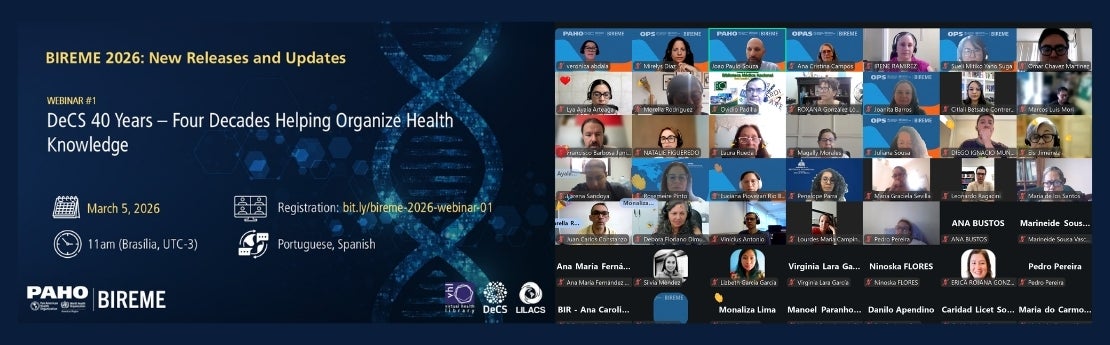
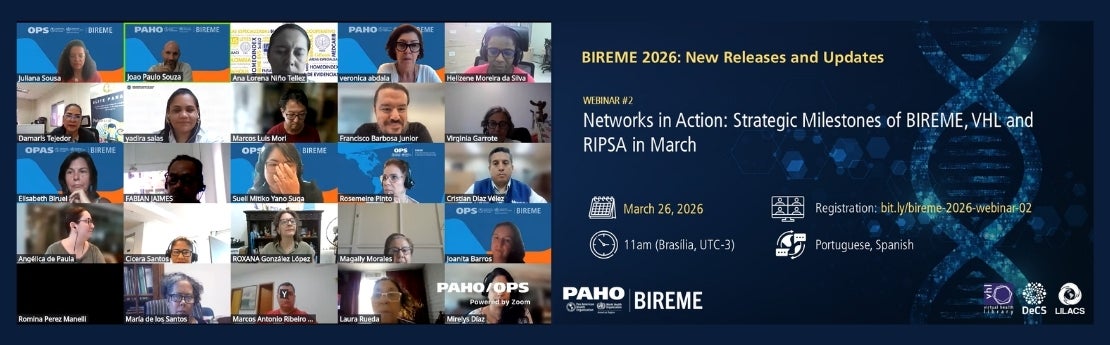
Launched in March, the program addressed topics reflecting the Center’s various areas of activity. The first session celebrated the 40th anniversary of DeCS — Health Sciences Descriptors — highlighting the evolution of terminology and perspectives on knowledge organization. Also in March, a second session highlighted BIREME’s strategic milestones, celebrating the Center’s 59th anniversary, as well as the 28th anniversary of the Virtual Health Library (VHL) and the 30th anniversary of the Interagency Health Information Network (RIPSA). The program also featured Ana Lorena Niño Tellez, who presented the experience of the VHL in Colombia and the work carried out in the country to strengthen the VHL Network.
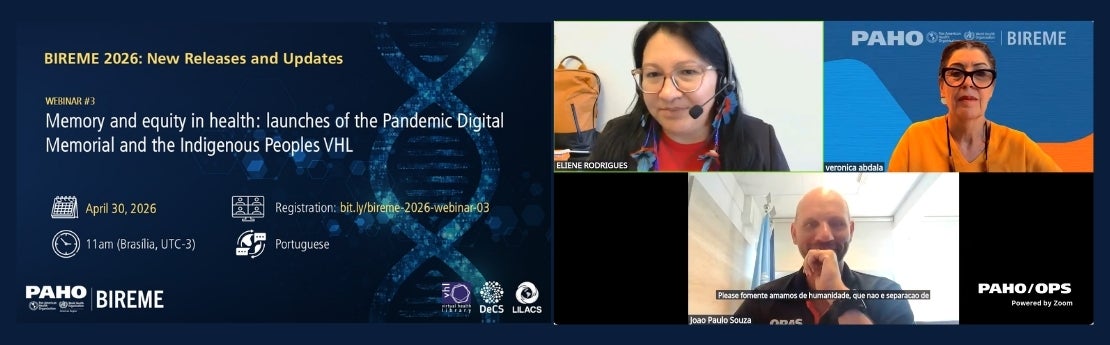
In April, the program presented two initiatives focused on remembrance and health equity: the Digital Memorial to the COVID-19 Pandemic and the Virtual Library on Indigenous Peoples’ Health. External guests included Ian Marino, from the Center for Digital Humanities at the Universidade Estadual de Campinas (CHD/Unicamp), and Eliene Rodrigues Putira Sacuena, from the Secretariat of Indigenous Health (SESAI) of Brazil’s Ministry of Health, who commented, respectively, on the initiatives presented. The session’s agenda was structured to feature project presentations by BIREME followed by contributions from partner institutions.
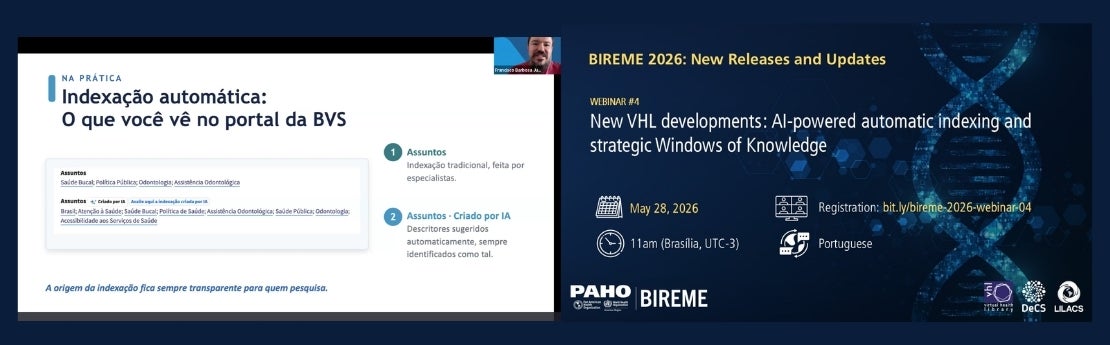
The following month, the focus was on new developments in the VHL, including automatic indexing supported by artificial intelligence. The session also featured the Windows of Knowledge “HEARTS on Health in the Americas” and “Climate Change and Health,” both designed to organize and facilitate access to selected content on strategic topics. The presentations were complemented by comments from Mariana Lizbeth Rodríguez de la Cerda, International Consultant on Noncommunicable Diseases and Mental Health at PAHO/WHO, on HEARTS in the Americas, and from Eduardo Kaplan Barbosa, Director of the Department of Health Economics and Investments (DESID/SE/MS), on the Window of Knowledge Climate Change and Health.
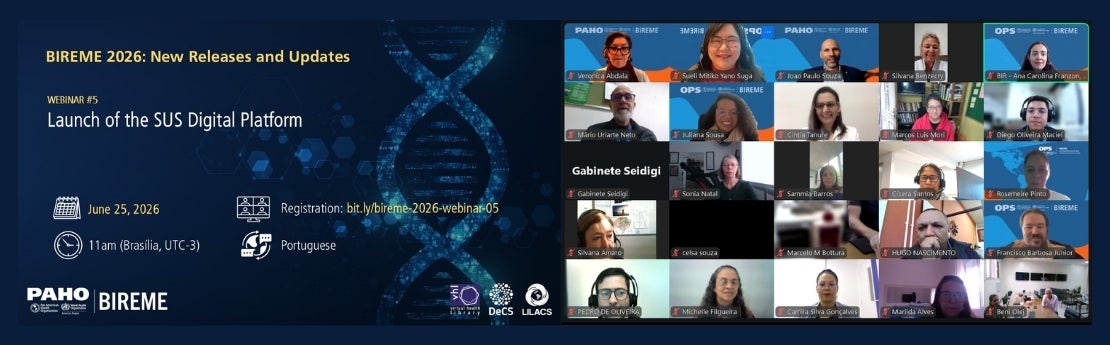
The first cycle of the program concluded in June with a session dedicated to the launch of the SUS Digital Platform, developed as part of a collaboration between BIREME, PAHO, and Brazil’s Ministry of Health, through the Secretariat of Information and Digital Health (SEIDIGI). The session also presented initiatives integrated into the platform, such as the Formative Second Opinion (SOF) and Decision Aids, aimed at providing access to information and supporting decision-making within Brazil’s Unified Health System (SUS). Ana Estela Haddad, then Secretary of Information and Digital Health, participated as a guest speaker, commenting on the SUS Digital Platform and the collaboration with BIREME.
Participation data shows growing interest in the topics presented. The first five sessions recorded an average of 296 registrations and 151 unique participants per session. Of the total 1,481 registrations received between March and June, 861 (58.1%) came from Brazil, while also highlighting participation from audiences in other countries and territories.
The program resumed in August with the webinar “New Frontiers in Information Management: Artificial Intelligence and Data Analysis,” which gathered 347 registrations and 181 unique participants. The session showcased applications of artificial intelligence in BIREME’s products and services, as well as a dashboard for bibliometric analysis of scientific output in Traditional, Complementary, and Integrative Medicine (TCIM), developed in collaboration with the World Health Organization (WHO) for the WHO Traditional Medicine Global Library (WHO TMGL). As a guest expert, Nancy Sánchez-Tarragó, an adjunct professor at the Universidade Federal do Rio Grande do Norte, commented on the developments presented and shared reflections on the challenges of representing traditional knowledge and the asymmetries in global scientific output.
The participation of partner institutions, experts, and members of health information networks throughout the various editions reinforces a dimension that, according to João Paulo Souza, lies at the heart of BIREME’s work. “Our greatest value lies precisely in the cooperative network of institutions and professionals who actively collaborate in the development and sustainability of information and knowledge management systems,” emphasized the director.
Published monthly, the series is part of BIREME’s communication and outreach efforts to increase awareness of the results of technical cooperation, share new developments, and foster dialogue with networks and communities working in the field of health information and knowledge. The sessions are free of charge, and certificates of participation are issued; recordings are available on BIREME’s official playlist on PAHOTV.
Article originally published in the BIREME Bulletin No. 113. Subscribe to receive it.