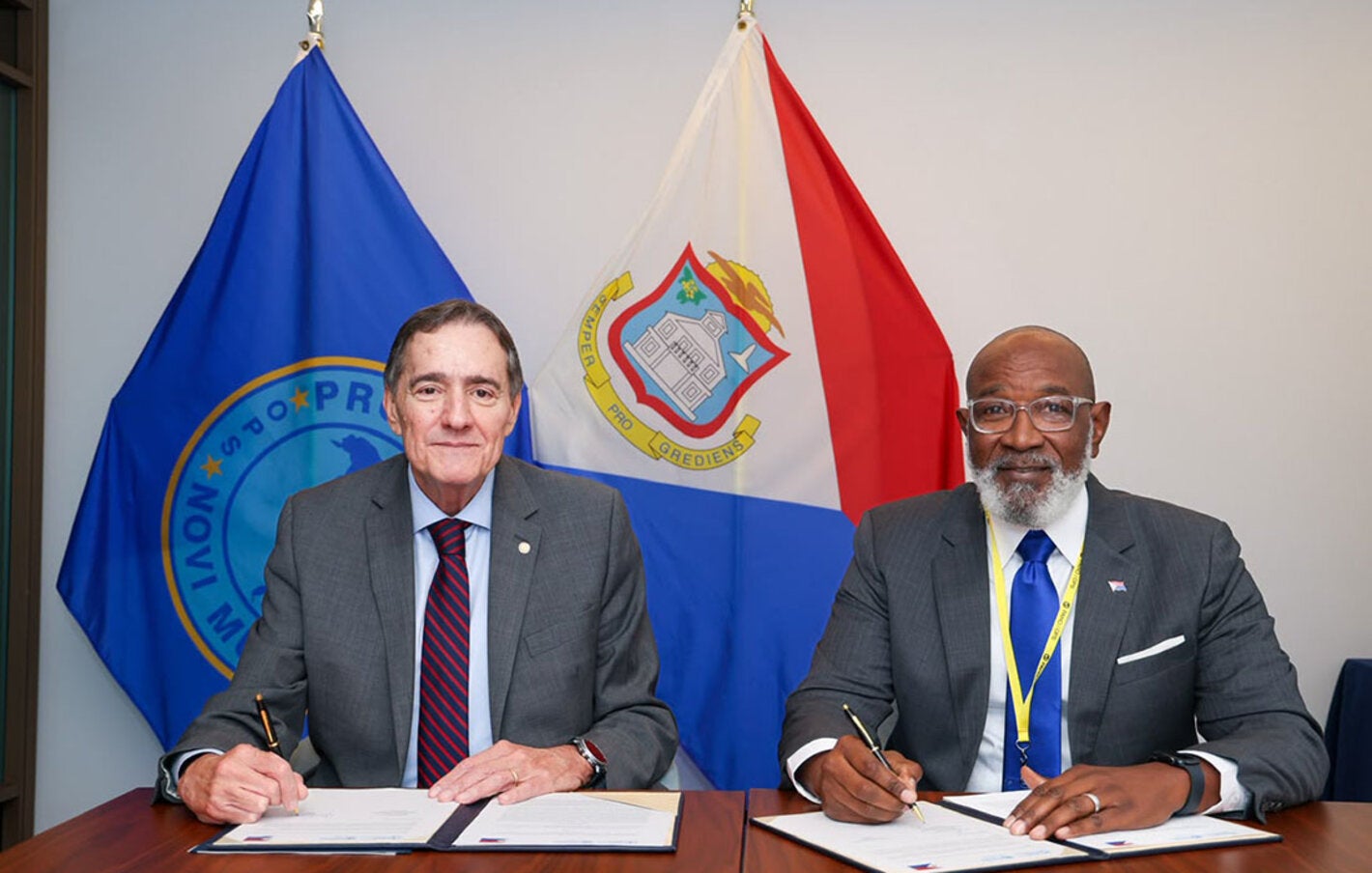
Washington, D.C., 29 September 2026 (PAHO) – The Pan American Health Organization/World Health Organization (PAHO/WHO) and the Government of Sint Maarten today signed the 2026–2031 Country Cooperation Strategy (CCS), establishing a six-year framework to guide cooperation to strengthen the country’s health system and improve the health and well-being of its population.
The agreement was signed by PAHO Director Dr. Jarbas Barbosa and Claret M.M. Connor, Minister of Public Health, Social Development and Labor of Sint Maarten, on the sidelines of the 63rd Directing Council of PAHO in Washington, D.C.
“The Country Cooperation Strategy provides a clear framework for PAHO/WHO to work with Sint Maarten to strengthen national capacities and advance the country’s health priorities,” said Dr. Barbosa. “Our cooperation will focus on supporting people-centered health services, preventing and managing noncommunicable diseases and mental health conditions, and strengthening disease surveillance and preparedness.”
The CCS aligns PAHO/WHO’s technical cooperation with Sint Maarten’s national health priorities and the Ministry of Public Health, Social Development and Labor’s National Health Strategy. It is also aligned with PAHO’s Strategic Plan 2026–2031, and the health-related Sustainable Development Goals (SDGs).
The strategy focuses on three strategic priorities:
- Strengthening people-centered health care across the life course, including digital transformation, health promotion, Health in All Policies, and capacities for disaster preparedness and response.
- Reducing the burden of noncommunicable diseases and mental health conditions, through prevention, early detection, improved management and strengthened community mental health services.
- Strengthening disease surveillance to support the elimination and sustained control of communicable diseases, including through improved data sharing and multisectoral partnerships.
The CCS, the second Country Cooperation Strategy between PAHO/WHO and Sint Maarten, was developed through a participatory process involving national stakeholders and the Organization. Its implementation will take place through biennial workplans over the six-year period, subject to the availability of funds.