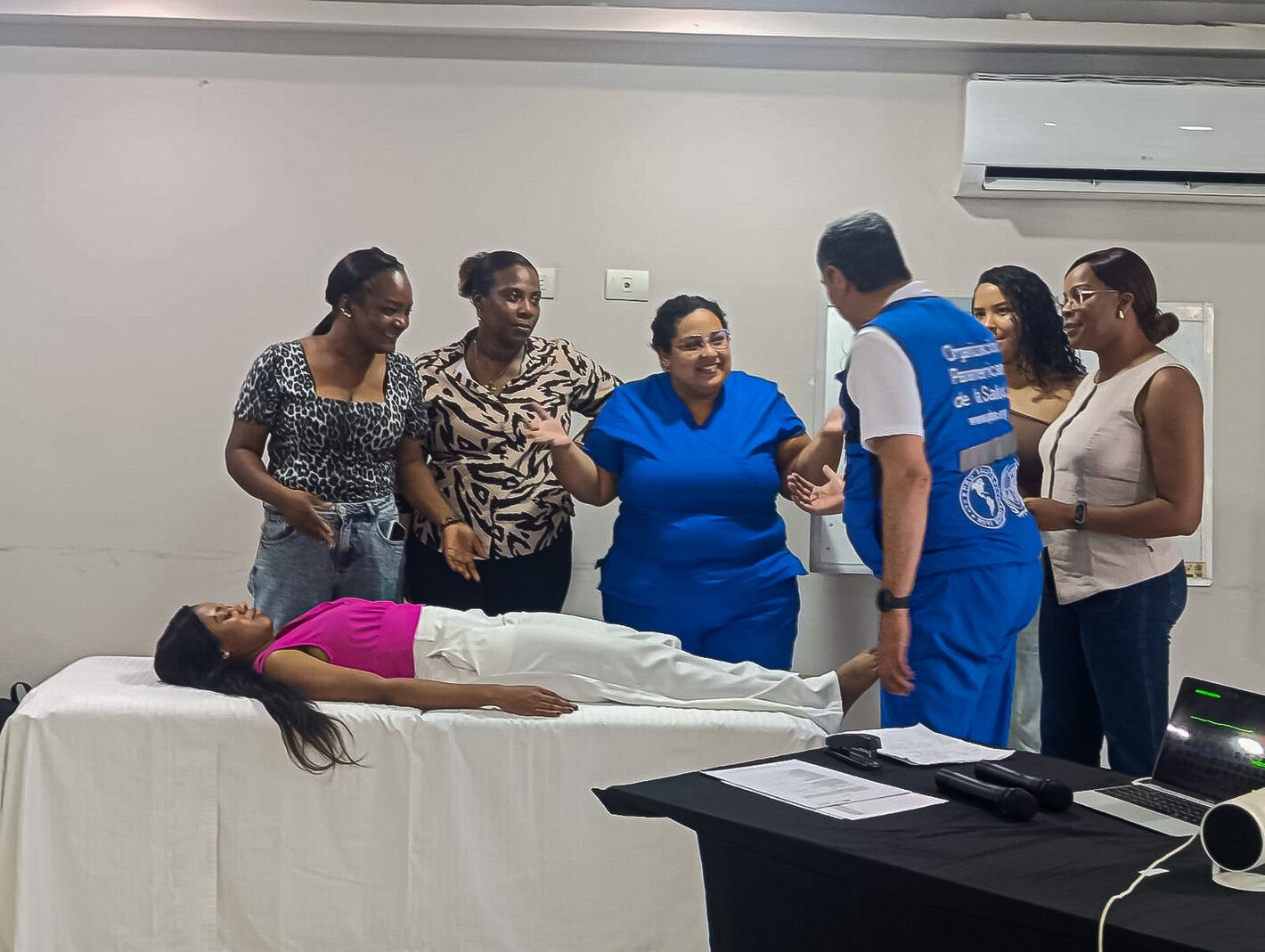
Bogotá, Colombia, July 2026 (PAHO) – Health professionals, traditional midwives, and community health workers from across Colombia's Chocó department gathered in Quibdó for training and the distribution of essential medical supplies to support maternal and child health care in remote and hard-to-reach communities. The initiative, supported by the Pan American Health Organization (PAHO) with funding from the Colombia Humanitarian Fund (CHF), aims to benefit 195 pregnant women and 960 children under five.
The activity focused on improving the response to obstetric emergencies and supporting maternal and newborn care, nutrition services, and access to primary health care in communities where geographic barriers make timely medical attention difficult.
Participants received technical guidance on obstetric emergencies, maternal and perinatal care, and nutrition, with an emphasis on coordinating care between health professionals and community-based providers.
As part of the intervention, maternal and child health care kits were distributed to support essential care in communities located far from municipal centers. Each kit included supplies such as mid-upper arm circumference measuring tapes, fingertip pulse oximeters, digital thermometers, automatic blood pressure monitors, and backpacks.
The activity was conducted in coordination with Colombia's Ministry of Health and Social Protection, the Chocó Departmental Health Secretariat, and PAHO national consultants, bringing together institutional and community-based health workers involved in delivering care to vulnerable populations.
This was the first activity under the Nutrition and Maternal and Child Health component of the project “Life-Saving Health Response to Outbreaks of Emerging and Reemerging Diseases, Violence, and Climate-Related Emergencies in Colombia,” implemented by PAHO with funding from the Colombia Humanitarian Fund (CHF).
Through the provision of essential medical supplies and technical guidance, the initiative seeks to support timely maternal and child health care, including the management of obstetric emergencies, in remote communities where access to health services remains a challenge.