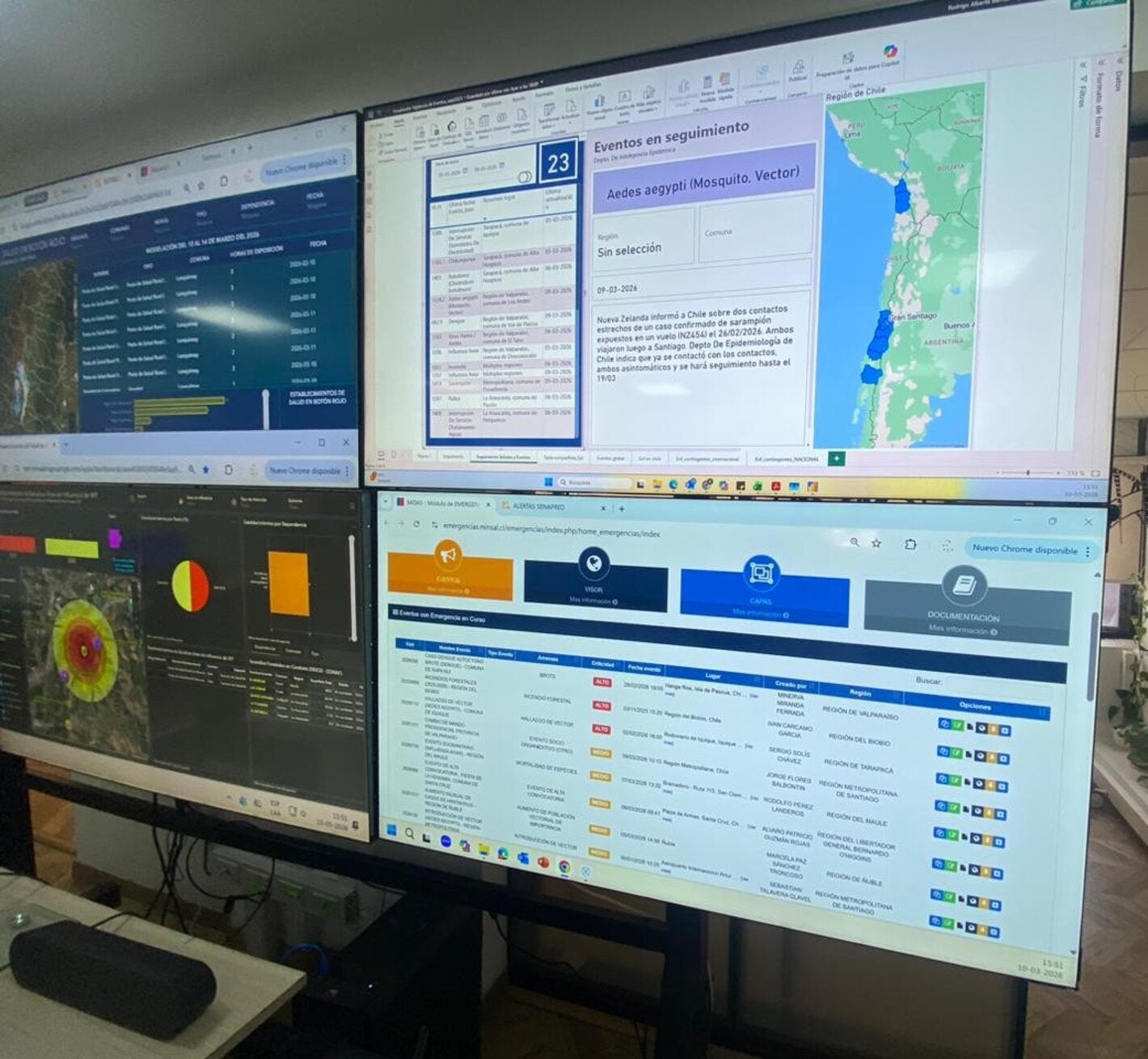
Santiago, Chile, October 30, 2026 (PAHO/WHO) – Representatives from Bolivia, Brazil, Colombia, Ecuador, and Paraguay shared experiences and lessons learned in community-based event surveillance during two exchange sessions organized by Chile's Ministry of Health, through its Health Emergencies Division, in collaboration with the Pan American Health Organization (PAHO). The sessions were held on October 21 and 28, 2026, as part of the Pandemic Response Optimization Through Engaged Communities and Territories (PROTECT) project, financed by the Pandemic Fund.
Communities play a critical role in the early detection of public health threats. Their participation helps identify and report unusual events that may signal potential health risks. This approach complements traditional epidemiological surveillance by connecting communities with health services and public health authorities to verify signals and support timely action.
During the first session, held on October 21, Paraguay presented governance mechanisms and community reporting tools that are essential to implementing and sustaining community-based event surveillance.
Brazil shared the experience of Amazonas state in the education sector, highlighting the contribution of school communities to the early identification of potential public health threats.
Colombia presented the activation of community-based surveillance networks during the response to the earthquake that struck San José del Palmar, Chocó, on August 10. The experience demonstrated the value of these networks in detecting and reporting public health events during emergencies and disasters.
During the second session, held on October 28, Bolivia shared progress in institutionalizing community-based surveillance through participatory management processes, social accountability mechanisms, and its integration into national epidemiological surveillance guidelines.
Finally, Ecuador presented its experience implementing community-based event surveillance in Indigenous communities, emphasizing the importance of adapting approaches to local sociocultural contexts and promoting meaningful community participation.
The activity forms part of PAHO's technical cooperation efforts to strengthen national capacities for epidemic intelligence and early warning while supporting the integration of community-based surveillance into public health surveillance systems.
The experiences shared provide practical tools and approaches that can be adapted to different national and local contexts, helping countries build early warning systems that are more inclusive, responsive, and effective in detecting public health threats.