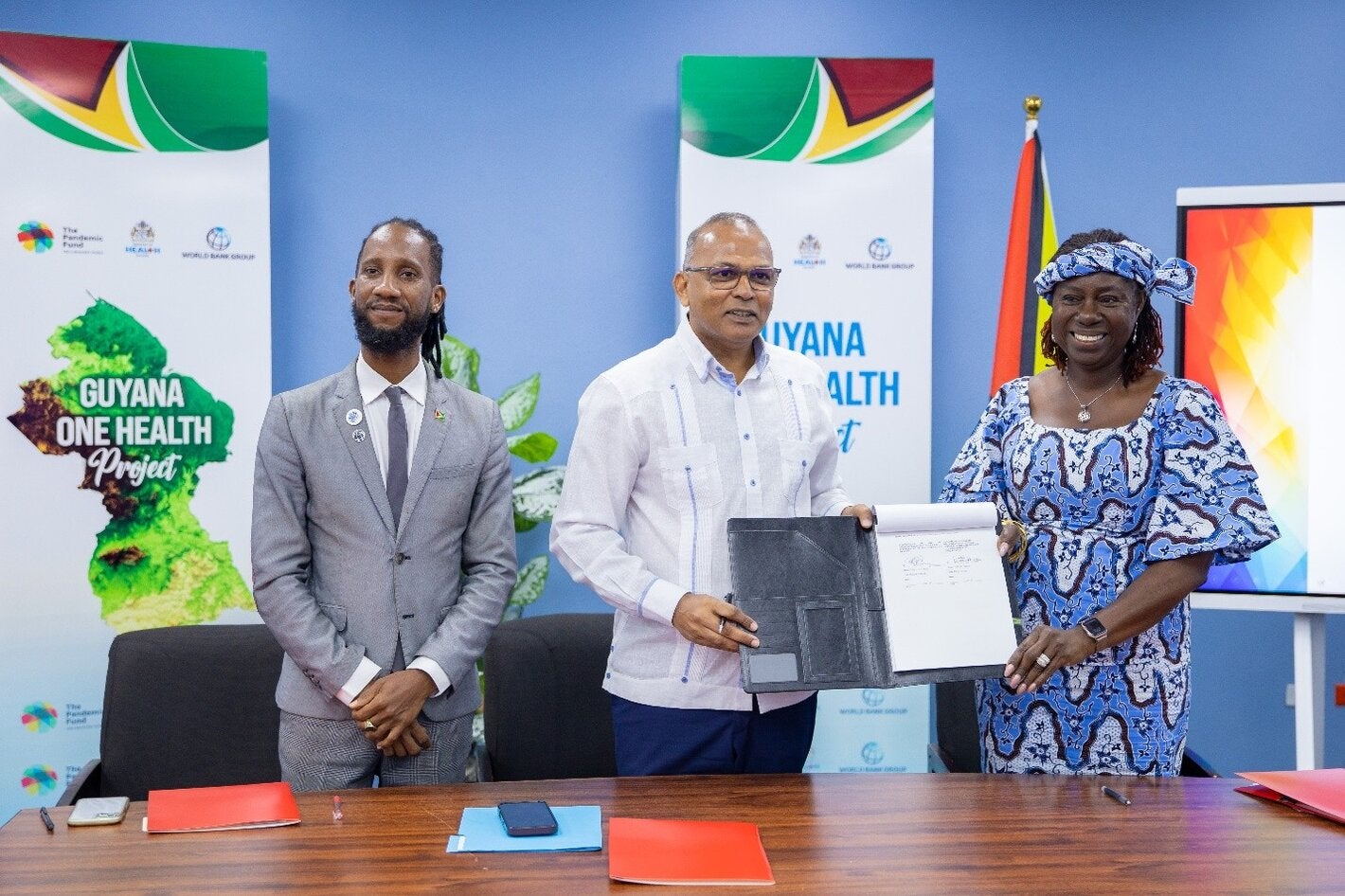
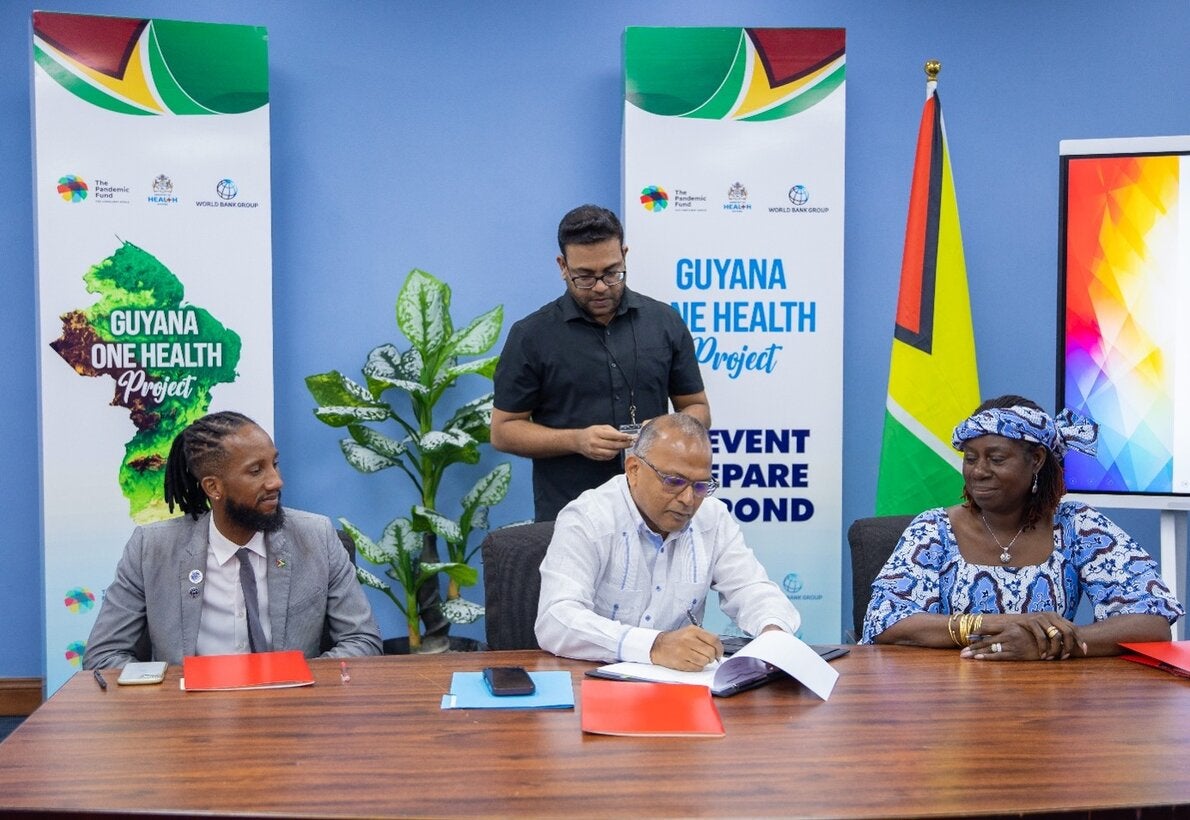
Georgetown, Guyana, 7 August 2026- Guyana has taken a significant step toward strengthening national and regional health security with the signing of a landmark project agreement under the Pandemic Fund, reinforcing the country's commitment to the One Health approach. Led by the Ministry of Health, with support from the Pan American Health Organization/World Health Organization (PAHO/WHO), the World Bank, and key partners, the initiative will enhance Guyana's capacity to prevent, detect, and respond to public health threats while addressing challenges related to zoonotic diseases, antimicrobial resistance, food safety, and environmental health.
The US$1,785,292 agreement for the implementation and delivery of outputs under the Guyana One Health Project through 2028 signals not only a commitment to preparedness, but also a vision for a healthier, safer, and more sustainable future for all Guyanese
This investment comes at a critical time, as countries around the world continue to prioritize preparedness and resilience in the aftermath of the COVID-19 pandemic.
The programme builds on years of strategic planning and technical collaboration. In 2023, Guyana conducted its first Voluntary External Evaluation (VEE) of International Health Regulations (IHR) capacities based on the State Party Self-Assessment Annual Reporting (SPAR) tool, which informed the development of the National Action Plan for Health Security. The Pandemic Fund proposal emerged from this evidence-based process, demonstrating Guyana's readiness to implement sustainable, long-term solutions that strengthen surveillance systems, laboratory services, field epidemiology, public health emergency management, infection prevention and control, and risk communication.
These investments will provide lasting benefits that extend beyond emergency response, contributing to stronger health systems and improved health outcomes for communities throughout the country.
Recent visits to hinterland regions have highlighted the remarkable work already being carried out by health workers and community partners. From expanding access to essential health services to improving multisectoral coordination, Guyana is building a foundation that supports both national development and public health resilience. However, additional support from donors and development partners will be critical to expanding these efforts, particularly in vulnerable and remote communities where health threats can have disproportionate impacts.
Strategic investments today will help protect lives, safeguard livelihoods, and strengthen preparedness for future emergencies.
As implementation begins, the initiative presents a valuable opportunity for donors to support a nationally led programme with clear objectives, strong partnerships, and measurable outcomes. By investing in Guyana's One Health agenda, partners can contribute to a model of integrated health security that advances disease prevention, promotes equity, and strengthens resilience across the human, animal, and environmental health sectors.
“This investment is about more than responding to the next outbreak—it is about building resilient systems that protect people, communities, and future generations. Through the One Health approach, Guyana is creating a stronger foundation for health security, and together with our partners, we are committed to delivering lasting impact for the country and the Region.”
— Dr. Kim Eva Dickson, PAHO/WHO Representative to Guyana
Speaking at the signing ceremony, World Bank Country Officer Herbert highlighted the importance of the Guyana One Health Project as a landmark initiative for both Guyana and the wider Caribbean region. He noted that the project will strengthen collaboration across sectors, enhance preparedness for future health threats, and deliver tangible benefits to communities nationwide while contributing to long-term health security and sustainable development.
“The Guyana One Health Project reflects the country’s leadership in recognizing that human, animal, and environmental health are deeply interconnected. By strengthening preparedness, coordination, and resilience, we are investing in a healthier and more secure future for all Guyanese.”
— Hurbert Forrester, Country Officer, World Bank
Reflecting on lessons learned from the COVID-19 pandemic, Hon. Dr. Frank Anthony, Minister of Health, emphasized that Guyana's One Health Project is a strategic investment in the country's future resilience. Guided by findings from the Voluntary External Evaluation, the Government secured approximately US$22 million through the Pandemic Fund and World Bank support to strengthen laboratory systems, disease surveillance, sample transport, data management, and emergency response capacity.
The Minister noted that pandemics are not a matter of if but when, making it essential to establish robust systems now that can rapidly detect, diagnose, and contain future threats before they escalate into national, regional, or global crises.
“You don't have to wait until there's a problem to go build a system. You have to build a system in anticipation of problems.”
— Hon. Dr. Frank Anthony, Minister of Health
The Minister further underscored that effective pandemic preparedness cannot be achieved by the health sector alone. Through the One Health approach, Guyana is fostering collaboration among the Ministries of Health and Agriculture, environmental and wildlife agencies, international partners, and technical experts to monitor and respond to risks at the human-animal-environment interface.
He emphasized that real-time data sharing, continuous training, and knowledge transfer are essential to building a responsive national network capable of identifying zoonotic diseases early and protecting communities. By working together, stakeholders can create a stronger, more resilient system that safeguards public health while addressing the growing challenges posed by environmental change and emerging infectious diseases.
Through this landmark partnership, Guyana is strengthening its preparedness for future health threats while advancing a comprehensive, integrated approach to health security that will benefit current and future generations.
Together with national authorities, development partners, and communities, PAHO/WHO is dedicated to helping Guyana realize a future where stronger systems, informed decision-making, and coordinated action protect lives, safeguard livelihoods, and leave no one behind. Through this partnership, Guyana is not only preparing for future emergencies—it is creating the foundation for a healthier, safer, and more resilient nation for generations to come.