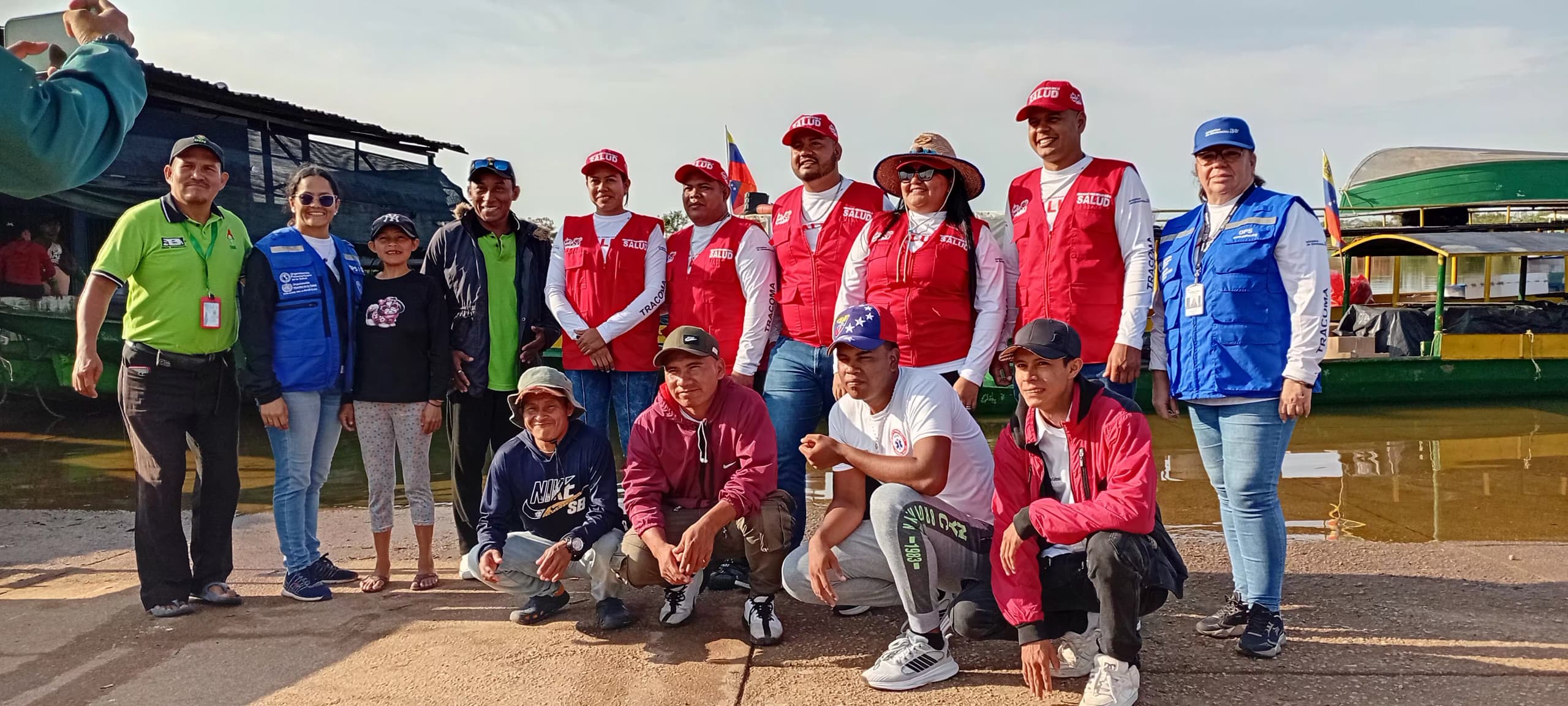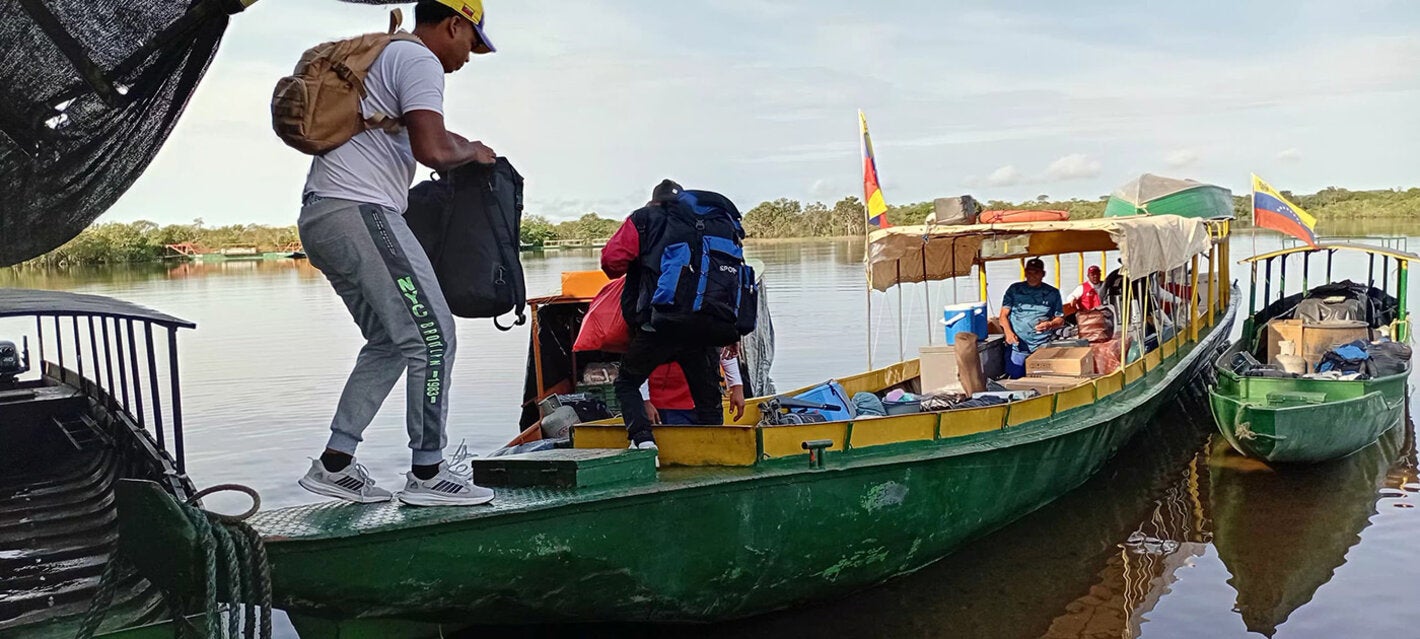
Caracas, 9 September 2025 (PAHO/WHO).- A team of 14 health workers from the Ministry of Popular Power for Health (MPPS) set sail on 9 September from Puerto Samariapo in the Autana municipality of the State of Amazonas. The team were heading to the Alto Orinoco municipality to provide comprehensive health services to 14 Yanomami groups as part of the Initiative for the Elimination of Trachoma in the Americas, a partnership between the Pan American Health Organization (PAHO) and the Government of Canada that includes Venezuela and nine other countries in the region.
These health workers, previously trained to detect trachoma, will assess the population to determine if this disease -- the leading cause of infectious blindness worldwide -- constitutes a public health problem in Venezuela. The MPPS conducted the first outreach in November 2024 in the municipalities of Atures and Autana in the State of Amazonas, and the second trip took place last May in the municipalities of Maroa and Río Negro.
This river outreach will last a total of 31 days. In addition to trachoma assessments, health services will be provided to these communities through various programs prioritized by the Ministry, such as immunization, malaria treatment and diagnosis, nutrition, comprehensive health care, and epidemiological surveillance, among others.
A total population of 2,219 people will receive trachoma assessments. The great majority belong to Yanomami ethnic groups, but health workers will also attend to members of the Piaroa and Yekuana ethnic groups.
Initiative for the Elimination of Trachoma
In 2023, a partnership between the Government of Canada and PAHO was launched to implement a project to improve the health of communities, especially women and children, by eliminating trachoma as a public health problem.
The participating countries in the initiative are Bolivia, Brazil, Colombia, Ecuador, El Salvador, Guatemala, Haiti, Mexico, Peru, and Venezuela.
Trachoma is one of the 30 infectious diseases that PAHO has targeted for elimination in the Region of the Americas by the year 2030 in the Disease Elimination Initiative.