
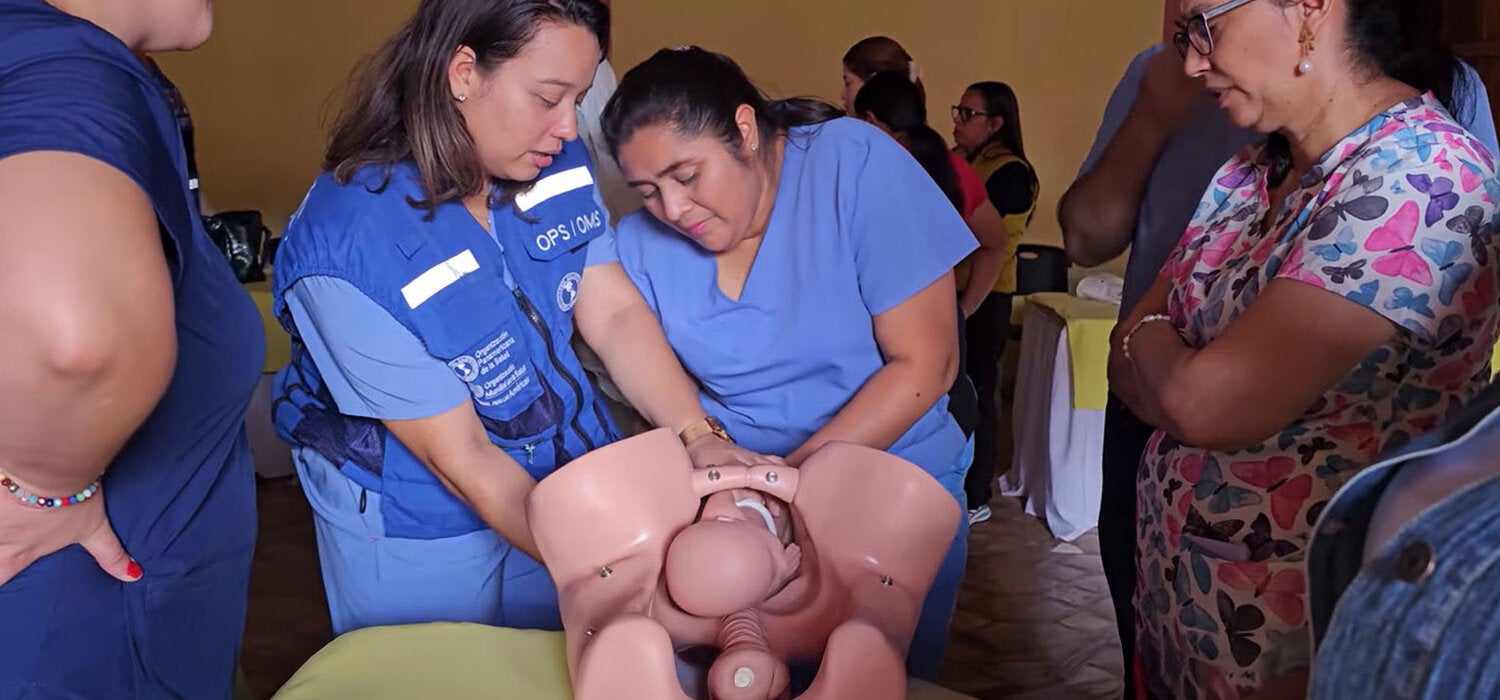
• Training activity to prevent maternal mortality

Code Red: Zero Maternal Deaths in Action

How Honduras reduced maternal mortality by over 27% with a life-saving alert system

In October 2023, three women lost their lives within less than 72 hours of each other at the Gabriela Alvarado Hospital in Danlí, located 92 kilometers south of Tegucigalpa, the capital of Honduras. While another 15 mothers were being rushed in with uncontrollable hemorrhages, a heavy silence filled the hospital’s corridors—the kind of silence that precedes major change. That week marked a turning point in the country’s maternal health history.

— July 2025 —

The Zero Maternal Deaths model is no longer a pilot or temporary initiative. It has become the standard for obstetric care in Honduras, aiming to ensure that no mother dies during childbirth.

The Ministry of Health, with technical support from the Pan American Health Organization (PAHO) and funding from the Government of Canada—through the IHWAG project—has changed the culture of maternal care nationwide.
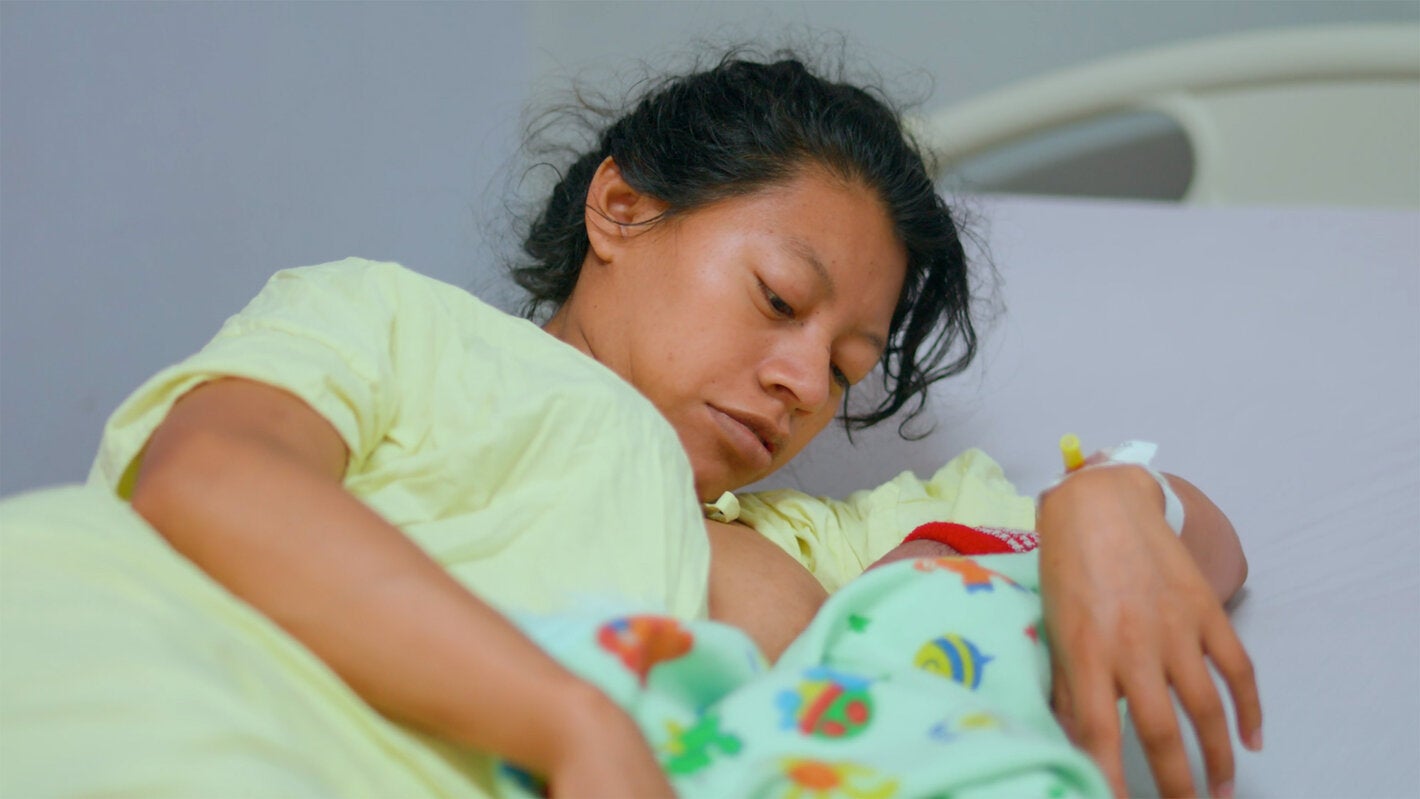
When hope has a name

Ana gripped her husband’s hand as the ambulance sped down the winding road connecting Patuca to Danlí. She had just given birth to her third child in a small health center in her remote community of the El Paraíso Department when the hemorrhaging began.

“I felt like I was going to die on the way,” Ana recalls, her voice still shaking as she remembers the 130 kilometers that felt like an eternity. The bleeding wouldn’t stop, her blood pressure dropped dangerously low, and every curve in the road seemed to take her further away from ever holding her  other two children again.

But when the ambulance doors opened at Gabriela Alvarado Hospital, something extraordinary happened. There were no desperate shouts or chaotic scenes in the hallways. Only one sound broke the silence: the Code Red alarm. Within seconds, a full team had assembled around Ana’s stretcher.

“I saw how all the staff arrived immediately,” Ana says. “Doctors, nurses, the lab technician—everyone knew exactly what to do. No one shouted, no one looked lost. It was as if they had rehearsed my arrival a thousand times.”

What Ana didn’t know was that, in a way, they had. Her life was saved thanks to one of the 38 operational Zero Maternal Death Teams in Honduras: teams that have transformed chaos into protocol, improvisation into precision, and loss into hope.

Zero maternal deaths teams


The revolution that began in Intibucá

For years, Intibucá was synonymous with preventable maternal deaths—a place where childbirth was a risk many families knew all too well.

The Zero Maternal Deaths model arrived as a precise methodology. It was not just about revising protocols on paper, but about completely reorganizing how hospitals respond to obstetric emergencies.

The results in Intibucá were so compelling that the strategy was rapidly replicated. Leonardo Martínez Valenzuela Hospital in San Pedro Sula, Puerto Cortés Hospital, the School Hospital in Tegucigalpa, and eventually all 28 hospitals in the national health system adopted the model.

A new way of saving lives

It was a December dawn when María, a 19-year-old from a rural community, arrived at Gabriela Alvarado Hospital. Nurse Yolani López, with 15 years of experience, had seen hundreds of mothers arrive in critical condition, but she had never witnessed a response like the one that was about to unfold.

When María lost consciousness in the delivery room, Yolani didn’t hesitate. She pressed the red button. The alarm echoed throughout the hospital, and in under three minutes, the multidisciplinary team was in place: gynecologists, anesthesiologists, specialized nurses, laboratory technicians, and blood bank staff.

“It was the first time we acted as one,” says Yolani. “No delays, no improvisation, none of the chaos we used to see. Everyone knew exactly where to be and what to do. María and her baby survived because the system worked the way it always should have.”

Voices of change

Dr. Nuri Bonilla, an obstetrician-gynecologist at Gabriela Alvarado Hospital, had worked for years in a system where each obstetric emergency was a race against time—often lost due to lack of coordination.

“A year ago, when we received the Zero Maternal Deaths training, I never imagined how crucial it would be,” she explains. “We went from a hospital where each emergency was chaotic to having organized teams, rapid response alarms, and protocols that truly save lives.”

The transformation was not only technical but profoundly human. “Now we have clearly established Code Reds, ready-to-use emergency kits, and, most importantly, a team that knows exactly what to do in every critical situation,” Dr. Bonilla continues. “The problem before was the delay: by the time we activated a protocol, we had already lost valuable time. Today, when the alarm sounds, we are in action within seconds.”

From a public policy perspective, Rosa Marlen Flores, Head of the Comprehensive Care Program at the Ministry of Health, understands that each statistic represents an entire family.

“We have always known that maternal mortality is the most sensitive indicator of a country’s health system,” she reflects. “Each mother we lose is a broken family, a child growing up without their mother. What was happening in Honduras was unacceptable.”

The program achieved what once seemed out of reach: implementing Zero Maternal Death Teams in all 28 hospitals in the country and training around 90% of municipalities in maternal mortality surveillance committees. But beyond the numbers, the transformation is evident in every delivery room, every emergency call, and every family that returns home whole.

Technology in service of life

The revolution extended beyond emergency protocols. The integration of prenatal teleconsultation services and the Perinatal Information System (SIP Plus) in five regional hospitals has allowed maternal care to reach beyond hospital walls. Mothers in remote communities can now receive specialized follow-up without traveling hundreds of kilometers, and doctors can detect complications before they become emergencies.

Emergency obstetric kits—designed and distributed by PAHO in nine health regions with high maternal mortality—ensure that each hospital has the necessary resources to handle the most common complications. Non-pneumatic anti-shock garments, hydrostatic balloons, and emergency blood kits are tools that significantly increase survival rates.

The country’s six Clinical Simulation Centers allow more than 1,700 trained health professionals to repeatedly practice emergency protocols, improving skills and coordination, reducing errors, and enhancing response in critical situations.

Impact measured in lives

The implementation of the Zero Maternal Death Teams and the Code Red system is one of the key interventions under the 2022–2026 National Maternal Mortality Reduction Plan.

Thanks to these efforts, Honduras achieved a historic 27.4% reduction in maternal mortality in 2024—saving the lives of thousands of women who once faced fatal complications.

The partnership between the Ministry of Health, PAHO/WHO, and the Government of Canada achieved something that goes beyond statistics: it transformed resignation into action, loss into prevention, and fear into hope for many Honduran families.

People displaying donated equipment