Following the June 24 earthquakes, vaccination teams in La Guaira continued visiting communities and temporary shelters to protect affected families and reduce the risk of outbreaks of vaccine-preventable diseases.
— August 2026 —

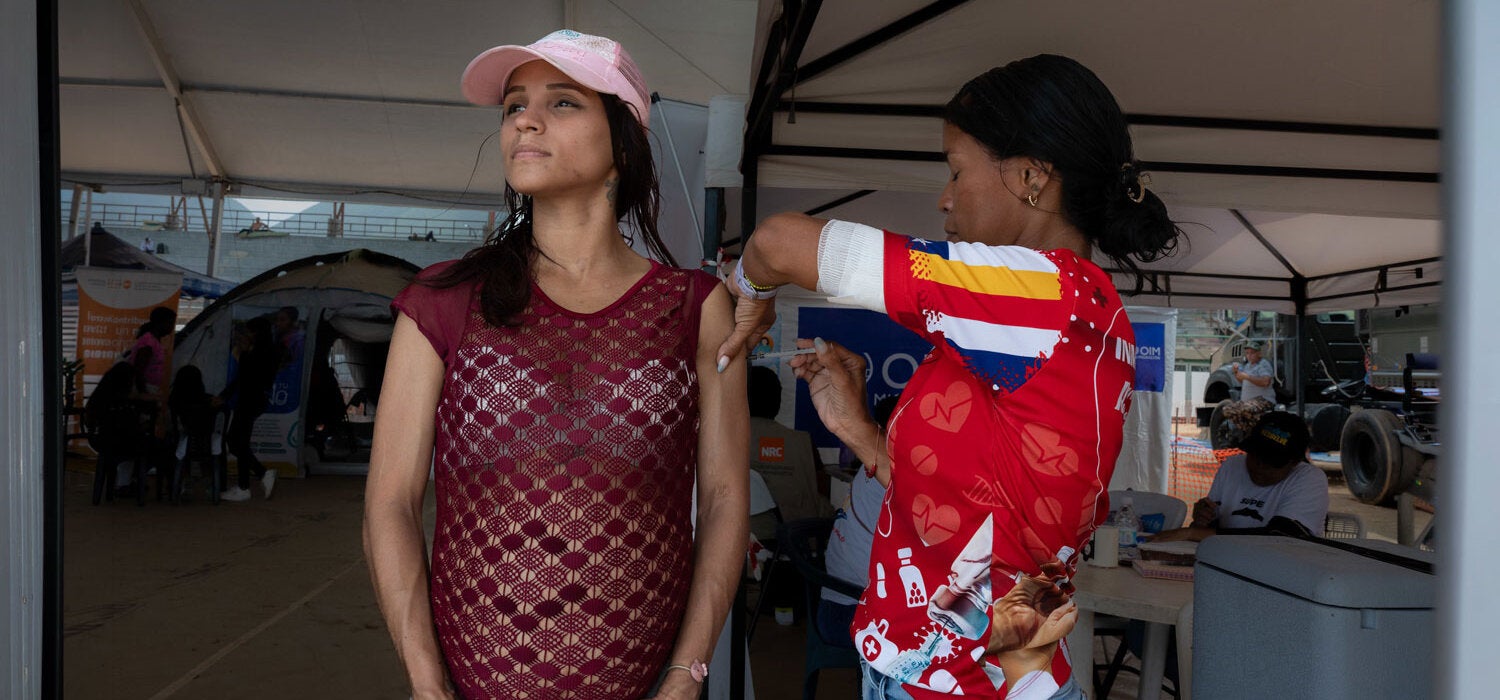
Following the June 24 earthquakes, vaccination teams in La Guaira continued visiting communities and temporary shelters to protect affected families and reduce the risk of outbreaks of vaccine-preventable diseases.
— August 2026 —
For more than two decades as a vaccinator, Elisa Margot Rodríguez de Longa visited the apartment buildings in the seaside community of Tanaguarena to vaccinate the children who lived there.
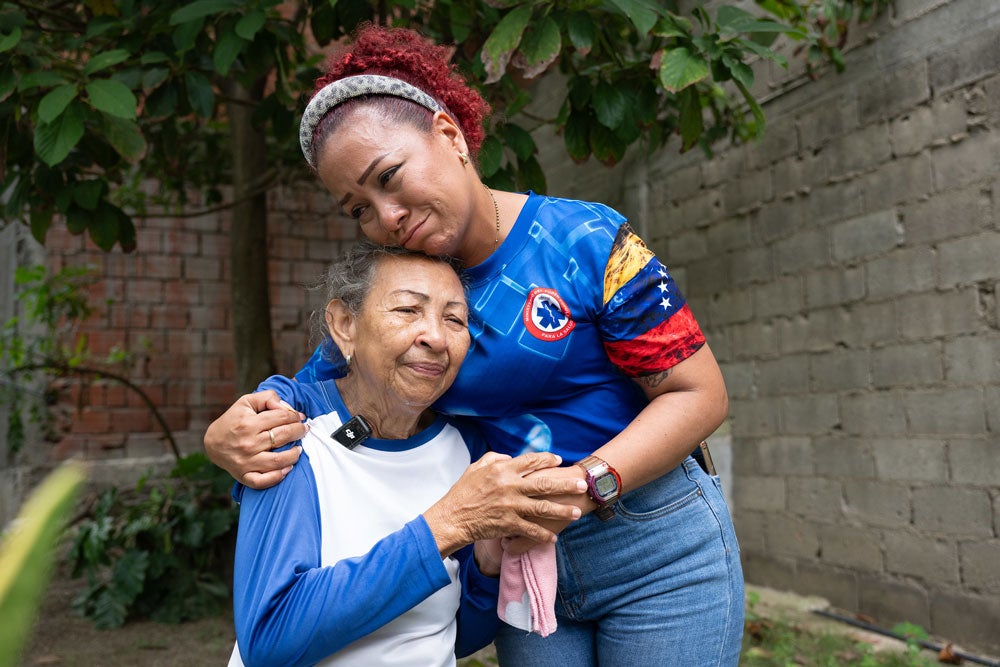
“The people here are like family to me,” Elisa says. “When they see me on the street, they greet me with love and affection because I vaccinated them when they were little. They used to call me grandma.”
The earthquakes on June 24 destroyed some of those same buildings, leaving many people trapped beneath the rubble. Among those who died were people Elisa had vaccinated as babies.
“I knew so many babies in that building,” she recalls.
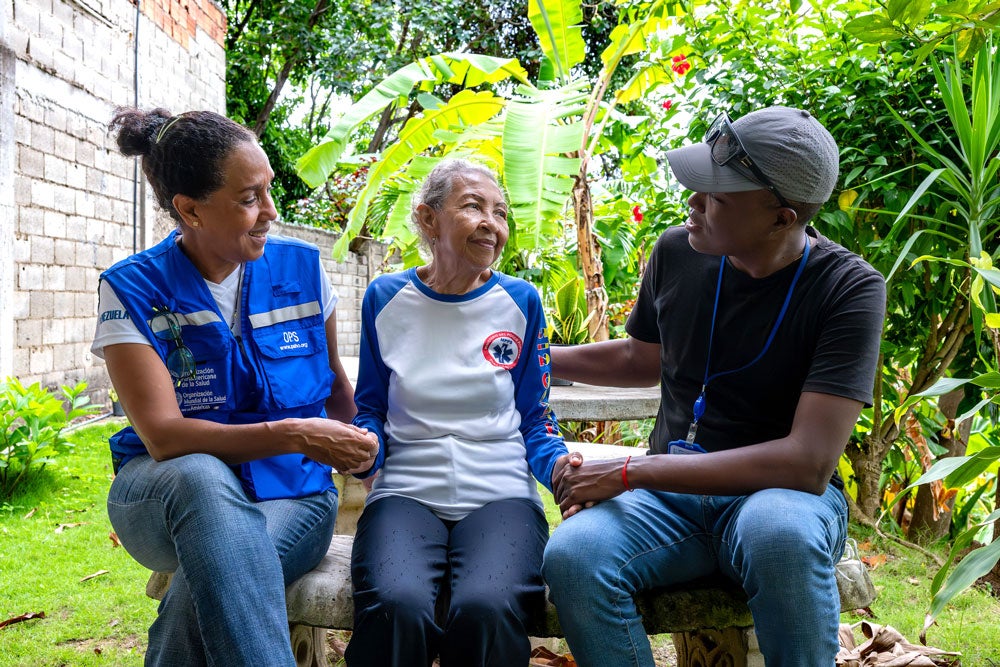
Today, Elisa is 76 and is known as one of the most experienced vaccinators in the state of La Guaira. She watched several generations grow up, got to know entire families and, years later, would still run into many of those children as adults.
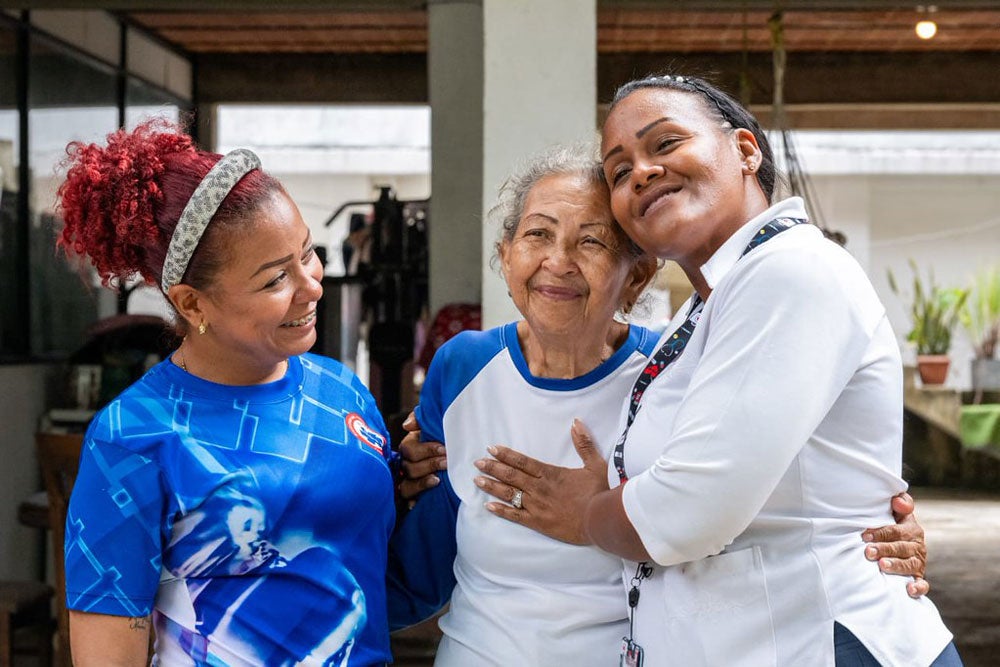
Over the course of her career, she trained new generations of health workers in La Guaira and remains close to them. “I trained a lot of young women. I would go out into the streets with them to vaccinate and teach them along the way,” she says.
Many of the vaccinators Elisa helped train were among the teams that responded to the emergency after the earthquakes. But not all of them were able to do so. Among those who lost their lives was Zobeida, a vaccinator who had also been part of the team.
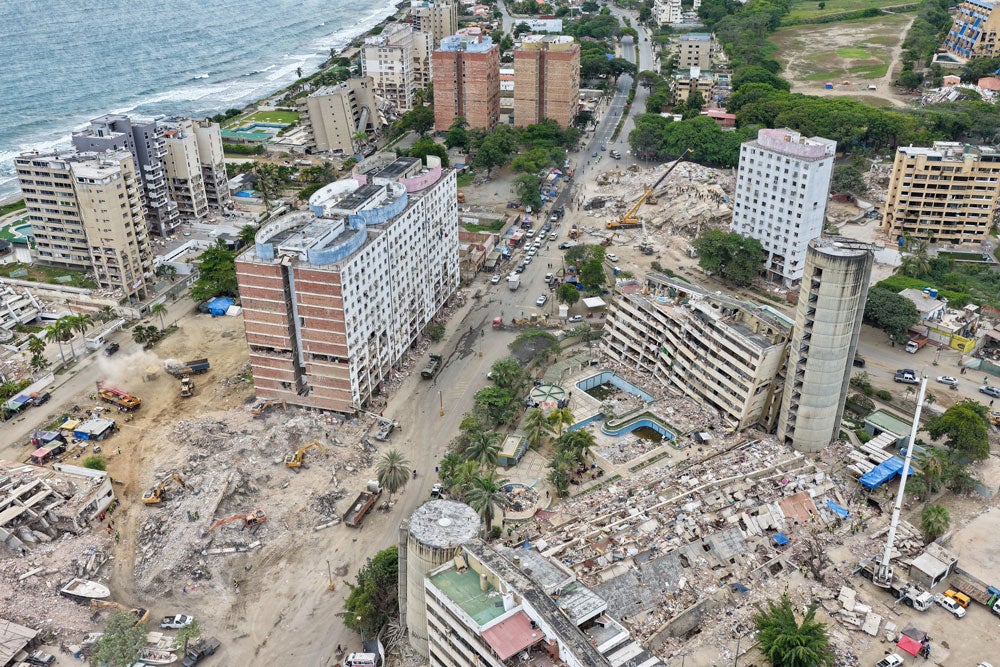
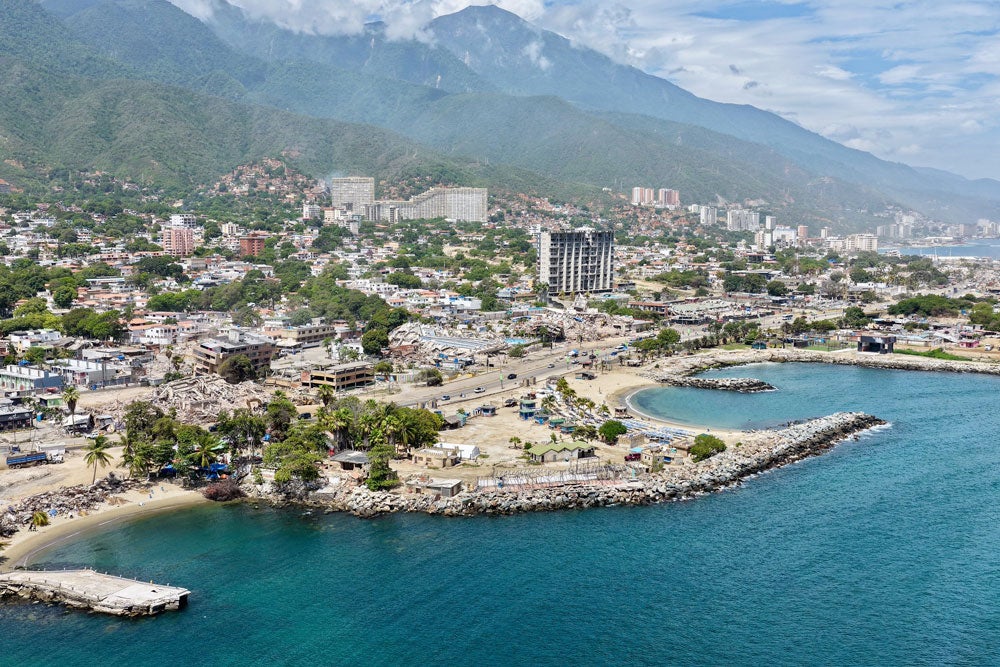
PAHO/WHO/Victor Ariscain - The June 24 earthquakes caused widespread damage in La Guaira, destroying homes, displacing families, and disrupting health services. In the weeks that followed, vaccination teams continued working in affected communities and temporary shelters to maintain routine immunization and reduce the risk of outbreaks.
Although Elisa is now retired, it was those same health workers who resumed vaccination activities in affected communities. Vanessa Robayna, coordinator for the parishes of La Guaira, Macuto and Caraballeda, was one of the vaccinators who returned to work in the midst of the emergency.
The building that housed the office of the Expanded Program on Immunization (EPI) in La Guaira also suffered in the earthquake. Vanessa retrieved information that they did not want to lose: vaccination records, vaccination cards, information boards, the computer’s hard drive, and the refrigerator where vaccines were stored.
Those records contained the information needed to reconstruct, child by child, vaccination histories that might otherwise have been lost in the rubble.
“These children will not be left without the information they need when looking for their records or checking their vaccination status,” according to Vanessa.
The Pan American Health Organization/World Health Organization (PAHO/WHO) supported this reorganization from the first days of the emergency. Together with Venezuela’s Ministry of Popular Power for Health (MPPS), PAHO/WHO supported the development of an immunization response protocol for the six months following the earthquake, including guidance to maintain the cold chain and ensure the safe storage and transport of vaccines.
With the records recovered, the team resumed operations from the La Guaira Social Security facility as the first temporary shelters were being established for displaced families. Vaccination teams resumed routine immunization in communities and shelters, administering vaccines including BCG, hepatitis B, pentavalent, and MMR (measles, mumps, and rubella). To strengthen the response, 122 vaccinators received training, with technical support from PAHO/WHO, on safe vaccination and surveillance of vaccine-preventable diseases.
During the first month of the emergency, vaccination teams administered more than 24,000 vaccine doses to the affected population.
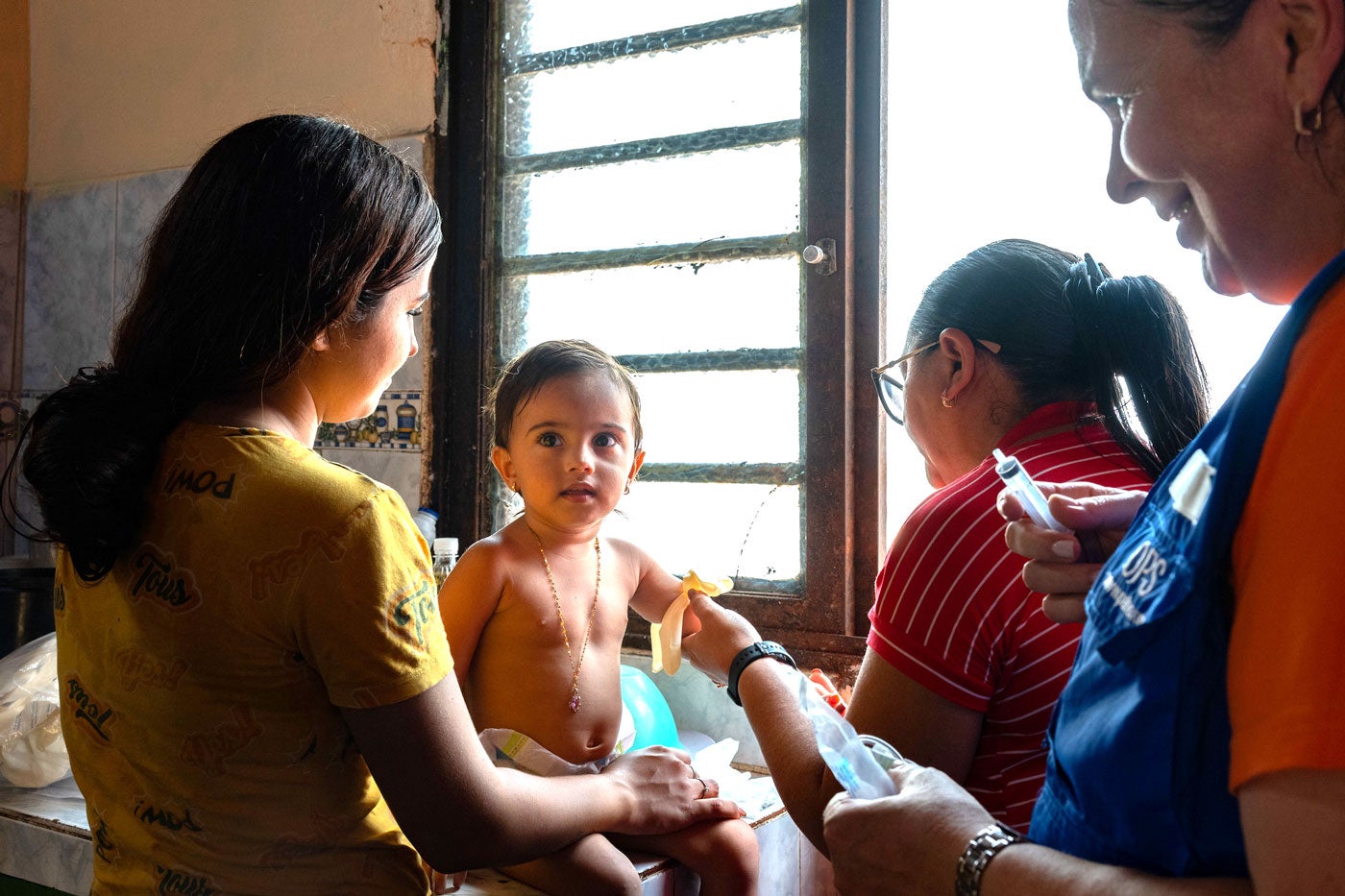
In settings where people have been displaced and are living in crowded conditions, highly contagious diseases such as measles can spread rapidly when people are unvaccinated or not fully vaccinated.
A few days after the earthquake, a suspected measles case was identified in the Aeropuerto area. Eloísa Garrido, National Director of the Expanded Program on Immunization, led the investigation with technical support from PAHO/WHO specialists. The team interviewed the family, collected samples, completed the epidemiological investigation and, without waiting for laboratory confirmation, launched a targeted vaccination response to identify and protect susceptible people in the community.
“We cannot wait for the results before acting to contain the spread of the disease,” Garrido explains.
Days later, laboratory testing ruled out measles. But by then, vaccination teams had already returned to the area, reviewing vaccination histories and administering MMR doses to those who needed them.
As part of efforts to ensure the continuity of vaccination following the earthquakes, on July 21, 2026, the Government of Venezuela purchased more than 1.3 million vaccine doses through the PAHO Revolving Fund.
These efforts were complemented by international donations supported by PAHO. Chile contributed 45,000 vaccine doses to strengthen the immunization response, while 1.15 million doses donated by Brazil arrived in Venezuela on July 20: one million doses of pentavalent vaccine, 102,000 doses of MMR, and 48,000 doses of BCG vaccine against tuberculosis.
For the Brazilian donation, PAHO supported logistics by procuring cold boxes to transport the vaccines and electronic temperature monitors to ensure cold-chain conditions were maintained as the vaccines entered the country.
Elisa is retired and now stays at home caring for her 82-year-old brother. She is a widow and lost her only son 30 years ago. Since then, the vaccinators she helped train have held a special place in her heart. She remains close to the families and former colleagues she came to know over decades of work.
When asked what she would like to say to the vaccinators who continue working even as they cope with losses of their own, she does not hesitate:
“Keep vaccinating those babies. They need you to do it with all your love and affection. Don’t stop. Keep moving forward.”
Many of the vaccinators Elisa helped train are now the ones traveling through communities and temporary shelters in La Guaira. As families rebuild their lives after the earthquakes, they continue reviewing vaccination histories and bringing vaccines to those who need them most, just as Elisa taught them for years: never stopping, always moving forward.