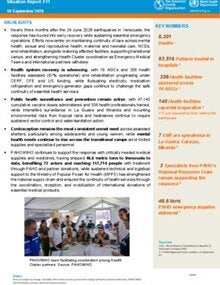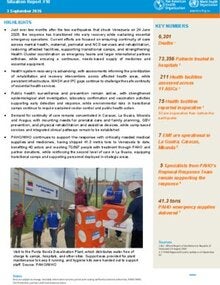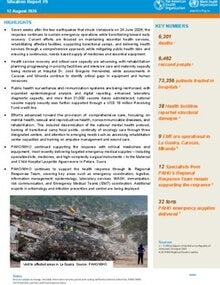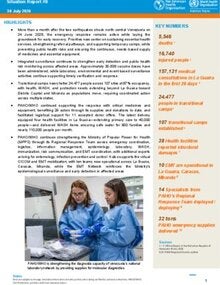
Health service recovery and critical care capacity continue to advance, while public health surveillance and immunization systems are being strengthened. Efforts are also expanding comprehensive care, with a focus on mental health, sexual and reproductive health, noncommunicable diseases, and rehabilitation.
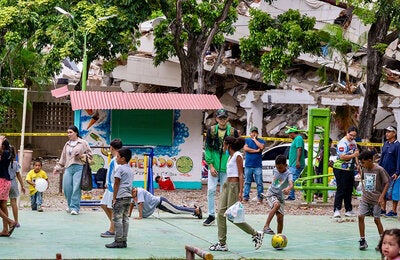
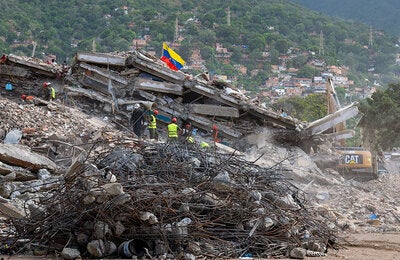
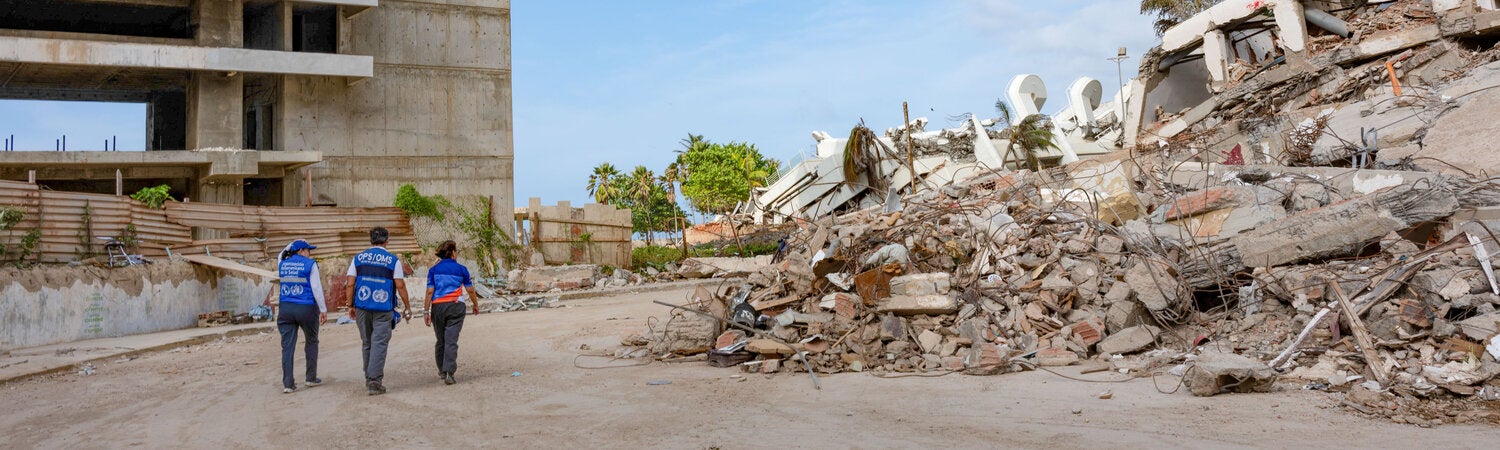
A powerful sequence of earthquakes struck north-central Venezuela on 24 June 2026, triggering a humanitarian emergency with significant health needs. An estimated 712,223 people were living in municipalities exposed to the highest seismic intensity. The Pan American Health Organization (PAHO/WHO) is supporting the health response alongside national authorities and partners by coordinating the response, deploying specialized teams, assessing health facilities, supporting the continuity of essential health services, and providing medicines and essential medical supplies.
Consult the latest Situation Report for detailed information, the most up-to-date figures, and operational updates.
Health Impact
The consequences of the earthquakes extend far beyond the immediate treatment of injured people. The emergency has placed the health system under extreme pressure, reducing hospitals' capacity to provide timely care and increasing the risk of additional public health emergencies.
Health Services
Public Health Risks
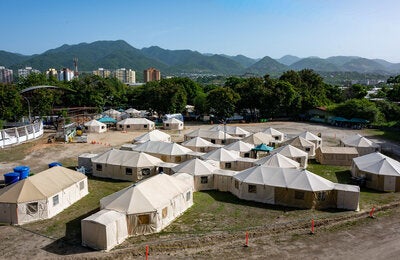
Damage to water and sanitation services, conditions in temporary shelters, and disruptions to routine health care increase the risk of outbreaks of vaccine-preventable and vector-borne diseases.
Mental Health & Psychosocial Support
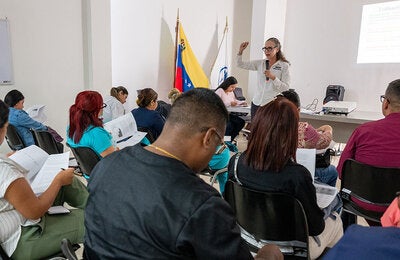
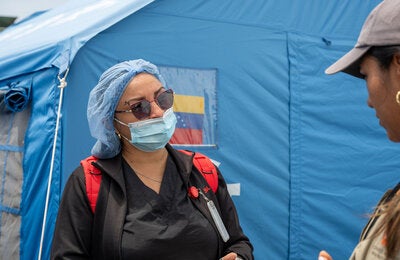
The loss of loved ones, displacement resulting from the destruction of homes, and continued uncertainty have created significant mental health needs. Psychosocial support is essential for affected communities, families, health workers, and first responders.
PAHO Response
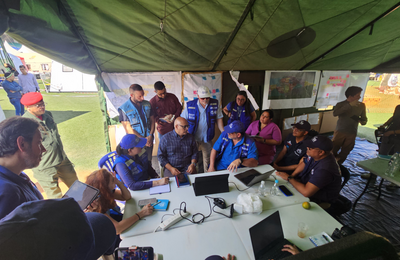
From the earliest hours of the emergency, PAHO/WHO activated its emergency response mechanisms and has been working alongside the Ministry of Health, Civil Protection, the Health Cluster, the United Nations, and humanitarian partners to coordinate the health response, mobilize specialized capacities, and support the continuity of essential health services.
Response coordination. PAHO/WHO co-leads the Health Cluster together with the Ministry of People's Power for Health, Civil Protection, and humanitarian partners.
View details
PAHO/WHO consolidates operational information, maps actors and capacities, identifies critical gaps, and aligns health sector response priorities to strengthen joint planning, avoid duplication, and direct resources to the most affected areas and health facilities.
Field assessments and technical assistance. Multidisciplinary teams are conducting rapid assessments of health facilities to guide immediate response actions and support the recovery of the health system.
View details
The assessments identify structural and non-structural damage, continuity of essential services, bed capacity, emergency flows, patient referrals, supply availability, and immediate needs. PAHO also provides technical assistance in trauma care, epidemiological surveillance, logistics, water and sanitation (WASH), mental health, and risk communication.
Emergency Medical Teams (EMTs). The Ministry of Health coordinates the international Emergency Medical Team response, with support from PAHO/WHO, through the Medical Information and Coordination Cell (CICOM).
View Details
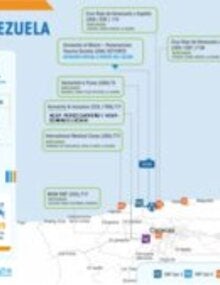
These teams provide specialized capabilities in trauma care, surgery, intensive care, rehabilitation, and other critical medical specialties. View EMT Response Map with the latest figures on patient consultations provided and operational Emergency Medical Teams.
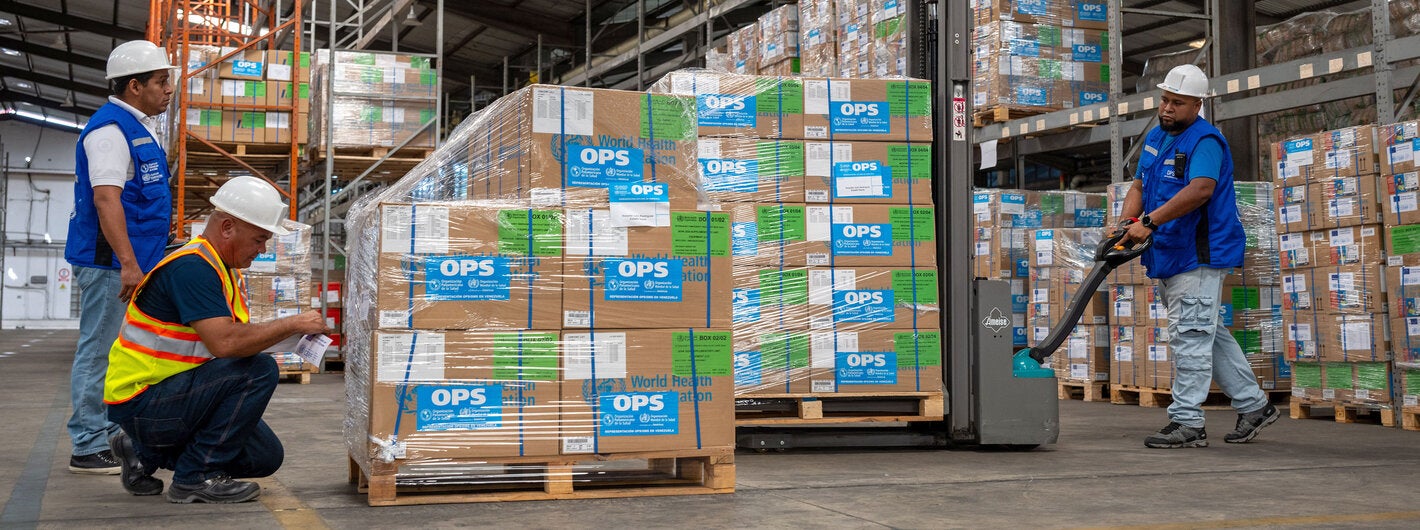
Medical Supplies. PAHO/WHO is mobilizing medicines, trauma kits, and other essential medical supplies from its Strategic Reserve in Panama to support the health response.
View Details
The supplies include emergency medicines, personal protective equipment (PPE), surgical supplies, materials for the treatment of injured patients, and supplies to support the dignified management of human remains. PAHO is also facilitating the urgent procurement of vaccines. As of August 24, PAHO/WHO has mobilized 40 metric tons of medicines, medical supplies and essential equipment to Venezuela.
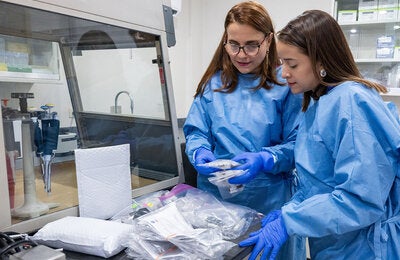
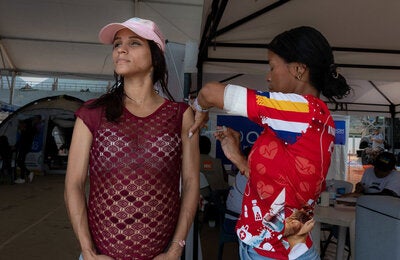
Epidemiological Surveillance. PAHO/WHO is strengthening syndromic surveillance and the early detection of public health events.
View Details
Surveillance activities are being carried out in shelters and transitional camps, with a focus on acute respiratory infections, acute diarrheal diseases, skin conditions, fever with rash, and vaccine-preventable diseases, particularly in the context of the regional measles outbreak in the Americas.
Response Strategy and Funding Requirements
PAHO's response strategy focuses on addressing immediate health needs while supporting the early recovery of the health system during the first six months of the emergency. The strategy is supported through PAHO's funding appeal.
A Call for Solidarity
US$23.9 million is needed to sustain the health response in Venezuela.
PAHO urgently calls on donors to support priority response actions over the next six months. This funding will enable PAHO to assist approximately 700,000 people living in the hardest-hit municipalities while strengthening referral hospitals and health services serving millions of additional people affected by disruptions to health care.
Organizations interested in supporting this appeal through financial contributions or in-kind donations are invited to contact our team to coordinate the donation process. For more information, please contact donate@paho.org.
Help us deliver lifesaving health care and protection services to earthquake-affected communities in Venezuela—leaving no one behind.