• belize students
    PAHO
    Credit

How a rural school in Belize is shaping healthier habits, one sip at a time

PAHO is working with Belize and partners to expand access to safe drinking water in schools, creating healthier environments for children to learn and thrive.

— October 2026 —

Shakeyra Berry, principal of St. Matthew’s Government School in the Cayo District of central Belize, remembers the daily struggle to keep her students hydrated. The school, rebuilt after a devastating fire in 2023, still lacked consistent access to potable water for its more than 400 students.

“We had to constantly fill five-gallon bottles,” Berry said. “Sometimes it wasn’t enough, and we ran out.”

The school was routinely spending over $30 USD per refill, stretching its limited budget. When deliveries failed or families couldn’t contribute, staff stepped in.

Berry recalls having to divide a single 12-ounce bag of water between two students. “It was very challenging,” she said.

During the hottest months, dehydration affected students’ health and ability to learn. Ten-year-old Isabela remembers a day when her water bottle was empty and she had no money. She felt weak and struggled to focus in class.

Over time, the shortage became normal. When water ran out, students coped as best they could. Those who could afford them turned to soft drinks.

“We had students complaining about headaches, even vomiting,” Berry said. “Some were too tired to function. Those are clear signs of dehydration.”
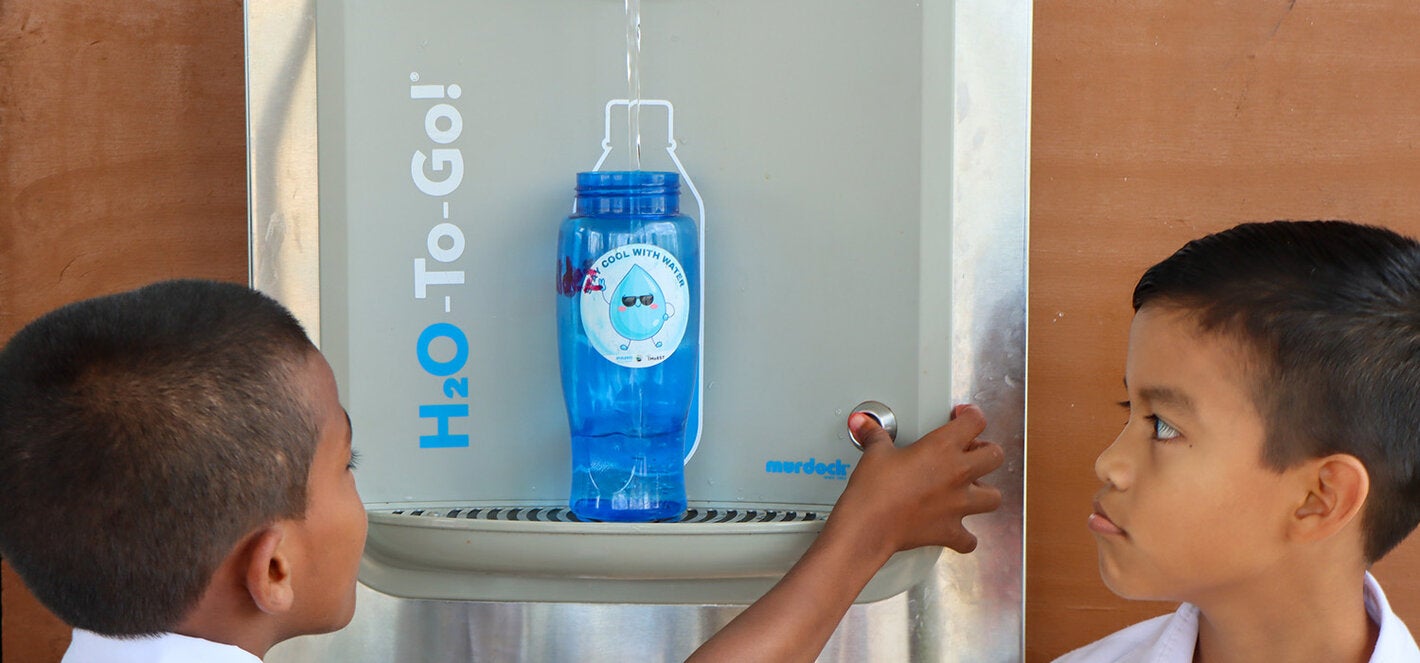
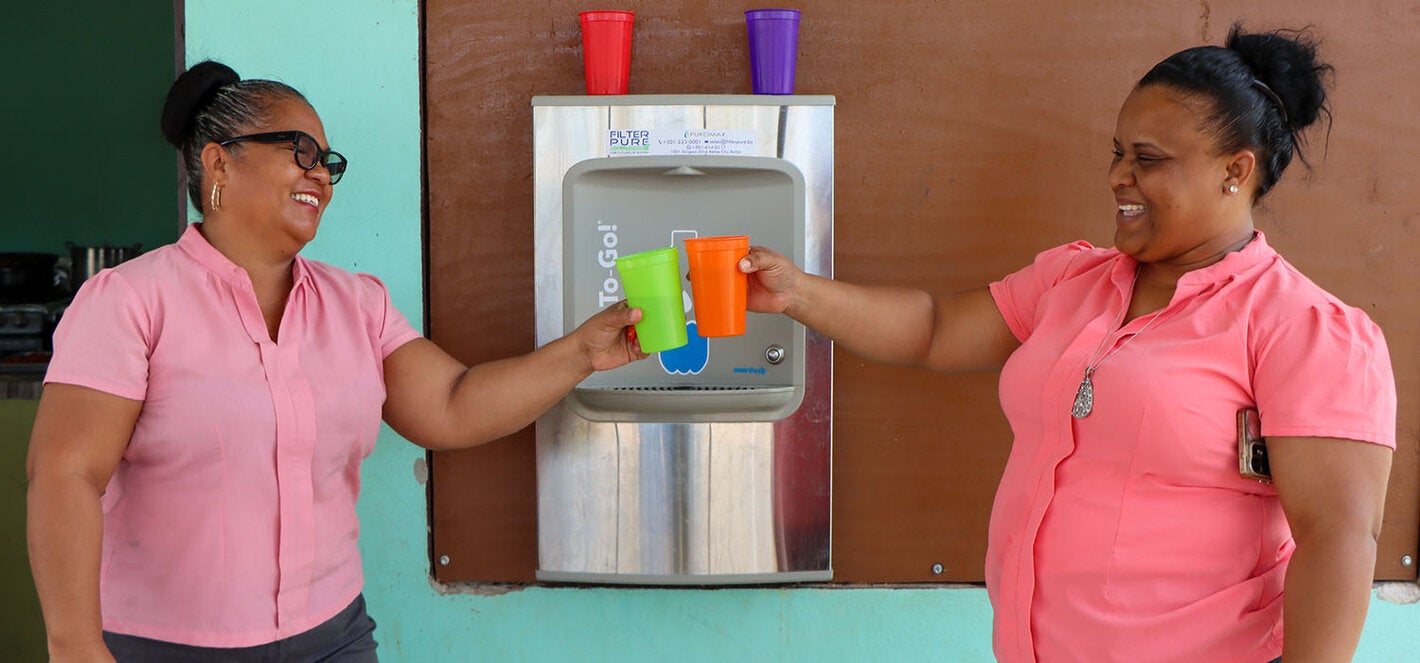
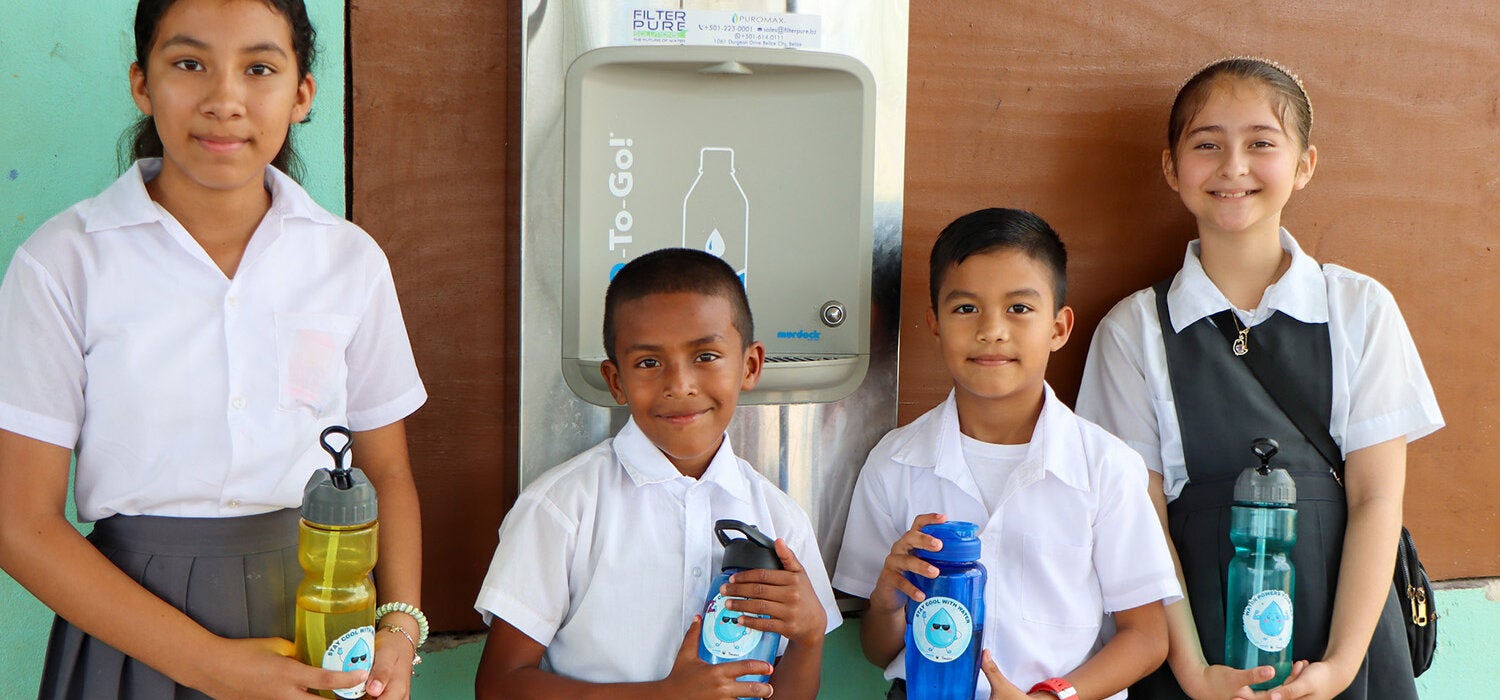
A new drinking fountain at St. Matthew’s Government School is helping students develop healthier habits by making safe drinking water readily available and encouraging them to choose water over sugary beverages.

Making an impact

In 2026, St. Matthew’s received a built-in water fountain through an initiative funded by the Organization of American States (OAS) and implemented by the Pan American Health Organization (PAHO), in partnership with Belize’s Ministry of Health and Wellness and Ministry of Education. The initiative provides students with reliable access to safe drinking water at school, while promoting healthier habits like reducing sugary drink consumption.

The fountain is one of four installed across the country—one in an urban school and three in rural communities. In addition, 20 schools with access to potable water received water coolers that use five-gallon bottles, and children in participating schools received reusable water bottles. To help ensure continued access, Belize’s Ministry of Education has provided schools with water coolers and a stipend to cover water refills, while schools with built-in fountains will receive support for maintenance.

The Pan American Health Organization promotes access to safe drinking water as a core public health intervention through its work on water, sanitation and hygiene (WASH) and health-promoting schools. Access to clean water helps prevent dehydration and waterborne diseases and can help reduce the consumption of unhealthy sugary drinks among children. 

In 2024, PAHO supported Belize to prepare and implement a climate-resilient water safety plan for the Double-Run water treatment plan, which covers over 95,000 people (23% of the country's total population). This plan supports healthier and safer environments in schools and communities now and in the future. In 2026, PAHO is supporting the country with new plans. In the whole Region of the Americas, this PAHO-led initiative has benefited over 90 million with 325 climate-resilient water and sanitation safety plans.

Through an initiative funded by the Organization of American States (OAS) and implemented by PAHO in partnership with Belize’s health and education ministries, schools are receiving drinking fountains, water dispensers and reusable bottles to create healthier learning environments.

A fountain for the future

Today, the presence of a water fountain providing safe, cool drinking water has transformed daily life at St. Matthew’s School. Costs have dropped sharply, freeing up resources for other needs, but the biggest change is in the students themselves, who are more hydrated, energized, and focused.

Isabela can now refill her bottle several times a day. “I don’t have to spend money. I can just go and get water,” she said.

Arleen, 11, remembers struggling to concentrate when the only option was warm water. “When I had a headache, it didn’t help,” she said. “I couldn’t focus on my studies.” Now, she says, “It’s very refreshing,” and she chooses water over soda.

For JJ, 10, the difference shows up on the football field. “When I get tired, I can get cool water and get hydrated fast,” he said. “Water keeps your body strong.”

Braden, 9, remembers feeling overwhelmed by thirst. “It felt like I would pass out,” he said. “Now the water is cold and refreshing. I love drinking it.”

Inside the classroom, Standard Four teacher Deborah Borland has introduced a simple system that allows students to quietly signal when they need water.

“It gives them a brain break,” she explained. “They can reset and focus again.”

The fountain is also helping reduce inequalities. Some students come from households with limited access to water, relying on rainwater or purchased supplies.

“He’s happy he can come here and refill,” Borland said of one student. “He knows he will have enough water.”

The school also reinforces healthier habits through policies that discourage sugary drinks and positive classroom messaging. As a result, many students who once preferred juice now choose water instead.

“If you drink too many sugary drinks, you won’t get strong—you’ll get weak,” JJ said.

The fountain is part of a broader effort across the Americas, where the Pan American Health Organization supports school-based interventions that combine infrastructure with education to make healthier choices easier. At St. Matthew’s Government School, that shift is visible in classrooms, on playgrounds, and in students’ daily choices.

“This was one of the best gifts we’ve received,” Borland said. “We don’t ever have to worry about being thirsty again.”

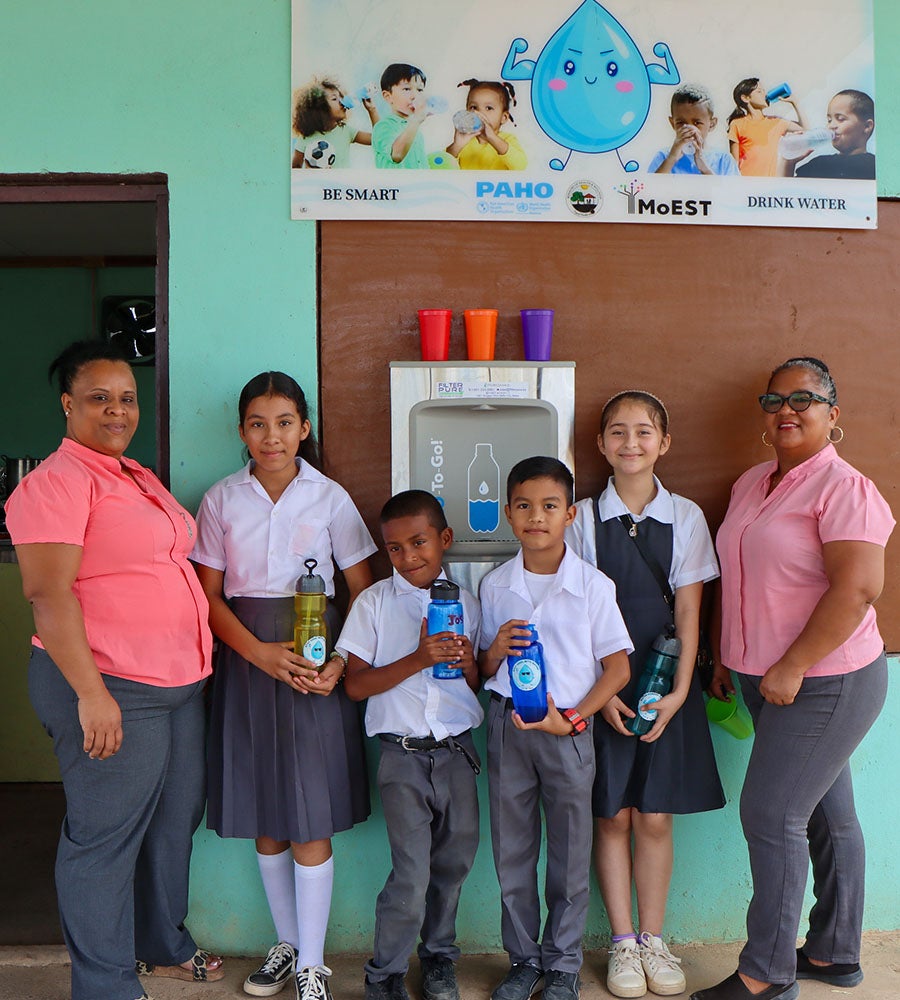
students and teachers posing
Students and teachers at St. Matthew’s Government School in Belize celebrate the installation of a new drinking fountain, providing more than 400 children with reliable access to safe, cool drinking water throughout the school day. With support from the Pan American Health Organization (PAHO) and partners, schools across Belize are improving access to safe drinking water, helping children stay hydrated, focused and ready to learn.