After Venezuela's June earthquake, international emergency medical teams helped ensure that essential health services continued even as hospitals and clinics came under immense pressure.
— August 2026 —

Every morning before patients start to arrive, Anderson Goodridge, a lieutenant commander with the Barbados Defence Force and head of the country's Emergency Medical Team (EMT) in Venezuela, meets with local physician Dr. Carlos Marrón to plan the day's work. Together, they assign doctors, nurses and other health personnel to different areas of the mobile hospital, where Barbadian and Venezuelan health workers work side by side.
This collaboration has become one of the defining features of the international medical response to the devastating earthquakes that struck Venezuela on 24 June. EMTs can deploy rapidly following disasters, bringing specialized personnel, equipment and essential supplies to provide emergency care and help sustain health services when hospitals and health centers are overwhelmed or damaged.
Depending on their capacity, EMTs range from Type 1, which provide outpatient emergency care, to Type 2 and Type 3 teams, which provide inpatient and surgical care, with Type 3 offering more complex referral-level services, including intensive care.
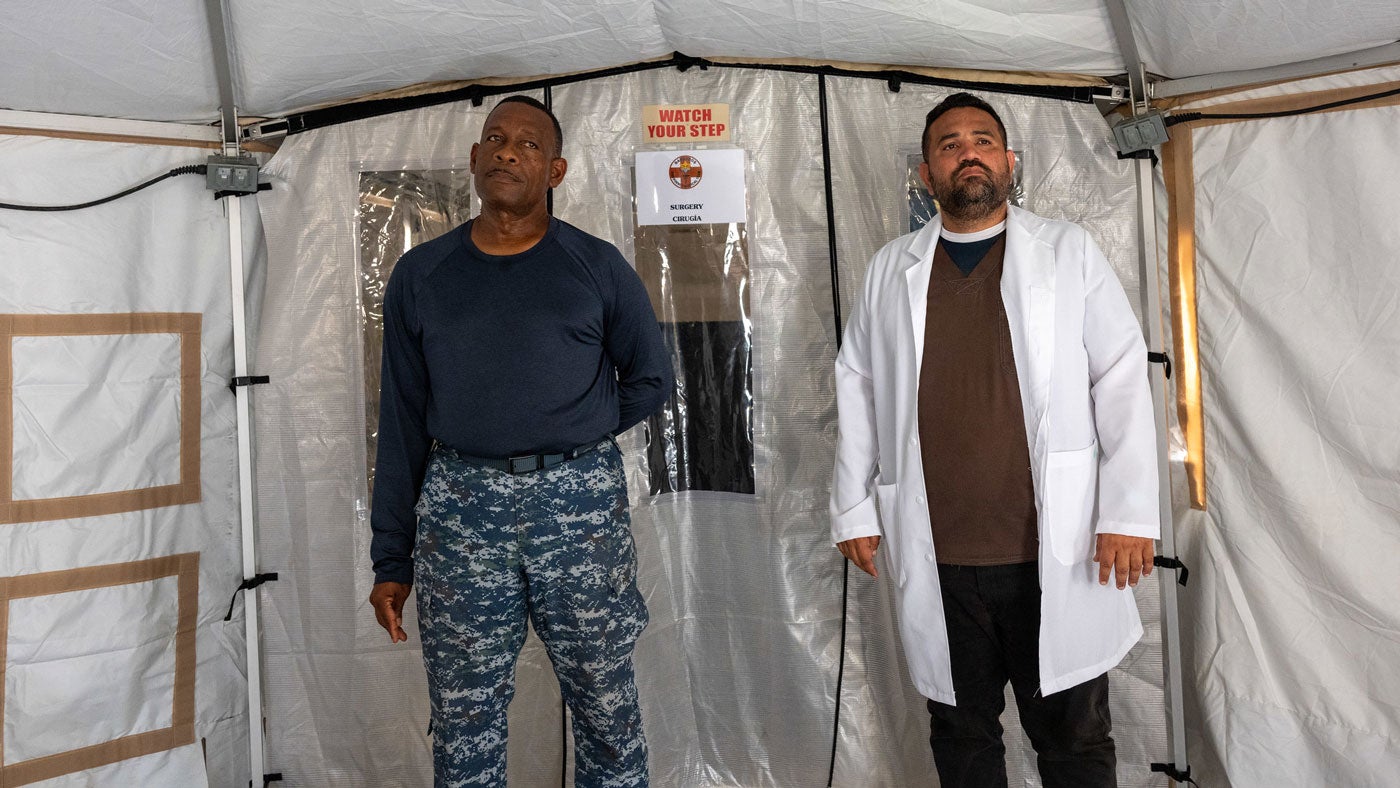
“Every emergency is different,” says Goodridge. “Here we are seeing many respiratory illnesses, many injuries, and a significant impact on mental health. You don't know exactly what you're going to find until you arrive. That's what determines what you do and what you need.”
Nearly two months after the earthquakes, health needs extend far beyond trauma-related injuries. People continue to require care for diabetes, hypertension, asthma, respiratory infections, maternal health, mental health conditions and other ongoing health needs. EMTs are helping maintain access to these essential services while the national health system continues to respond to the disaster.
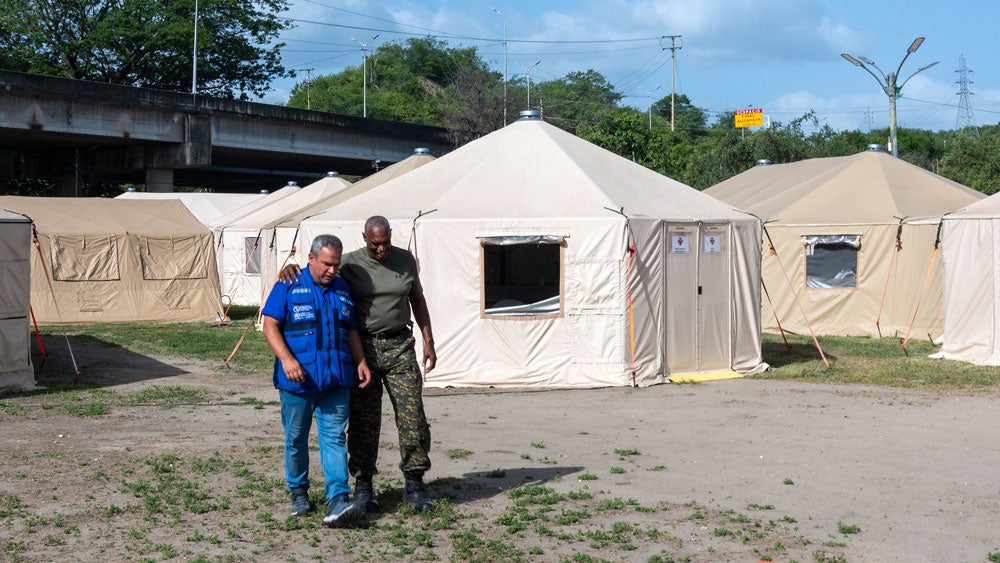
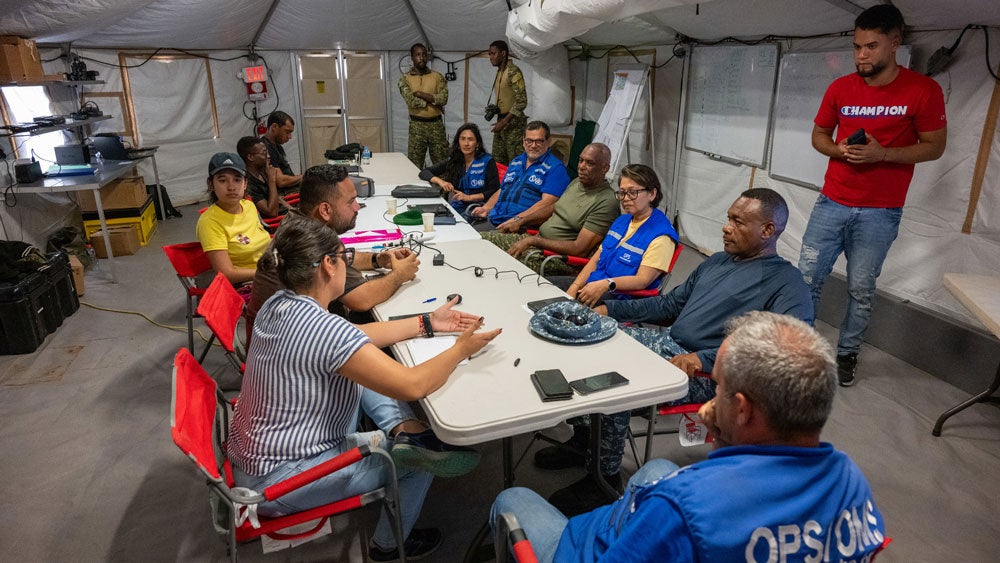
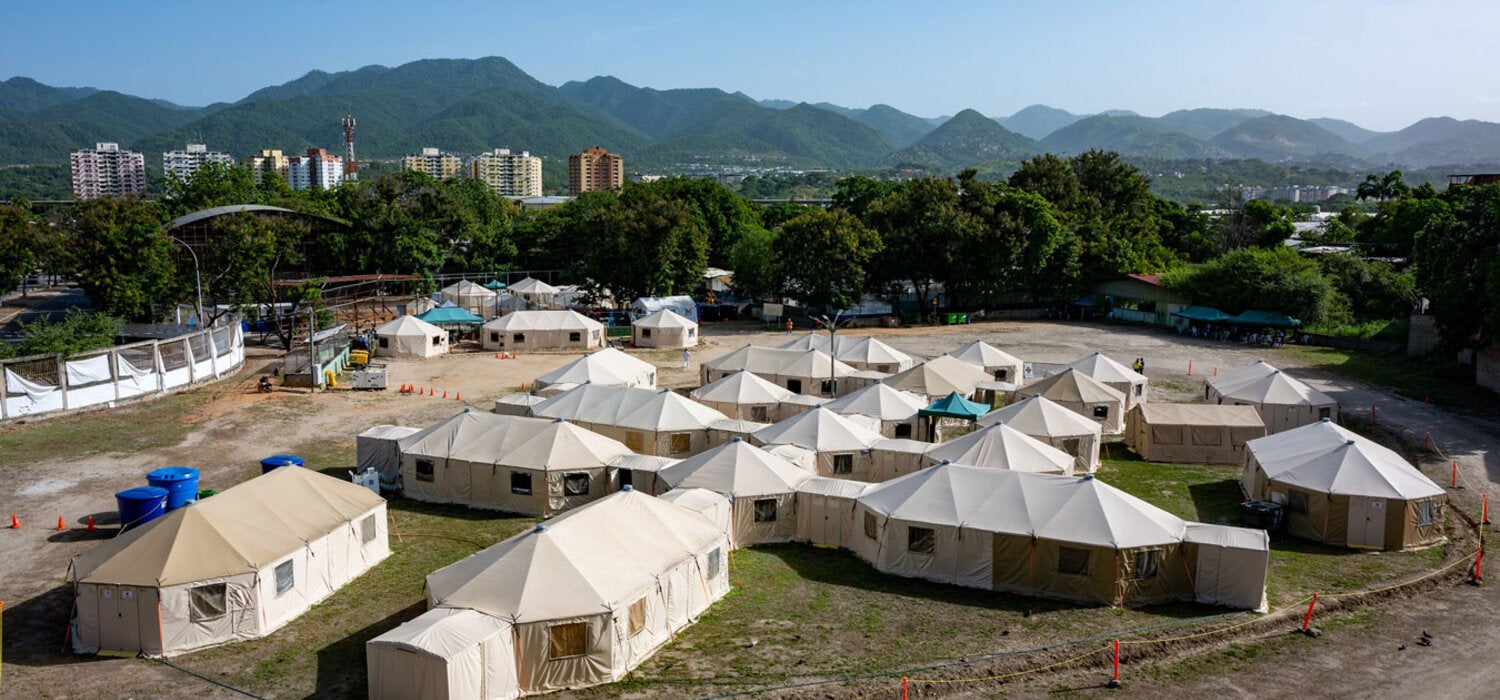
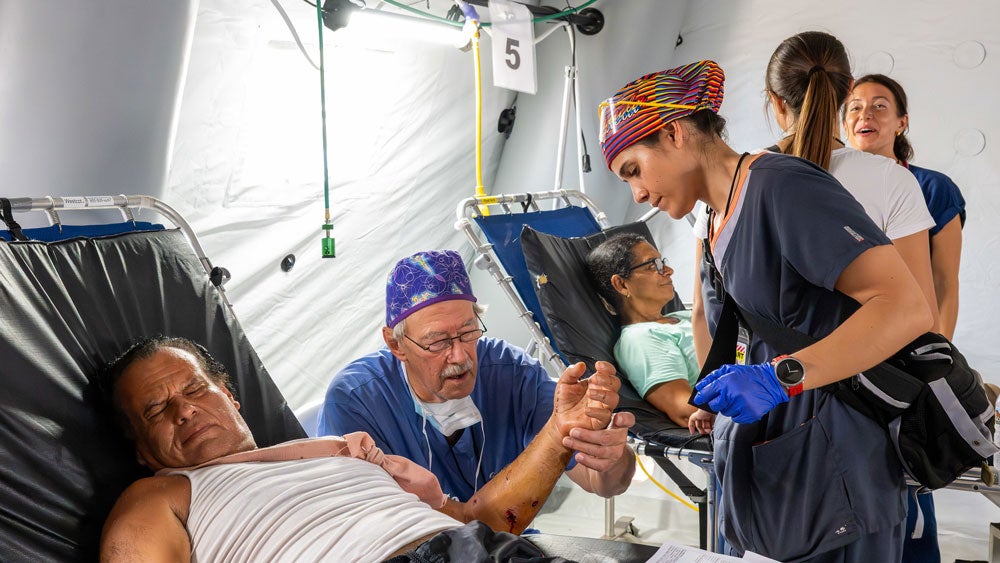
PAHO/WHO/Karen González - The Barbados EMT brought health personnel, medicines and medical equipment to Venezuela, reinforcing local capacity to provide emergency, diagnostic, surgical and other health services following the earthquake.
By mid-August, international EMTs had reported more than 42,300 consultations, 1,522 hospital admissions, and 347 major and 327 minor surgical procedures. Their daily reporting also contributes to epidemiological surveillance, helping health authorities identify changes in disease patterns and potential public health risks.
Today, nine international teams, including the Barbados EMT, remain operational in Venezuela, while 13 have completed their missions. The teams still on the ground are providing outpatient and hospital care, surgery and specialized services, helping to maintain access to essential health services while easing pressure on Venezuela's health system as it continues to recover.
The Barbados EMT, globally classified as a Type 1 team and currently working toward Type 2 classification, deployed to Venezuela with expanded inpatient and surgical capacity as one of 22 international teams supporting the response, 11 of them from countries in the Americas. For the 75-member Barbados team, Venezuela marks its second international deployment, following its mission to Jamaica after Hurricane Melissa. That experience helped prepare team members to adapt quickly to the different demands of the emergency in Venezuela.
Under the leadership of Venezuela's Ministry of Health, the Pan American Health Organization (PAHO) has provided technical support to coordinate EMT deployments based on identified needs and integrate them into national protocols, referral systems and the Medical Information and Coordination Cell (CICOM). Through CICOM, health authorities and partners can match priority health needs with the appropriate medical capacities and coordinate teams as an integrated part of the national response.
“When you see the teams working together, you feel that everything you have trained for comes together and works well,” says Andrés Sanz, a member of the PAHO EMT Secretariat technical team supporting CICOM and response coordination. “The teams have been comfortable working with CICOM, very well coordinated and working hand in hand with Venezuela's Ministry of Health.”
At the Barbados mobile hospital in Guarenas, Miranda, this coordination is visible in practice. The team brought equipment and medicines, including a mobile X-ray machine that is used to quickly identify fractures and other injuries. Venezuelan health technicians operate the equipment, carrying out around 20 to 25 X-ray studies each day.
The operating room provides another example of this collaboration. During a recent surgical day, three Venezuelan surgeons and two surgical nurses worked alongside two nurses from the Barbados EMT to perform eight operations using equipment and medicines brought by the team. According to Goodridge, all eight patients recovered and were able to return home.
“It has been very helpful because it complements our system, which continues to function fully, but this support allows us to respond more quickly to the group of patients that emerged as a result of the earthquake,” explains Marrón.
The work also extends beyond the mobile hospital. After several patients raised concerns about suspected measles, health workers followed up at a transitional camp, where they assessed 16 families, reviewed children's vaccination status and collected samples from suspected cases. The investigation, carried out according to Ministry of Health protocols, ultimately ruled out the suspected cases.
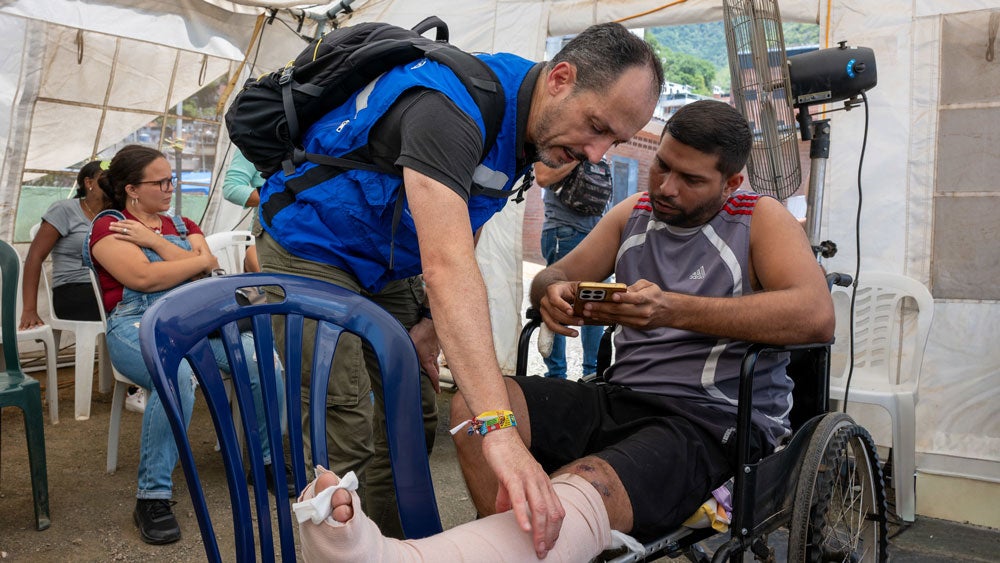
PAHO/WHO/Karen González - The Samaritan’s Purse Type 3 Emergency Medical Team established an Emergency Field Hospital in La Guaira, providing inpatient care, surgery and intensive care for patients requiring more advanced hospital treatment following the earthquake.
Samaritan’s Purse was the first international Emergency Medical Team to arrive in Venezuela following the earthquake. The United States-based Type 3 EMT arrived on 27 June and established an Emergency Field Hospital in La Guaira, where it began receiving patients on 30 June. At the start of its deployment, the hospital reported capacity for 48 inpatient beds, including four intensive care and four acute care beds, two operating theatres, a pharmacy and laboratory, and outpatient capacity for up to 100 patients a day.
By 18 August, Samaritan’s Purse had reported more than 6,200 consultations and 313 major surgical procedures to PAHO. As a Type 3 EMT, its combination of inpatient care, major surgery and intensive care provided additional capacity for patients requiring more advanced hospital treatment, including referrals from national health facilities and other EMTs.
By late July, Samaritan’s Purse was also providing technical support, together with the PAHO EMT Americas Secretariat, for an inpatient care module in Maiquetía that will be operated by Venezuela’s Ministry of Health.
For Marrón, the collaboration has also created an opportunity for health workers from both countries to learn from one another.
“It is a new experience for the teams, even in terms of the language we use to care for patients,” he says. “We complement one another and share experiences, both the Barbados team in managing patients and us in applying the protocols. In the end, we can unify our approaches because the objective is the same: caring for the patient.”
Asked whether he would be willing to travel to Barbados if the island country ever faced a similar emergency, Marrón did not hesitate.
“Absolutely. I would be willing to go, and this whole team that has come together would also be willing to go wherever it is needed.”