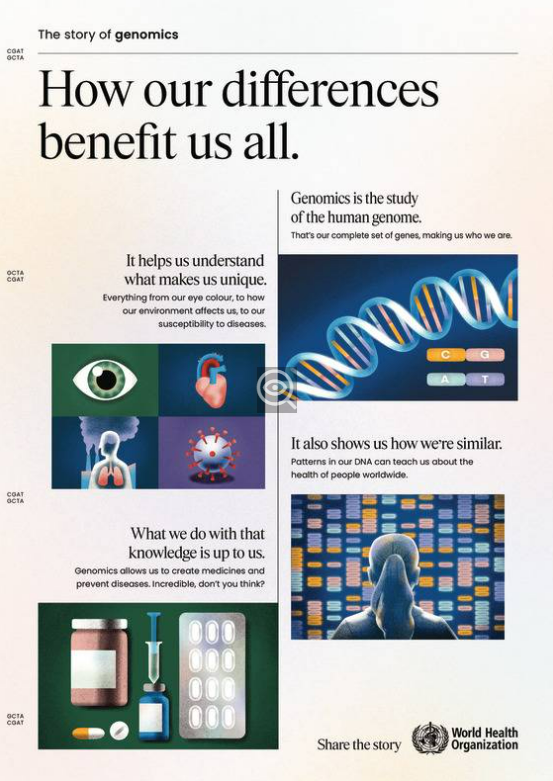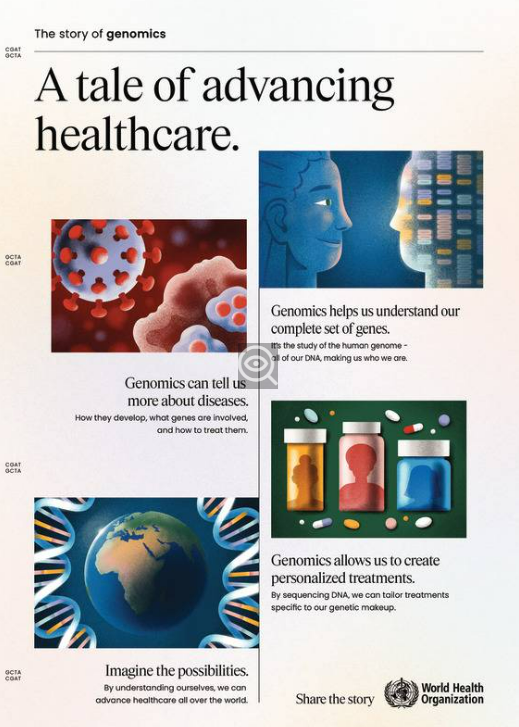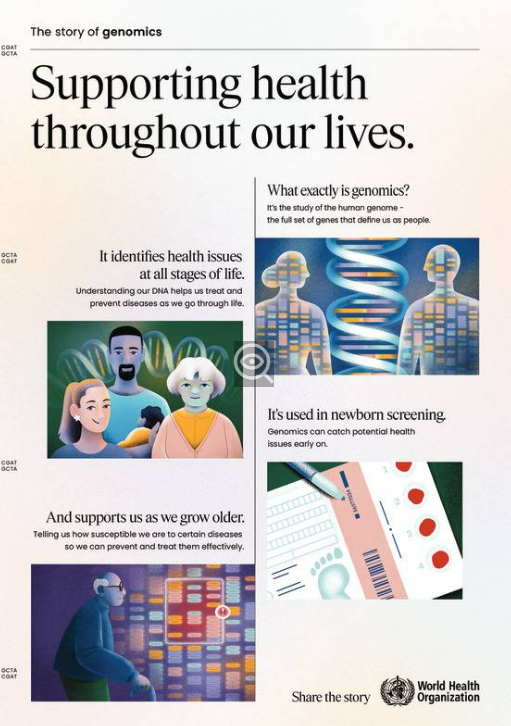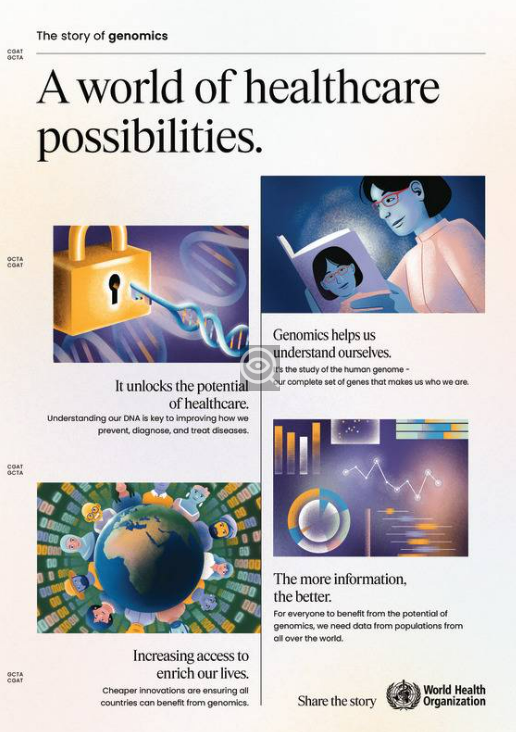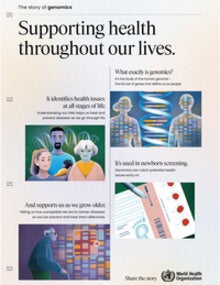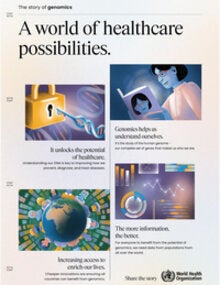

Human genomics is the study of the complete set of human genes and how they interact with each other and with the environment. Unlike genetics, which focuses on individual genes, genomics examines the genome as a whole. Rapid advances in genomics are transforming public health by contributing to disease prevention, diagnosis, and management. In the Region of the Americas, PAHO promotes the ethical, equitable, and effective use of human genomics to improve population health and reduce health inequalities.
- Human genomics helps explain the genetic basis of diseases and their interaction with environmental factors.
- It supports prevention through risk assessment and screening programs.
- It improves diagnosis, particularly for rare diseases and genetic disorders.
- It supports treatment optimization through pharmacogenomics, reducing adverse effects.
- It has current and potential applications across the life course.
- Human genomics is a strategic tool for public health and precision medicine.
- Well-established applications include newborn screening and genetic diagnosis.
- Challenges remain related to technical capacity, governance, ethics, and equitable access.
- Regional collaboration enables knowledge sharing and use of genomic data.
The use of human genomics in public health has steadily increased in the Region of the Americas, with important applications in rare diseases, cancer, congenital anomalies, and genomic surveillance. Multiple regional initiatives and networks contribute to the generation, analysis, and use of genomic data to improve population health.
PAHO supports Member States in integrating human genomics into public health to improve disease prevention, diagnosis, and management. Through the Knowledge portal on human genomics for health (PAHOHumanGen), PAHO promotes capacity building, regional cooperation, and the ethical and equitable use of genomics, in line with World Health Assembly resolutions.