
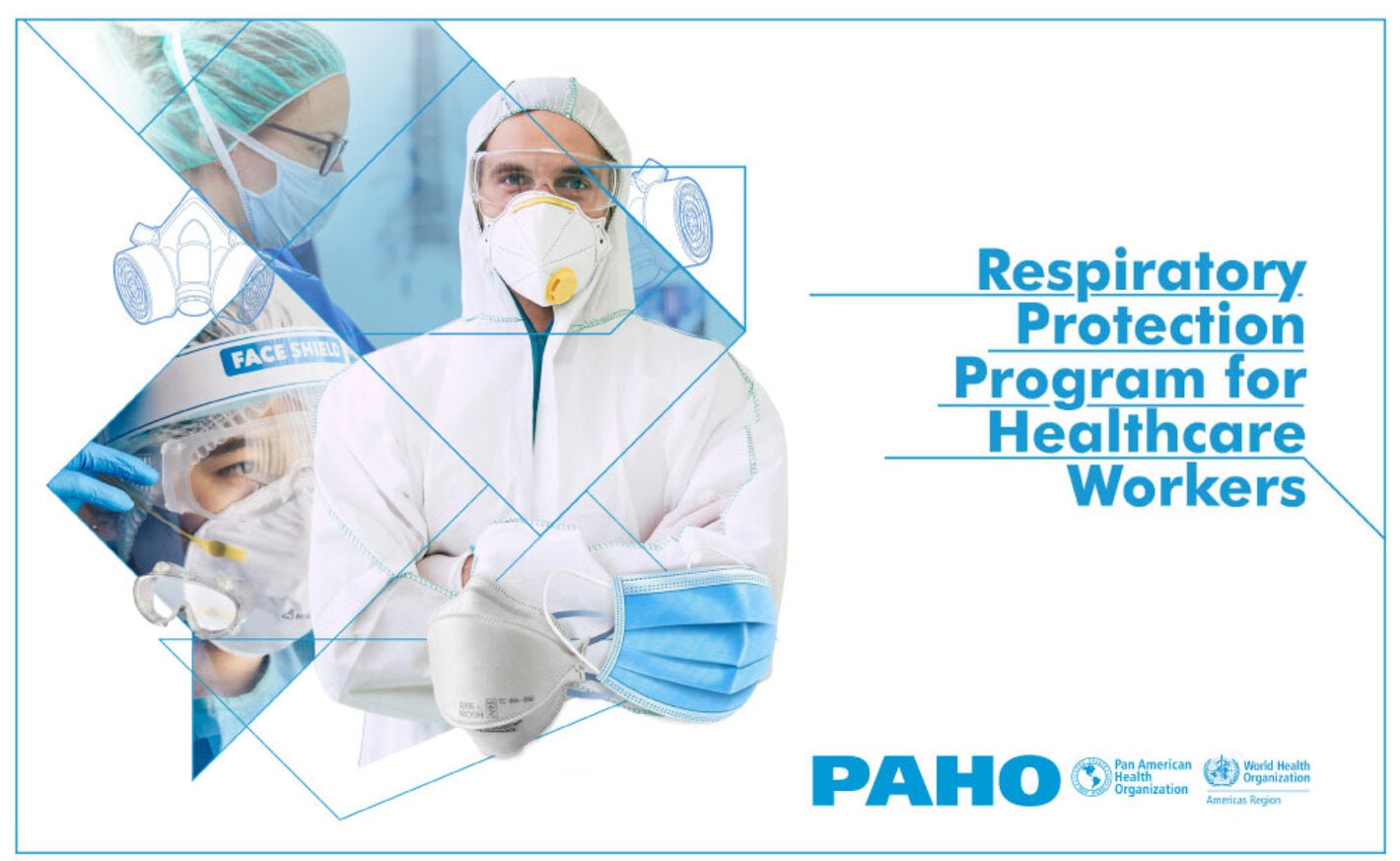
The respiratory protection program for health workers aims to implement control measures to mitigate respiratory risks, initially 10 countries were selected to begin such implementation which included both face-to-face and virtual training and covers several key aspects, including
a) necessary infrastructure,
b) human and material resources needed to support the program in different health care settings,
c) selection criteria for appropriate respiratory protection equipment, including guidance on technical standards and quantities needed,
d) fit testing procedures,
e) training of health workers in the use of equipment and monitoring of its implementation.
The implementation of respiratory protection programs in these countries seeks to improve the protection of healthcare workers from respiratory exposure to potentially harmful chemical and physical agents and microorganisms that cause respiratory diseases. Additionally, each of the countries participating in these trainings received equipment for program implementation.
The virtual Respiratory Protection course is available on the PAHO website in English and Spanish, as is the respiratory protection program manual in English, Portuguese, and Spanish.
This webinar was held to present the Respiratory Protection Program (RPP) and share progress on its implementation, bringing together regional experts in infection prevention and control, epidemiology, clinical management, and risk management. The session aimed to highlight the key components of the RPP, present advances in its implementation, expand knowledge related to respiratory risks, and disseminate the main challenges faced during the implementation process.