
Context
The Pan American Health Organization (PAHO) has been celebrating the Wellness Week of the Americas since 2011 with the aim of promoting a positive and comprehensive vision of health in the Region. Within this approach, health promotion stands out as a fundamental element for the well-being of individuals and communities. In 2025, this campaign will be held from September 13 to 19, with a launch event on Monday, September 15.
Since its first edition, Wellness Week has been celebrated jointly with the Caribbean Public Health Agency (CARPHA) and has the support of the American Public Health Association (APHA), as well as Latin American public health associations and the Executive Secretariat of the Council of Ministries of Health of Central America and the Dominican Republic (SE-COMISCA).
Theme for 2025
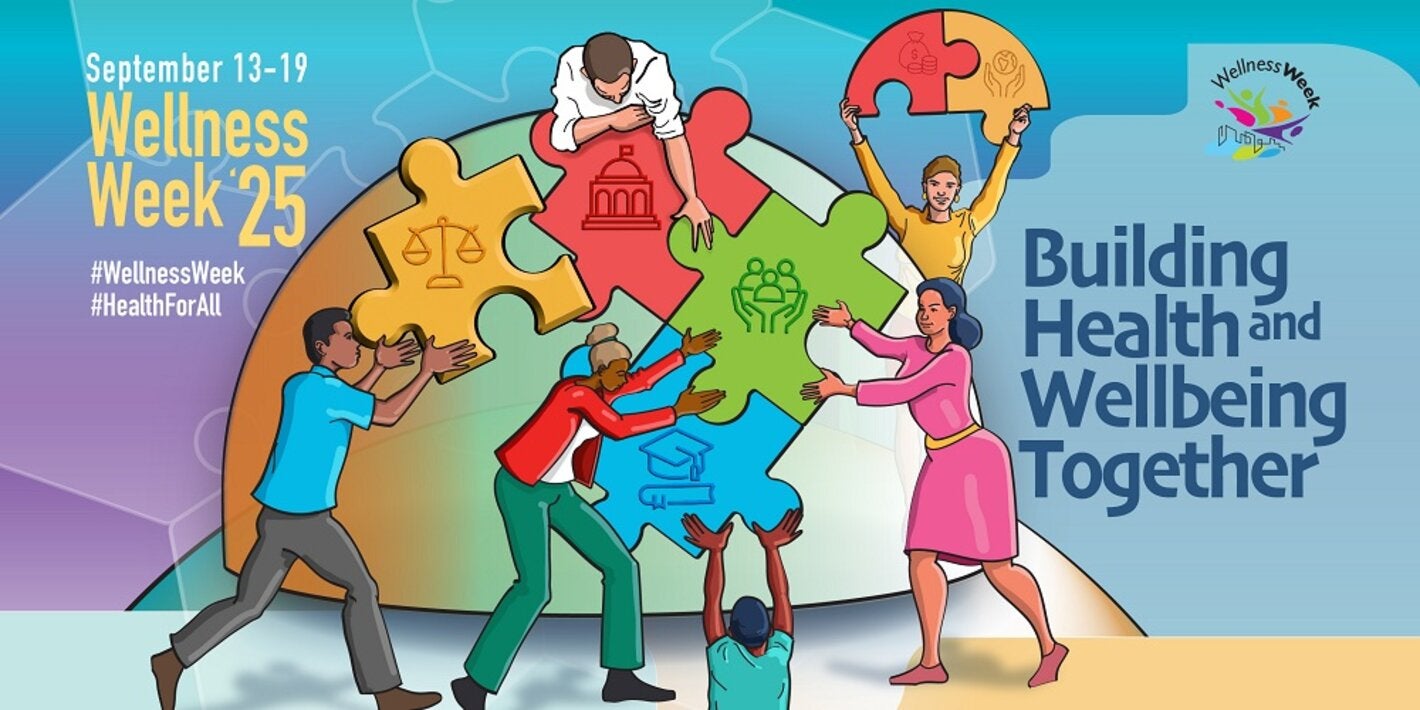
The theme of Wellness Week 2025 is intersectoral work and Health in All Policies (HiAP), as fundamental strategies for addressing the living conditions that impact health and well-being. For this reason, the slogan for the week is: Building Health and Well-being Together.
Strengthening the joint work of the different sectors is a necessity to promote health, well-being and equity. In relation to this, we understand intersectorality as the articulation of representative institutions of more than one sector of the public administration in the tasks of design, implementation and evaluation of actions in order to achieve a synergistic effect that favors the effectiveness of interventions on problems related to health, well-being and quality of life. Intersectoral initiatives allow making collaborative efforts to intervene in people's living and working conditions, such as housing, access to green areas, transportation, basic sanitation, working hours, among many others, which impact on the health and well-being of populations and generate inequities in these matters.
These conditions are called social determinants of health, and their approach requires integrated actions between various sectors, which have the potential to benefit both health outcomes and all areas of social well-being.
PAHO Strategy
PAHO recognizes and highlights the importance of intersectorality for health and equity. In 2023, PAHO promoted the formation of the Intersectoral Work and Social Participation Network for Health Equity in the Americas (TIPSESA Network). This network, which brings together more than 50 institutions from more than 13 countries, aims to facilitate and boost the exchange of experiences and learning to contribute to the strengthening of intersectoral work capacities and competencies in order to reduce health inequities and promote collective well-being by addressing their social determinants.
To strengthen capacities both within the health sector and in other sectors, PAHO has prepared virtual courses on intersectorality for Ministries of Health, as well as for local governments in the Region.
Local governments are key actors in the promotion of health and well-being due to their ability to implement intersectoral and participatory public policies. Hence, intersectorality is a basic pillar of the Healthy Municipalities, Cities and Communities Movement (MCCS), a regional platform led by mayors and promoted by PAHO, which brings together more than 3,800 cities and municipalities in the Americas.
To help strengthen intersectoral action efforts in the region, PAHO has launched a process of building an analytical framework and indicators to monitor and evaluate intersectoral initiatives with an equity approach, which will allow member states to review their intersectoral efforts with a view to enhancing their positive impact on health and well-being.
Participation
- DATE: Monday, September 15, 2025
- TIME: 10:00 - 11:00 am
- WHERE: Virtual event, on ZOOM
- LANGUAGES: This event will have interpretation in English, Spanish and Portuguese
- HOW TO JOIN: Register HERE or using this QR code:

Agenda
Monday, 15 September 2025
Welcome remarks
- Dr. Jarbas Barbosa, PAHO Director
- Dr. Lisa Indar, Executive Director, Caribbean Public Health Agency (CARPHA)
- Dr. José Renán De León Cáceres, Executive Secretary, Executive Secretariat of the Council of Ministers of Health of Central America and the Dominican Republic (SE-COMISCA)
- Dr. George Benjamin, Executive Director, American Public Health Association (APHA)
Debate
- Dr. Patricia Castillo, President, Network of Intersectoral Work and Social Participation for Health Equity in the Americas (TIPSESA Network)
- Dr. Pastor Castell-Florit, Director, National School of Public Health, Cuba
- Dr. Kelsey Lucyk, Manager, Health Equity Policy Directorate, Public Health Agency of Canada
- MODERATION: Dr. Orielle Solar, Chief, Health Promotion and Social Determinants Unit, PAHO
Closing remarks
Dr. Rhonda Sealey-Thomas, PAHO Assistant Director