The six-year strategy will support stronger primary health care, disease prevention and more resilient and sustainable health systems.
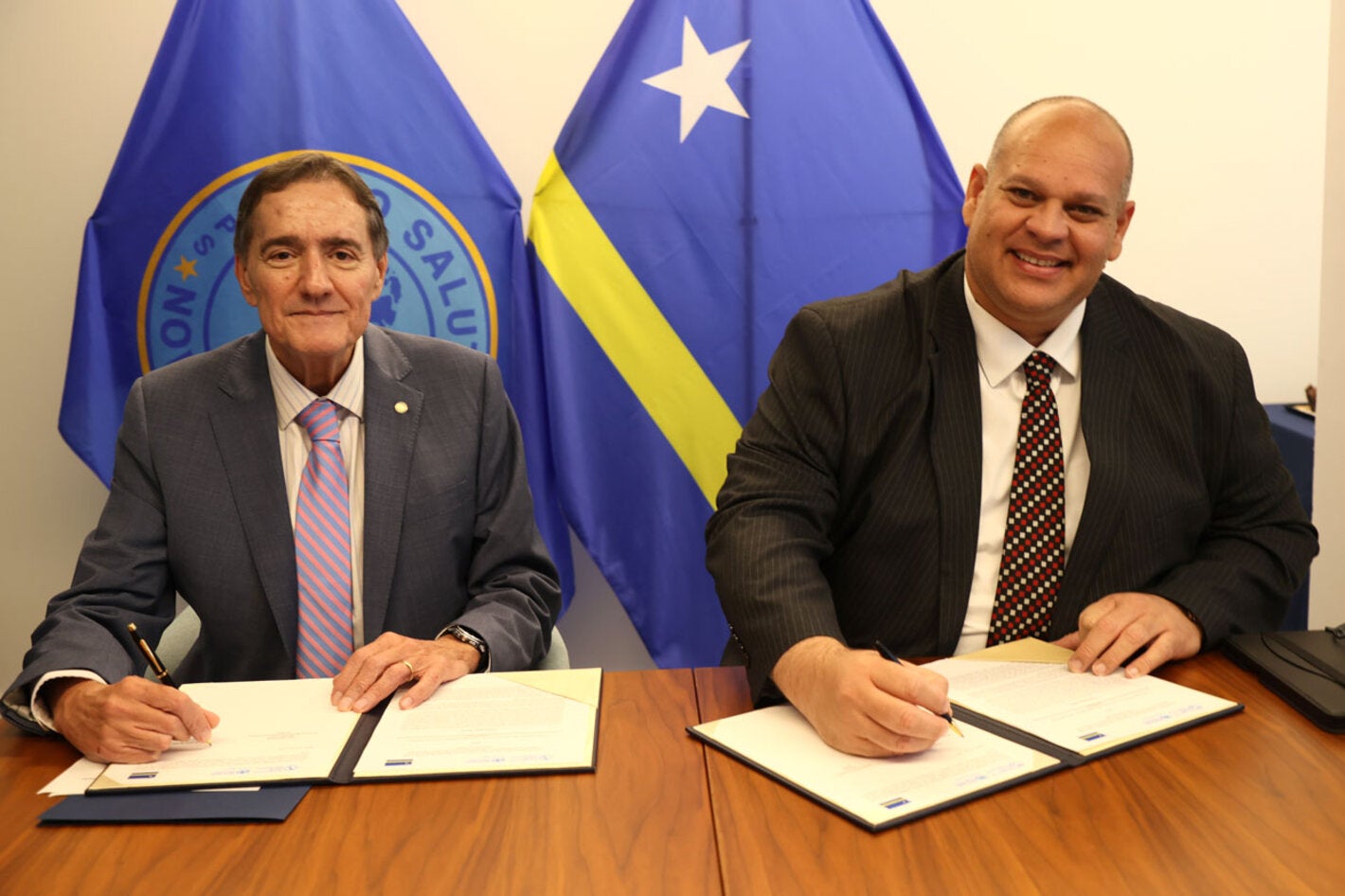
Washington, D.C., 1 October 2026 (PAHO) – The Pan American Health Organization/World Health Organization (PAHO/WHO) and the Government of Curaçao today signed the first Country Cooperation Strategy (CCS) for Curaçao, covering 2026–2031, to support national health priorities and strengthen the country’s health system. The agreement was signed on the margins of the 63rd PAHO Directing Council, taking place this week in Washington, D.C.
The agreement aligns with Curaçao’s National Health Strategy, Un Korsou Salú (A Healthy Curaçao), and PAHO’s Strategic Plan 2026–2031. It establishes three priorities: strengthening integrated, people-centered and climate-resilient primary health care; improving the prevention and management of communicable diseases, noncommunicable diseases and mental health conditions; and building more resilient, sustainable and efficient health systems.
“The first Country Cooperation Strategy with Curaçao provides an important framework for strengthening our technical cooperation and supporting the country’s health priorities,” said Dr. Jarbas Barbosa, Director of PAHO. “Together, we can strengthen primary health care, build more resilient health systems and advance access to quality health services for the people of Curaçao.”
The CCS will guide PAHO’s technical cooperation with Curaçao over the next six years, including efforts to enhance health promotion and disease prevention, strengthen surveillance and vaccination, expand mental health and NCD services, build health workforce capacity, advance sustainable health financing, and accelerate digital health and health information systems.
The CCS was developed through a participatory process involving PAHO/WHO and a wide range of national stakeholders. Equity, gender, human rights and ethnicity are integrated as cross-cutting considerations throughout its implementation.