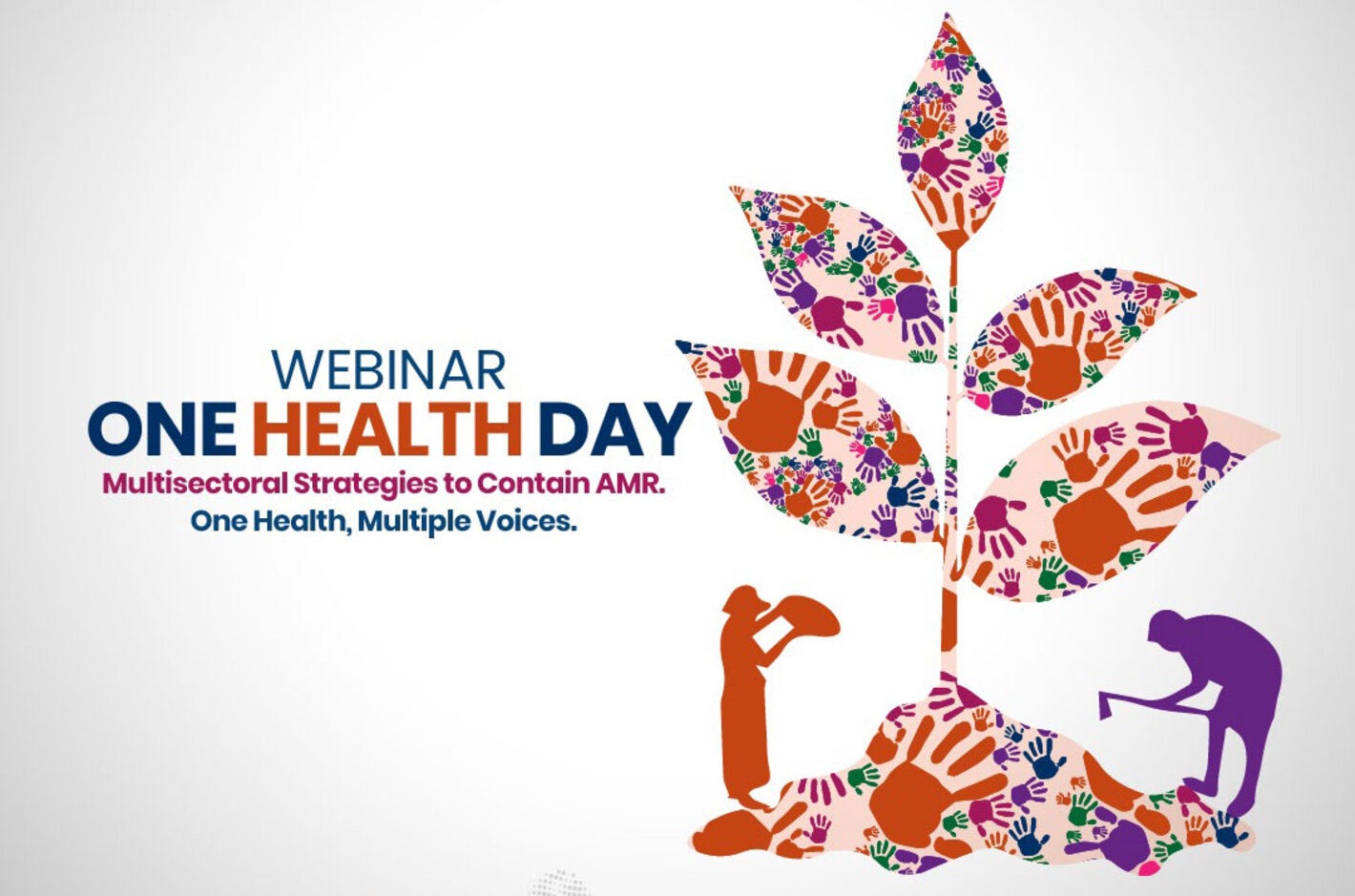
October 30, 2025 - The webinar “Multisectoral Strategies to Contain Antimicrobial Resistance (AMR): One Health, Multiple Voices” brought together experts from diverse sectors to address antimicrobial resistance as a shared societal challenge requiring coordinated action.
Organized by the Pan American Health Organization (PAHO) and ReAct Latin America, in collaboration with the Brazilian Institute for Consumer’s Defense (IDEC) and other partners, the event framed AMR within a One Health approach. Discussions highlighted how antimicrobial use and resistance are shaped by the interconnected dynamics of human, animal, and environmental health. Speakers emphasized the growing global burden of AMR and its cross-sectoral drivers, setting the stage for a rich multisectoral dialogue involving public health, animal health, food systems, academia, and civil society from across Latin America and the Caribbean.
Panelists underscored the importance of making the links between water, food systems, and antibiotic use visible through clear and accessible communication. They stressed the need to translate technical knowledge into narratives that connect with everyday experiences, while strengthening education and scientific literacy at all levels. Concrete examples, ranging from resistant bacteria in wildlife near livestock operations to environmental contamination from human waste, illustrated how AMR circulates across shared ecosystems. These cases reinforced the relevance of the One Health approach across the continuum from “farm to fork” and from “environment to community.”
Discussions on collaboration highlighted persistent challenges, including institutional silos, limited resources, and fragmented data, alongside key enablers such as political commitment, trust, shared evidence, and common objectives. Panelists proposed several mechanisms to operationalize One Health in practice, including the establishment of permanent multisectoral committees, regular cross-sector dialogue, joint field activities, integrated training programs, and coordinated investment strategies. Throughout the conversation, speakers emphasized that meaningful community participation, listening to and working with communities rather than merely targeting them, is essential for sustainable and effective AMR action.
In closing, the organizers reaffirmed the webinar as part of a broader regional effort linking World One Health Day with World AMR Awareness Week. Participants were invited to take part in upcoming regional activities and to engage in the launch of a new storytelling publication amplifying community experiences. The webinar concluded with a collective call to protect antibiotics, safeguard food and water systems, and empower communities to lead long-term, collaborative responses to AMR in pursuit of a healthier and more sustainable future.