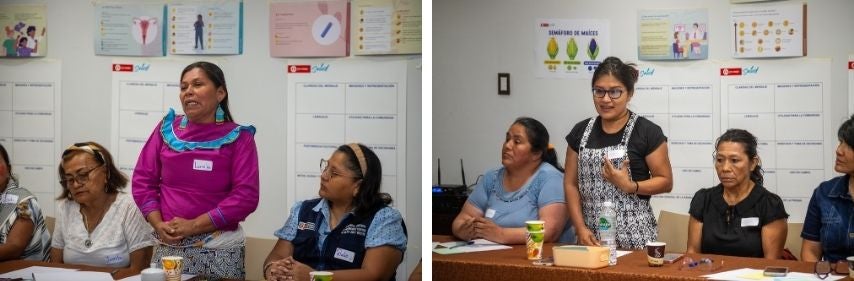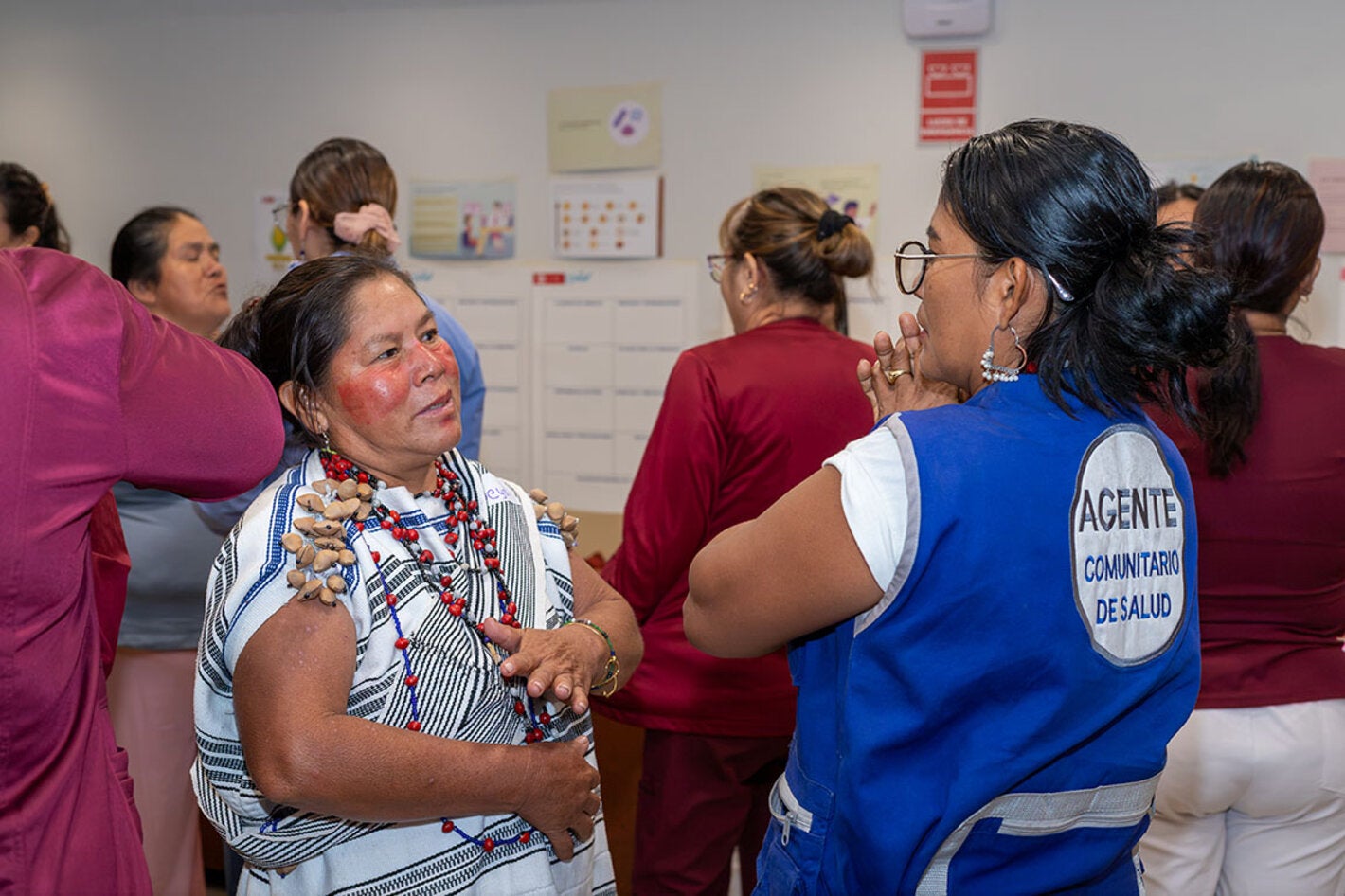
Lima, August 12, 2026. – To address gaps in access, information, and cultural appropriateness in maternal health and family planning, the Pan American Health Organization/World Health Organization (PAHO/WHO), through the Life Course, Women’s and Children’s Health Unit (HL), together with the Loreto Regional Health Directorate (DIRESA Loreto), organized the participatory co-creation workshop “Voces y Saberes Vivos” in Iquitos. The activity aimed to validate and adapt materials on Immediate Post-Obstetric Event Contraception (AIPEO) at the community level, contributing to strengthening family planning counseling, informed access to contraceptive methods, and the prevention of unintended pregnancies during the postpartum period, as part of strategies to reduce maternal deaths in the Peruvian Amazon.
The province of Maynas, in the Loreto region, faces challenges related to obstetric emergency care and records the highest number of maternal deaths in the region. To help change this reality, the “Response to Obstetric Emergencies and Unplanned Pregnancies” project is being implemented. As part of the project, a workshop is being held to validate and adapt materials on Immediate Post-Obstetric Event Contraception (AIPEO), an intervention that strengthens postpartum family planning and supports informed and voluntary decisions about contraception following an obstetric event.
This activity was made possible thanks to funding from MSD for Mothers and Global Affairs Canada, as well as the technical support of Pro Mujer, strategic partners in strengthening maternal and child health and sexual and reproductive rights in the region. The workshop brought together 30 traditional midwives, nurses, regional strategy coordinators, and community health agents and advocates from Loreto, Amazonas, and Ucayali. Their participation provided an opportunity to exchange experiences and integrate perspectives from different Amazonian regions to improve community communication on Immediate Post-Obstetric Event Contraception (AIPEO), family planning, and informed decision-making.
An innovative regional initiative to culturally adapt maternal health and family planning materials
With this workshop, Peru continues an innovative regional initiative aimed at the cultural adaptation of maternal health and family planning materials, with the active participation of Indigenous communities. The experience in the Peruvian Amazon contributes to consolidating a regional methodology that recognizes the value of community knowledge and the participation of local Indigenous communities in shaping culturally appropriate public health policies.
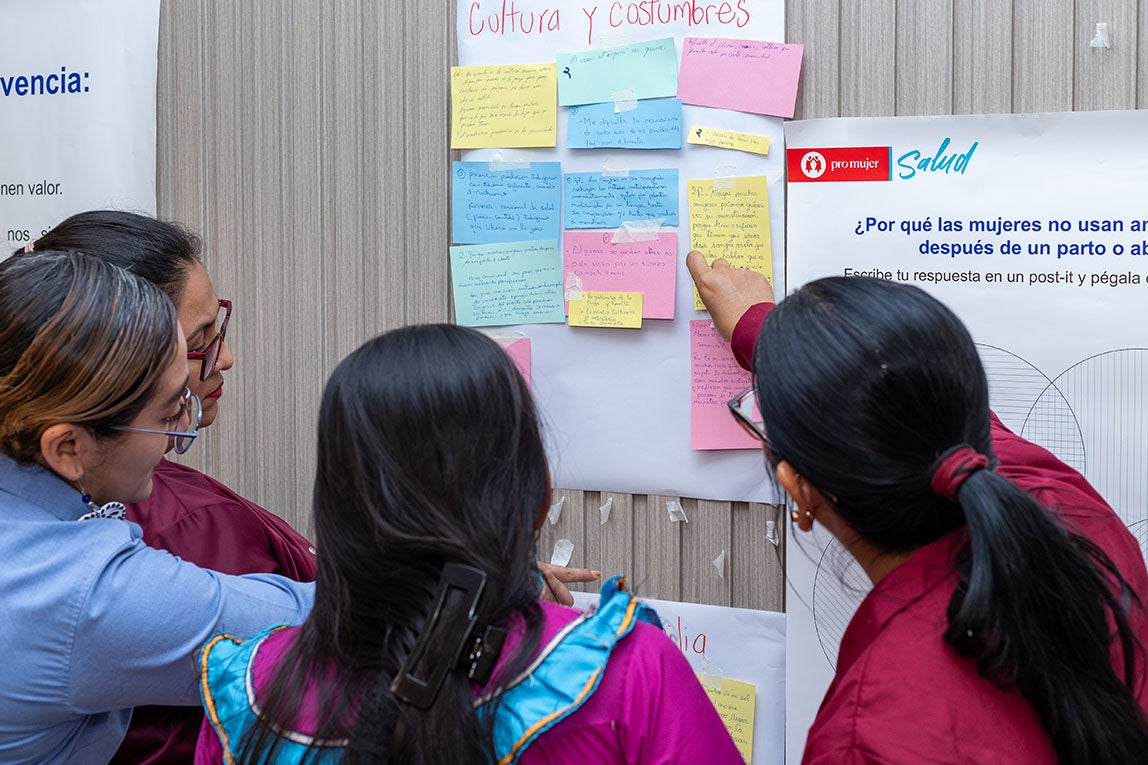
“Voces y Saberes Vivos”, a co-creation space
The heart of the workshop centered on the communities and on actively listening to their real, everyday needs related to sexual and reproductive health. The discussions addressed myths, cultural barriers, and information needs related to family planning and Immediate Post-Obstetric Event Contraception (AIPEO) in rural settings.
Participants agreed that horizontal exchange is key to designing educational materials that reflect and respect their realities while promoting informed, voluntary, and stigma-free decisions. Unlike traditional technical consultation mechanisms, the methodology implemented is based on a critical-dialectical approach inspired by the Latin American community pedagogy of Paulo Freire, which positions communities as active agents in their own transformation and in the co-creation of knowledge.
The working sessions were structured around four methodological pillars, integrated through a participatory approach. A participatory assessment was conducted to identify gaps, local knowledge, and needs related to family planning and Immediate Post-Obstetric Event Contraception (AIPEO). A critical analysis of the community’s role was also promoted to understand and overcome existing tensions between local practices and institutional guidelines. These approaches helped guide the adaptation of messages based on the communities’ own experiences and a rights-based approach.
Building on this process, the co-creation and adaptation phase followed, during which diverse stakeholders jointly proposed messages, metaphors, and images to adapt PAHO’s technical flipchart to their local context. Finally, a replicable methodology was developed to promote access to clear, culturally appropriate, rights-based information on Immediate Post-Obstetric Event Contraception (AIPEO) and self-care, grounded in a sexual and reproductive rights approach.
PAHO/WHO will continue providing technical cooperation to strengthen postpartum family planning, improve the quality of counseling, and ensure that educational materials respond to the needs, languages, practices, and priorities of Amazonian communities.