Washington, D.C., 14 August 2025 - To strengthen national capacities for implementing innovative vector control strategies, the Pan American Health Organization (PAHO) and partners held an international workshop on the operational use of sterile mosquitoes and/or mosquitoes infected with Wolbachia.
With the continued spread of Aedes aegypti and the rising incidence of arboviral diseases such as dengue, countries in the Americas have intensified the search for more effective and sustainable solutions. In this context, PAHO/WHO, in collaboration with the International Atomic Energy Agency (IAEA), organized the “Theoretical–Practical Workshop on New Technologies for the Control of Aedes aegypti: Mass Mosquito Production Systems.”
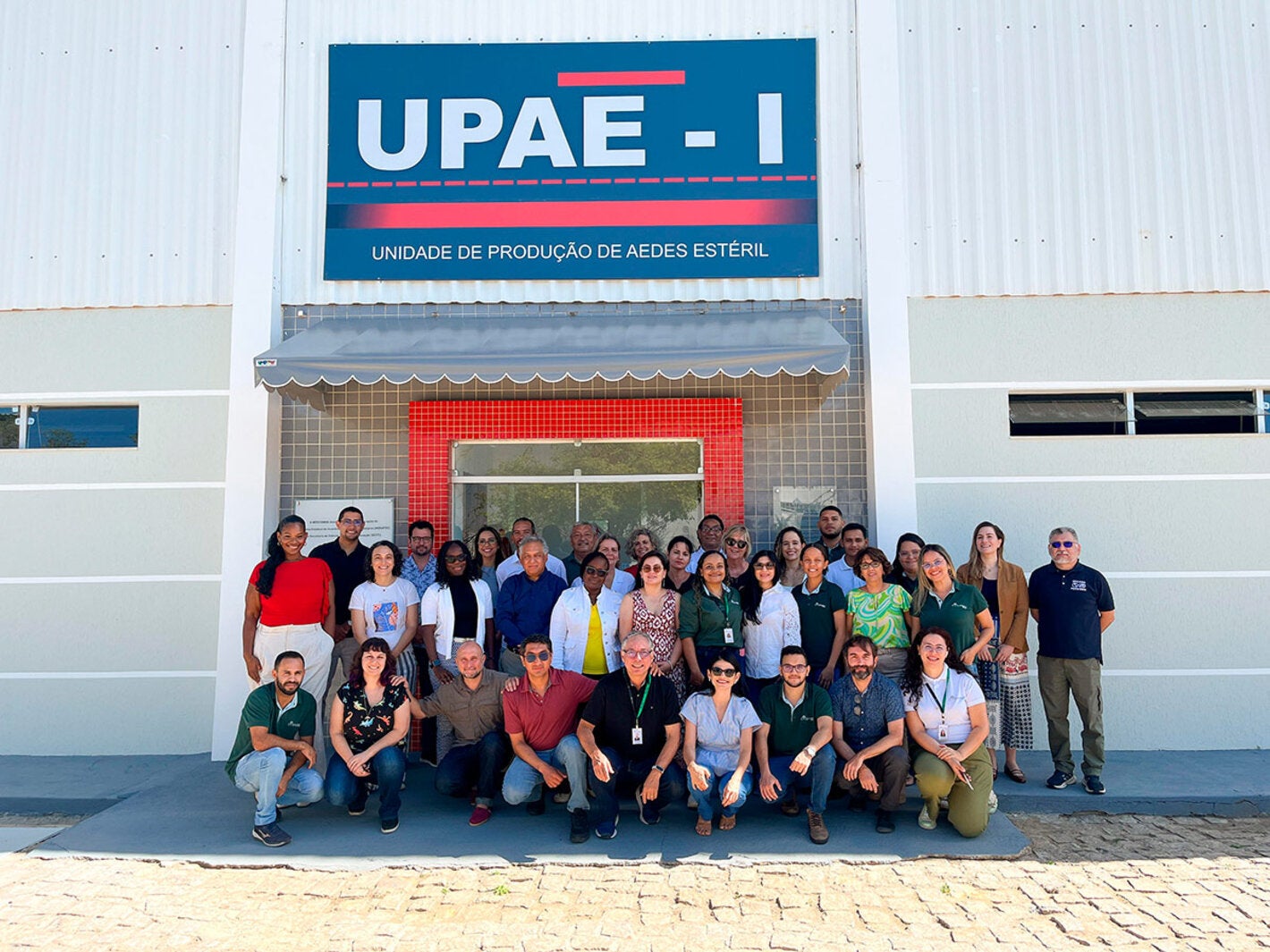
The theoretical phase of the workshop was held virtually from 19 to 21 May 2025, with participation from 18 countries in the Region (Argentina, Bolivia, Brazil, Chile, Colombia, Cuba, Ecuador, Guatemala, Honduras, Jamaica, Mexico, Nicaragua, Panama, Paraguay, Peru, the Dominican Republic, Uruguay, and Venezuela). Practical activities followed in two in-person stages: the first in Mérida, Mexico, from 26 to 30 May, supported by the Universidad Autónoma de Yucatán, and the second in Juazeiro, Brazil, from 4 to 8 August, in collaboration with the Moscamed Biofactory.
Technological innovation and regional cooperation
Conventional vector control methods face major challenges in containing diseases transmitted by Aedes aegypti, including dengue, Zika, chikungunya, and yellow fever. Factors such as limited access to households, incomplete coverage in large urban areas, and increasing insecticide resistance affect the sustainability and impact of these interventions.

The sterile insect technique and Wolbachia-based incompatible insect technique are among the most promising approaches for sustainable vector control. These strategies aim to reduce or replace wild mosquito populations through the controlled release of laboratory-reared mosquitoes, thereby reducing their capacity to transmit disease.
During the workshop, technical teams received training in standardized operational procedures for the mass production of eggs, larvae, pupae, and adult mosquitoes, as well as in quality control techniques and the safe release of sterile males. As a result of this technical exchange, countries developed a preliminary roadmap for implementing national Sterile Insect Technique projects, adapted to their capacities and operational contexts.

Moving toward effective implementation
Introducing these technologies requires investments in infrastructure, staff training, regulatory adjustments, and careful planning. For this reason, workshops of this kind provide a key platform for strengthening the technical capacity of vector control programs and fostering cooperation among countries.
Through these actions, PAHO, the IAEA, and partners reaffirm their commitment to supporting Member States in adopting innovative, evidence-based solutions that help reduce the burden of vector-borne diseases and improve public health in the Region of the Americas.