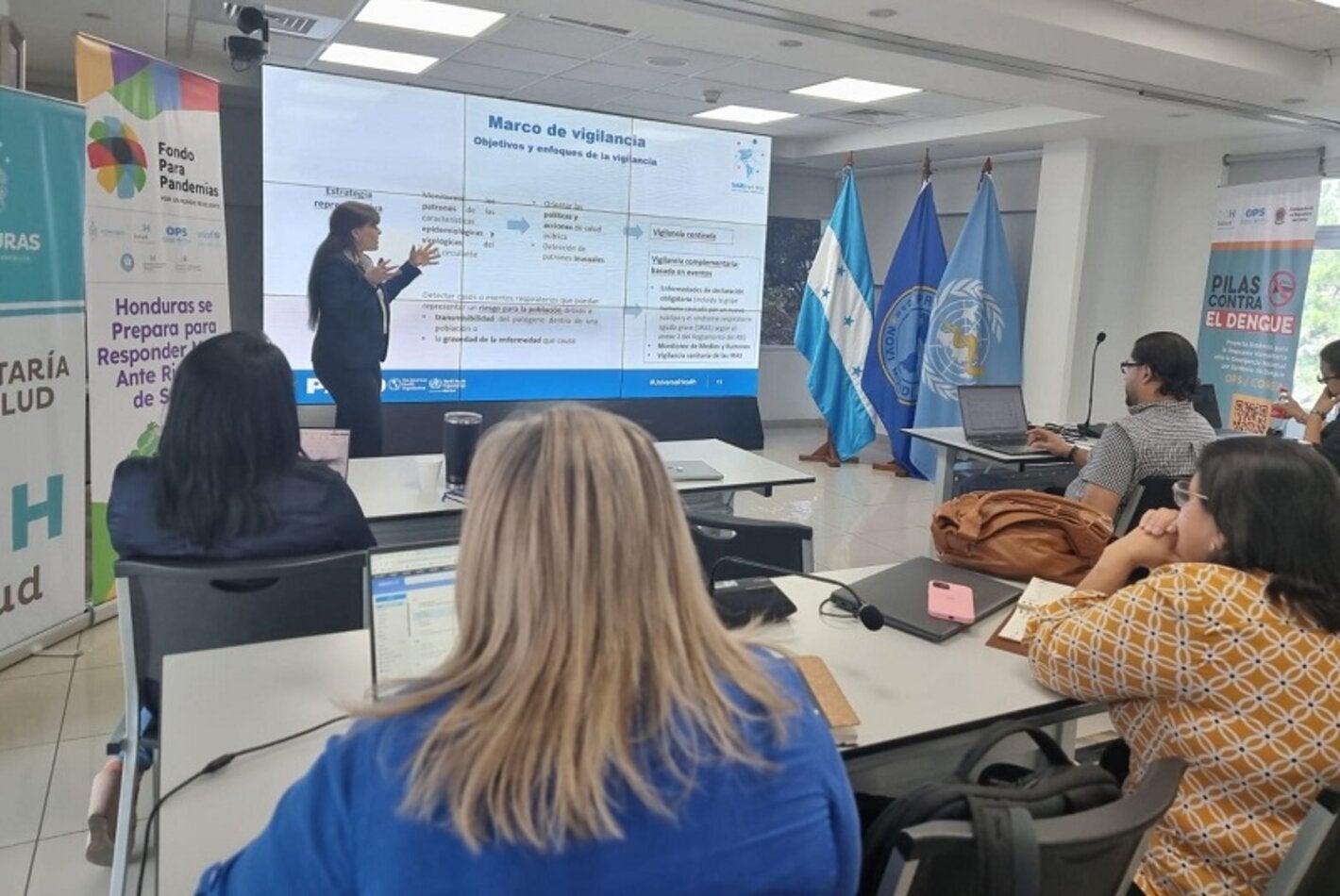
Tegucigalpa, August 15, 2025 (PAHO/WHO) - With support from the PAHO/WHO Pandemic Project, a refresher course on surveillance of influenza, rubella, measles, and pertussis was held for the technical team of the Ministry of Health. This activity strengthens the country's capacity to respond quickly and effectively to emerging respiratory viruses, protecting the health of the population.
The workshop was facilitated by Dr. Paula Couto, an expert from the Regional Health Emergencies Department (PHE), together with the PAHO team in Honduras. Participants included professionals in epidemiological surveillance, infectious diseases, zoonoses, and the National Laboratory, who reviewed key strategies for detecting and responding to threats such as avian influenza, respiratory syncytial virus (RSV), and COVID-19.
One of the highlights was the strengthening of sentinel sites, which are essential for the early identification of possible outbreaks and the activation of protective measures. Priorities for 2026 were also addressed, such as improving information systems, strengthening laboratories, and coordinating surveillance between human and animal health.
Thanks to the support of the Pandemic Project, Honduras is making progress in consolidating functional structures, strengthening institutional leadership, and promoting intersectoral coordination, which are fundamental pillars for an effective response. This reflects the country's commitment to technical, strategic, and collaborative preparedness aimed at building more robust, integrated, and resilient surveillance in the face of future health threats.
PAHO reaffirms its commitment to provide technical support to Honduras, promoting more integrated, efficient, and sustainable surveillance. This joint effort seeks to ensure that Honduran families are better protected against future respiratory threats, because investing in surveillance is investing in health.