Mexico City, November 17, 2026. PAHO — The Mexico City Department of Public Health, together with the Pan American Health Organization/World Health Organization (PAHO/WHO) and in collaboration with the Spanish Agency for International Development Cooperation (AECID), launched the first phase of SISMED 911, a technological platform designed to enhance the management and coordination of medical emergencies through a Computer-Aided Dispatch (CAD) model.
Developed to strengthen prehospital emergency care and improve the management of emergency medical services, SISMED 911 integrates emergency call intake, incident triage and prioritization, resource geolocation, and the real-time dispatch of ambulances, emergency medical teams, and other response assets.

The technical launch was held on November 13 at Torre Insignia in Mexico City, where Nadine Gasman, Secretary of Public Health for Mexico City, underscored the importance of timely and coordinated action during medical emergencies. "In a medical emergency, every minute counts. The speed of our response, coordination among institutions, and our ability to make decisions based on reliable information can mean the difference between life and death," she said.
SISMED 911 was tailored to the operational requirements and workflows of the Medical Emergency Coordination Center (CRUM). Its implementation will strengthen the management of cases and resources involved in prehospital care while generating structured data for monitoring, analysis, and evidence-based decision-making.
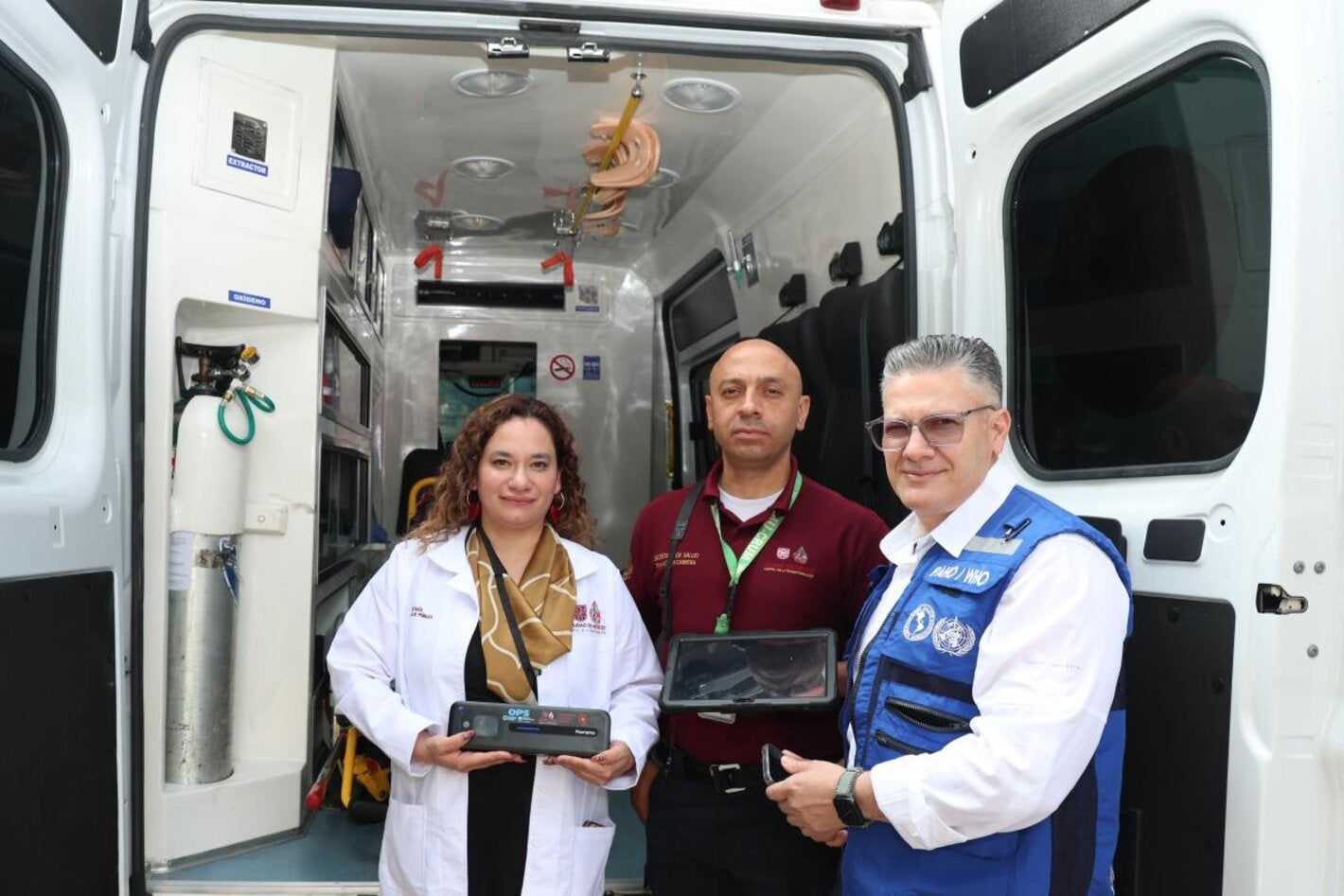
According to Carlois Melo, PAHO/WHO International Advisor for Health Emergencies in Mexico, one of the platform's most significant advances is the digitalization of the Prehospital Care Record Form (FRAP). The tool enables information to be captured directly from ambulances using tablets, incorporates geolocation capabilities, and facilitates real-time tracking throughout the care process. The system also allows the form to be printed whenever required by the relevant authorities.

As part of the event, participants observed a live demonstration of the digital FRAP, including data entry in an ambulance setting and on-site printing of the completed record. The demonstration was led by David Paredes, PAHO/WHO Consultant for Health Emergency Preparedness.
The introduction of SISMED 911 marks an important step toward modernizing prehospital emergency care management in Mexico City by improving the availability, quality, and traceability of information from the moment an emergency is reported. Enhanced access to timely data will support needs assessment, resource tracking, operational oversight, and the continuous improvement of emergency medical services.
Participants also reviewed the platform's implementation process and the redesign of information management across the prehospital care pathway, from emergency call reception and ambulance assignment to real-time monitoring, patient handover at health facilities, and ambulance release. The agenda included a live operational demonstration of the system and the symbolic handover of the platform to Mexico City health authorities.
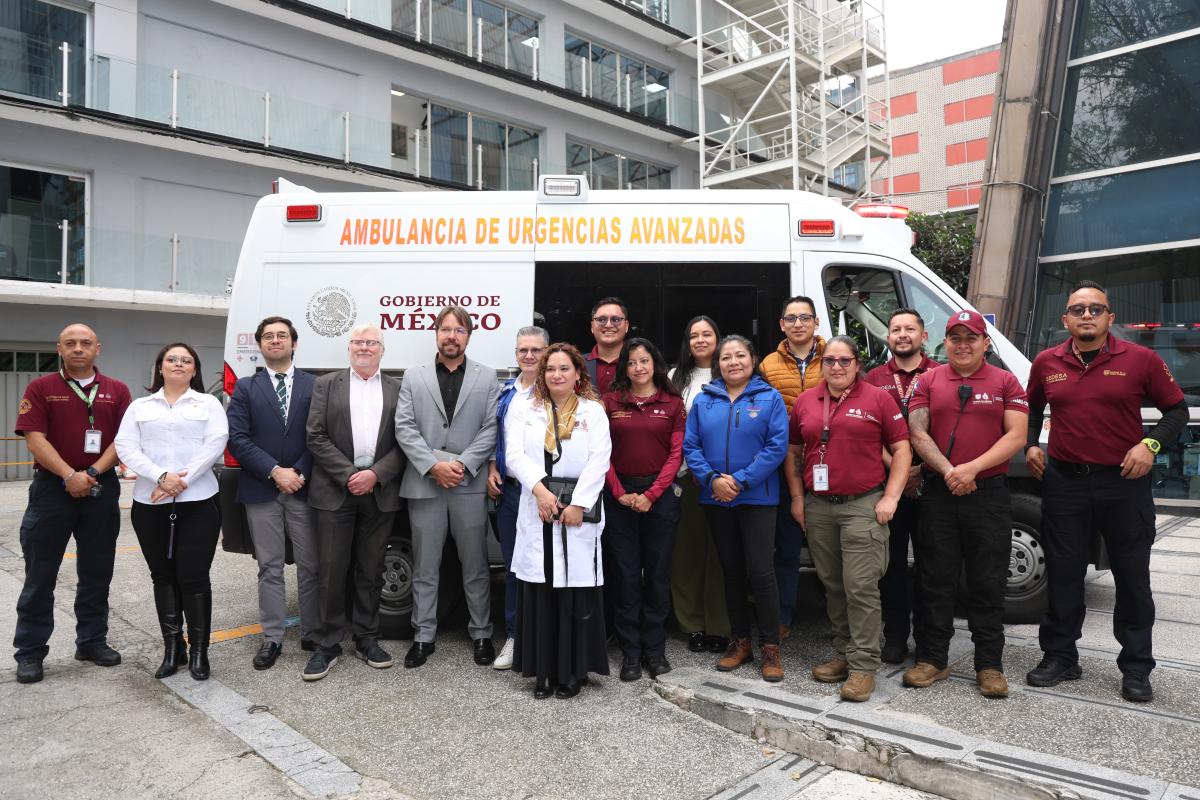
The event was attended by Yanet Fortunata López Santiago, Director for Accident Prevention at the Technical Secretariat of the National Council for Accident Prevention (STCONAPRA); Víctor Aznar, AECID Project Manager in Mexico; members of the PAHO/WHO technical team; and CRUM authorities and technical personnel.