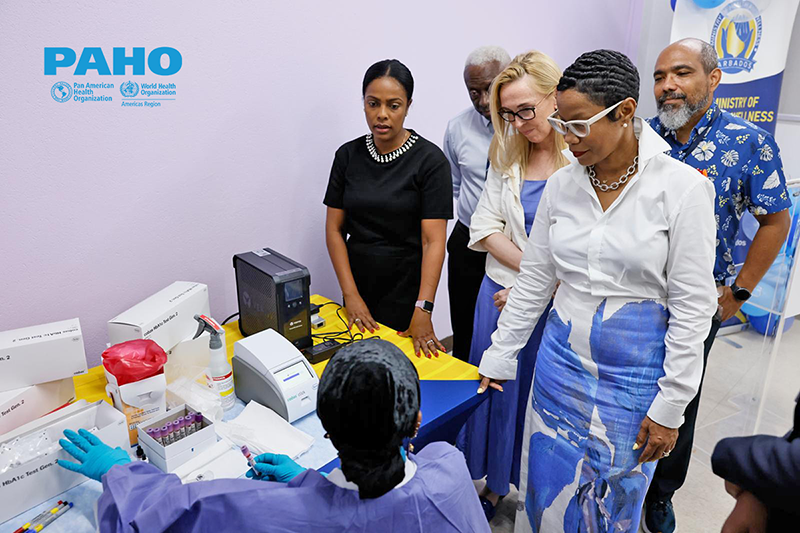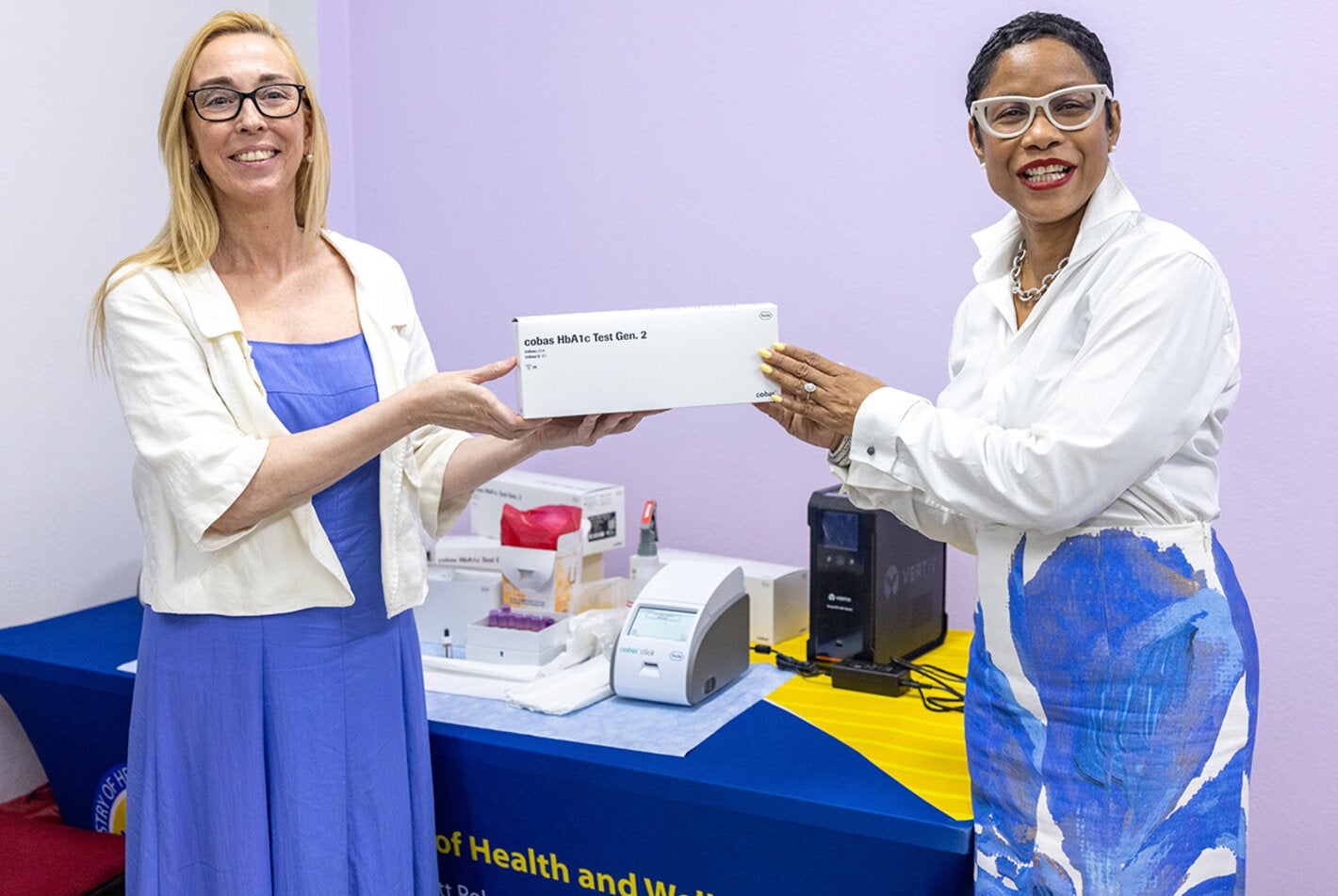
Bridgetown, Barbados, 17 November 2026 (PAHO/WHO) – The Pan American Health Organization/World Health Organization (PAHO/WHO) has handed over 11 HbA1c testing machines and 15,000 test supplies to the Ministry of Health and Wellness to strengthen diabetes monitoring and management at polyclinics across Barbados.
The provision of the equipment forms part of PAHO/WHO's ongoing collaboration with the Ministry to strengthen primary health care services, improve the prevention and control of noncommunicable diseases (NCDs) and bring essential health services closer to communities.
HbA1c testing is an important tool in diabetes care, providing an indication of a person's average blood glucose levels over the preceding two to three months. The equipment and supplies will strengthen the capacity of health professionals to monitor patients living with diabetes, guide treatment decisions and help reduce the risk of diabetes-related complications.
The handover comes shortly after World Diabetes Day, observed on 14 November, reinforcing the importance of diabetes prevention, early detection, regular monitoring and effective management.
Speaking at the handover ceremony, Minister of Health and Wellness, Senator Lisa Cummins, highlighted the importance of the new equipment in improving access to timely diabetes testing and supporting the country's focus on prevention and early detection.
"The first deployment allows us to test for HbA1c levels and to get a result in five minutes. If we are talking about the extremely high levels of diabetes in our country, then the emphasis must be on prevention and early detection," Minister Cummins stated.
She noted that the equipment would also help reduce the lengthy waiting periods traditionally associated with laboratory testing.
"So the days of going to the clinic, getting your blood drawn and sending it off to the lab to wait for a result in days or even longer are behind us with this new investment," she added.
The provision of the equipment complements the Government's plans to upgrade and equip the country's nine polyclinics, expanding the range of services available at the community level. Strengthening these services is an important step towards improving continuity of care for patients living with chronic conditions while reducing unnecessary reliance on hospital-based services, including the Queen Elizabeth Hospital.
PAHO/WHO Representative for Barbados and the Eastern Caribbean Countries, Dr. Eva Jané Llopis, highlighted the significant burden of diabetes in Barbados, noting that the country ranks fifth in the Caribbean and sixth in the wider Region of the Americas in terms of diabetes prevalence, with approximately 18% of adults aged 18 years and older living with the condition.
Against this backdrop, Dr. Jané Llopis emphasized the importance of strengthening diabetes monitoring and management within primary health care settings.
"Having access to appropriate diabetes monitoring within the primary health care setting supports continuity of care and helps health professionals identify when a patient's management may need to be reviewed or adjusted. Ultimately, we want people living with diabetes to receive the care and follow-up they need, without having to rely unnecessarily on hospital-based services for routine monitoring," Dr. Jané Llopis stated.
The equipment and supplies were purchased by the Government of Barbados through the PAHO Strategic Fund, a regional mechanism that supports countries in accessing quality-assured medicines, diagnostic products and other essential health supplies at competitive prices through pooled procurement. By combining the purchasing needs of participating countries, the Fund helps improve access to essential health products and demonstrates the value of regional cooperation in addressing shared public health challenges.
Effective diabetes management requires regular monitoring, appropriate clinical follow-up and access to essential diagnostic tools to support timely and informed decisions about patient care. Strengthening these services at the primary health care level is critical to preventing complications and improving the quality of life of people living with diabetes.
Through continued technical cooperation with the Ministry of Health and Wellness, PAHO/WHO remains committed to strengthening people-centred primary health care, advancing the prevention and control of NCDs and supporting better health outcomes for the people of Barbados.