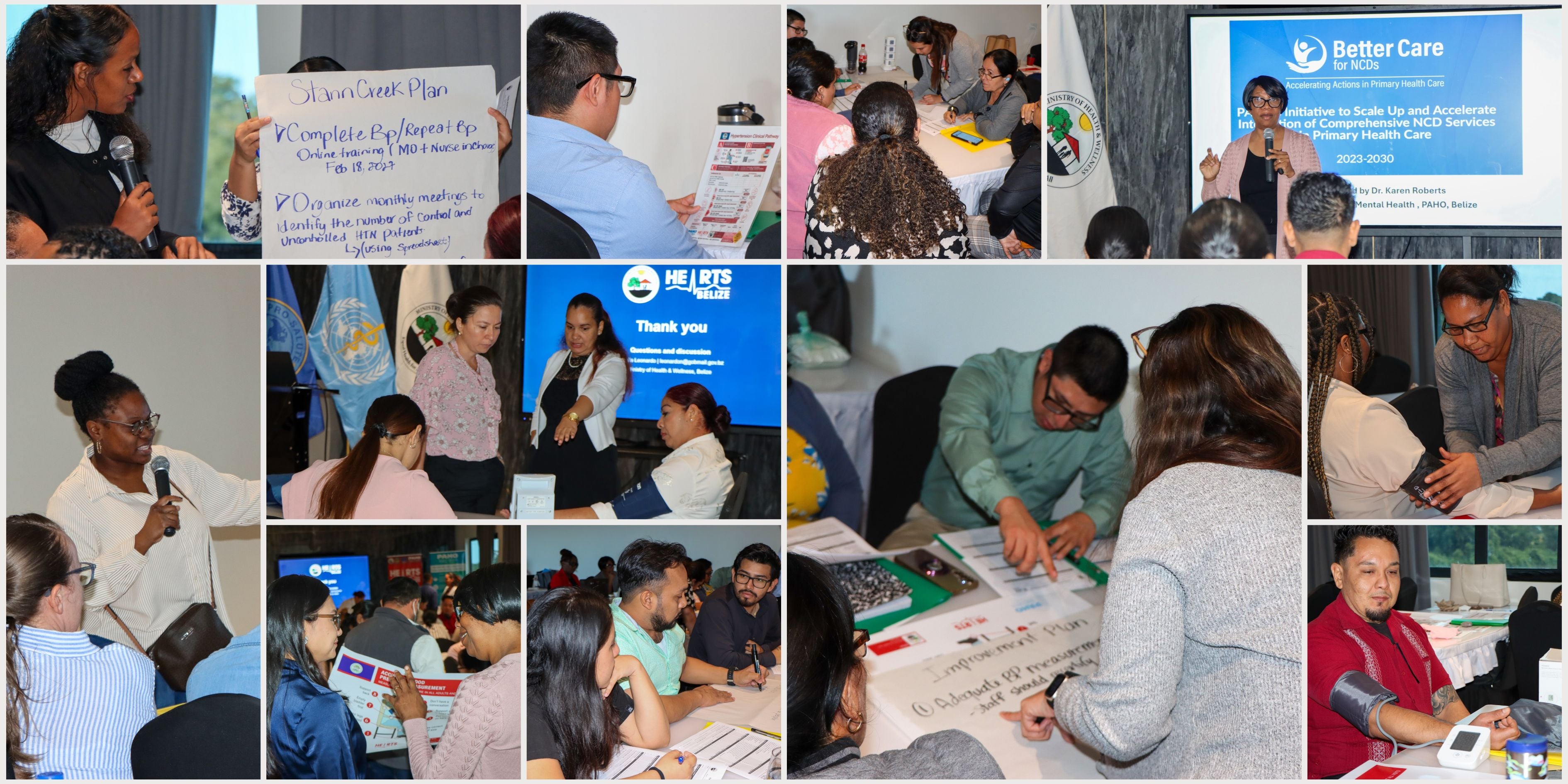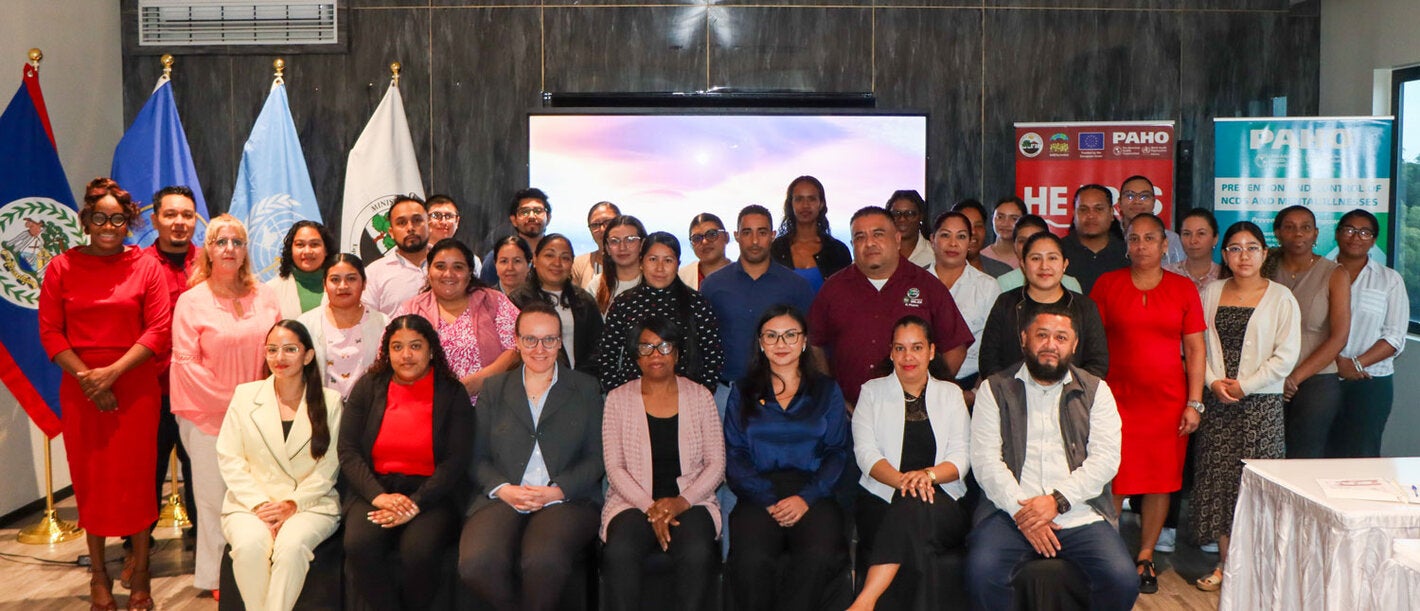
Belize City, Belize, November 20, 2026 (PAHO) – The Pan American Health Organization/World Health Organization (PAHO/WHO), in collaboration with the Ministry of Health and Wellness (MoHW), advanced the implementation of the Better Care for Non-communicable Diseases (NCDs) in Belize through a two-day capacity-building workshop on the HEARTS Initiative, which provides a practical approach to improving cardiovascular health.
Cardiovascular diseases remain a major public health concern in Belize. In 2025, heart disease was the leading cause of death in the country, accounting for 309 deaths. In Belize, approximately one in three adults lives with hypertension, and more than four in ten of them are estimated to be unaware of their condition, highlighting the importance of early detection and access to timely care.
The workshop brought together over 40 health professionals, including physicians, nurses, and pharmacists from primary health care facilities across the country, particularly those who had not previously received HEARTS training. The workshop focused on improving the prevention, early detection, and management of cardiovascular diseases, including hypertension, at the primary health care level.
Since adopting the Global HEARTS Initiative in 2023, Belize has continued to expand the capacity of its health workforce with technical support from PAHO/WHO. For 2026, more than 250 health professionals across the country have received HEARTS training.
“Strengthening the capacity of primary health care workers is essential to closing the gaps in the prevention, early detection, management and control of cardiovascular diseases and other noncommunicable diseases (NCDs),” shared Dr. Karen Roberts, PAHO/WHO Technical Advisor for NCDs and Mental Health. “Through the HEARTS Initiative, PAHO/WHO supports countries in improving cardiovascular care through evidence-based interventions, including standardized clinical protocols, cardiovascular risk assessment, healthy lifestyle counselling, access to essential medicines and technologies.”
During the workshop, participants engaged in practical exercises on accurate blood pressure measurement, cardiovascular risk assessment, treatment, and patient follow-up. They also identified priority actions to apply what they learned in their respective facilities over the following 90 days, with continued mentorship and support.
“Our goal is to ensure that every person at risk of cardiovascular disease or living with cardiovascular disease can access timely, standardized, and quality care within our primary health care system,” shared Dr. Laura Friesen, Deputy Director of Public Health and Wellness of the MoHW. “By equipping more health professionals with the knowledge and skills to prevent and manage cardiovascular diseases, we are taking an important step towards reducing avoidable complications and improving the health and well-being of Belizeans.”