Assessing damage, identifying priority needs and maintaining essential health services remain key priorities.
Washington, D.C., 20 August 2026 (PAHO) – Just over one week since a magnitude 7.4 earthquake struck Colombia on 10 August, the health response is moving into its next phase, with efforts focused on assessing damage levels to health infrastructure, identifying priority needs and maintaining essential health services in affected communities, according to the latest health situation report.
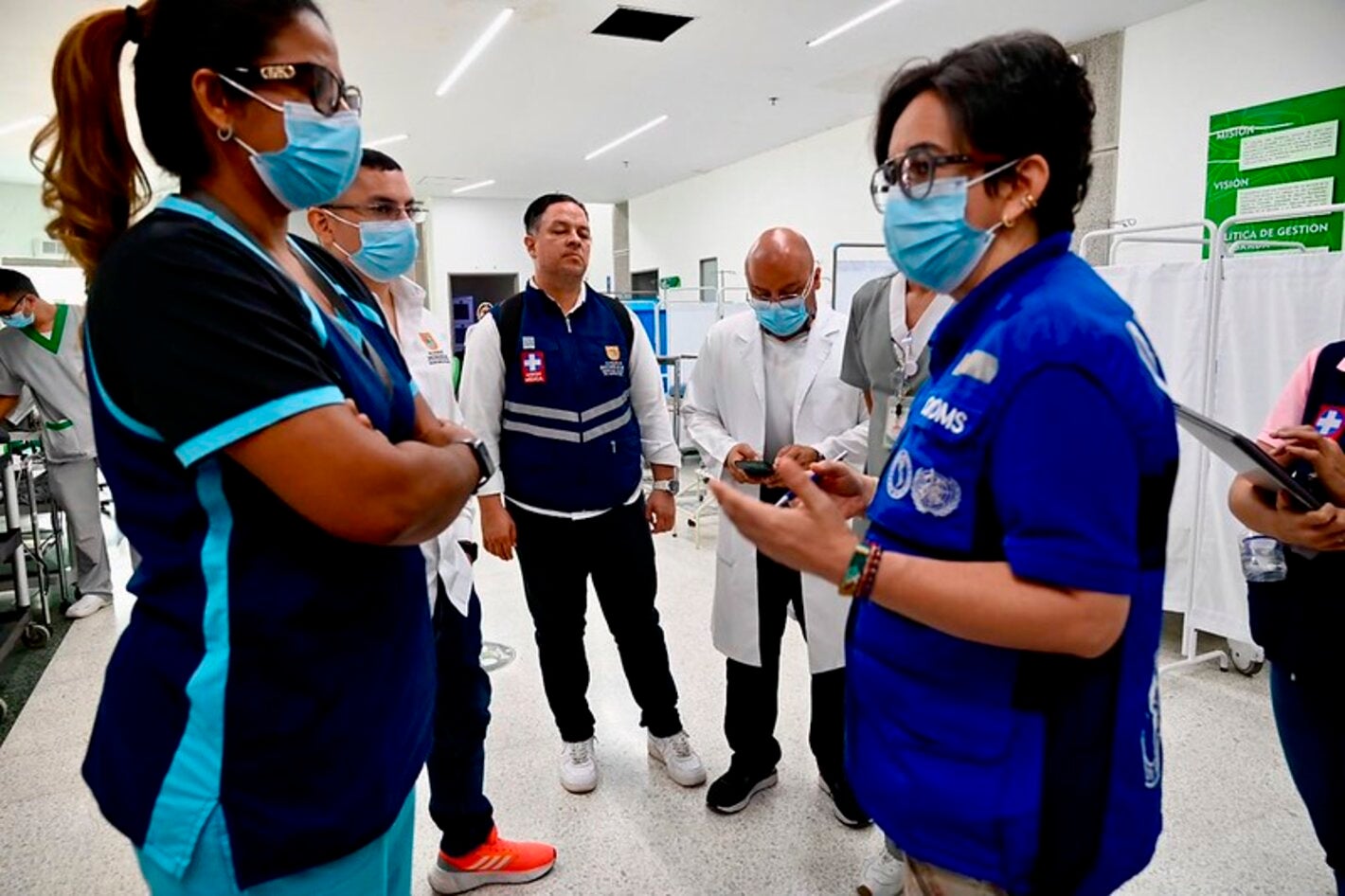
PAHO/WHO continues to support Colombia’s Ministry of Health and Social Protection (MSPS), the National Institute of Health (INS) and local health authorities across these areas, including through assessments of damaged health facilities, monitoring of health risks in temporary emergency shelters, coordination of Emergency Medical Teams (EMTs), and actions on water, sanitation, hygiene and mental health.
According to the situation report, 303 health establishments have been affected across 11 of the 15 departments impacted by the earthquake. As of 18 August, the Ministry of Health had verified damage at 192 facilities and prioritized 50 where damage could compromise the continuity or capacity of health services.
“We are now moving from the immediate response to the next phase, where it is critical to understand the extent of damage to health services, identify the most urgent needs and ensure that essential care continues to reach affected communities,” said Dr. Ana Rivière Cinnamond, PAHO/WHO Representative in Colombia. “PAHO/WHO is working closely with Colombia’s health authorities to strengthen these capacities and support decisions based on the needs identified on the ground.”
Assessing damage to maintain health services
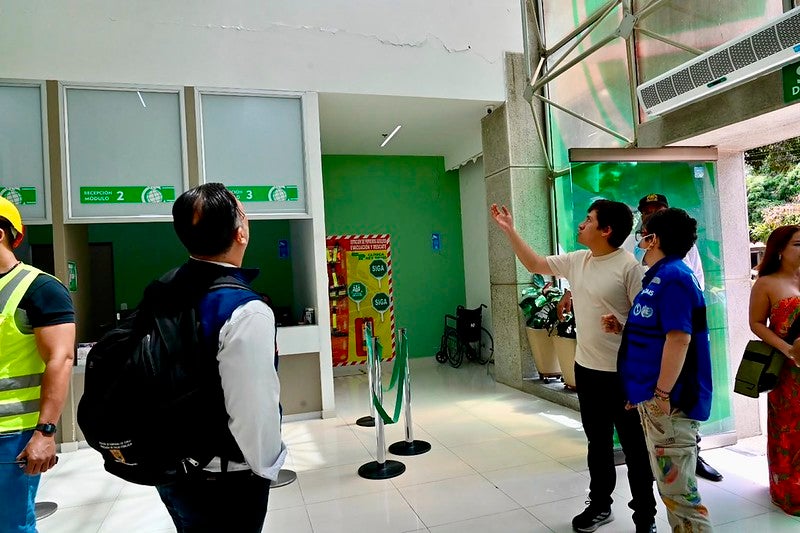
PAHO/WHO is working with the Ministry of Health to assess the condition of health facilities affected by the earthquake and identify those requiring the most urgent attention.
PAHO/WHO has trained health personnel to carry out rapid assessments of damaged facilities. Where more serious damage is identified, engineers and architects carry out additional assessments to determine what is needed to reinforce or maintain services.
The Organization is also helping health authorities bring this information together so they can see where the greatest needs are and prioritize support and interventions.
Monitoring health risks in temporary shelters
PAHO/WHO is also supporting health authorities to monitor the health of people living in temporary emergency shelters.
As of 18 August, 75 temporary shelters were operating across seven affected departments and districts. PAHO/WHO has worked with the INS to strengthen a system that helps health authorities monitor symptoms and identify unusual increases in illness, allowing them to investigate potential health risks and respond early.
The information collected in the shelters is being brought together to help authorities monitor the situation and make timely decisions. According to the situation report, Colombia’s national disease surveillance system remains operational despite the earthquake, with 99.94% compliance with reporting requirements during epidemiological week 32.
PAHO/WHO is also supporting measures to reduce health risks in shelters and affected health facilities, including monitoring water quality, providing bottled water and cleaning supplies, promoting food safety and strengthening measures to control vectors and pests.
Coordinating emergency medical teams according to needs
At the request of the Ministry of Health, PAHO/WHO activated a virtual Emergency Medical Team Coordination Cell (CICOM) on 14 August to register and review offers of emergency medical assistance.
The response continues to rely primarily on national capacities. One national EMT is currently operating in three locations, while two additional teams are in the process of mobilization. The Hospital Ship San Raffaele has deployed mobile teams in Bajo Calima, Río Cajambre and Cali, with additional specialized surgical capacity being mobilized for Litoral del San Juan.
International EMTs are also on standby should the Ministry of Health determine that their deployment is needed. The coordination mechanism will remain active to assess offers against identified needs, with no international deployment initiated without authorization from the Ministry.
Protecting health and restoring essential capacity
PAHO/WHO is supporting mental health and psychosocial response efforts through psychological first aid training, strengthening mental health referral pathways and supporting frontline responders.
Laboratory services are also being affected. Public health laboratories in Quindío, Risaralda and Caldas remain closed because of infrastructure damage, while activities at the Valle del Cauca public health laboratory have been temporarily suspended while its infrastructure, safety and equipment are assessed.
PAHO/WHO is supporting authorities to maintain alternative arrangements for receiving, transporting and processing priority samples while these laboratories work to restore their operations.
Continued support for the next phase
This emergency has deepened and amplified protracted, underlying vulnerabilities that were already affecting the population. As Colombia moves into the next phase of the response, significant health needs remain, including temporary health facilities, biomedical equipment, medicines, supplies to expand hospital capacity, diagnostic reagents and laboratory supplies, and materials to support water and food safety monitoring. These needs are compounded by concerns over increased rainfall associated with the El Niño phenomenon, which could further affect already vulnerable communities, increase the risk of waterborne and vector-borne diseases, and place additional pressure on health services.
PAHO/WHO continues to work with Colombia’s national and local health authorities and partners to identify critical gaps, strengthen response capacities and mobilize the support needed to maintain essential health services and protect the health of communities affected by the earthquake.