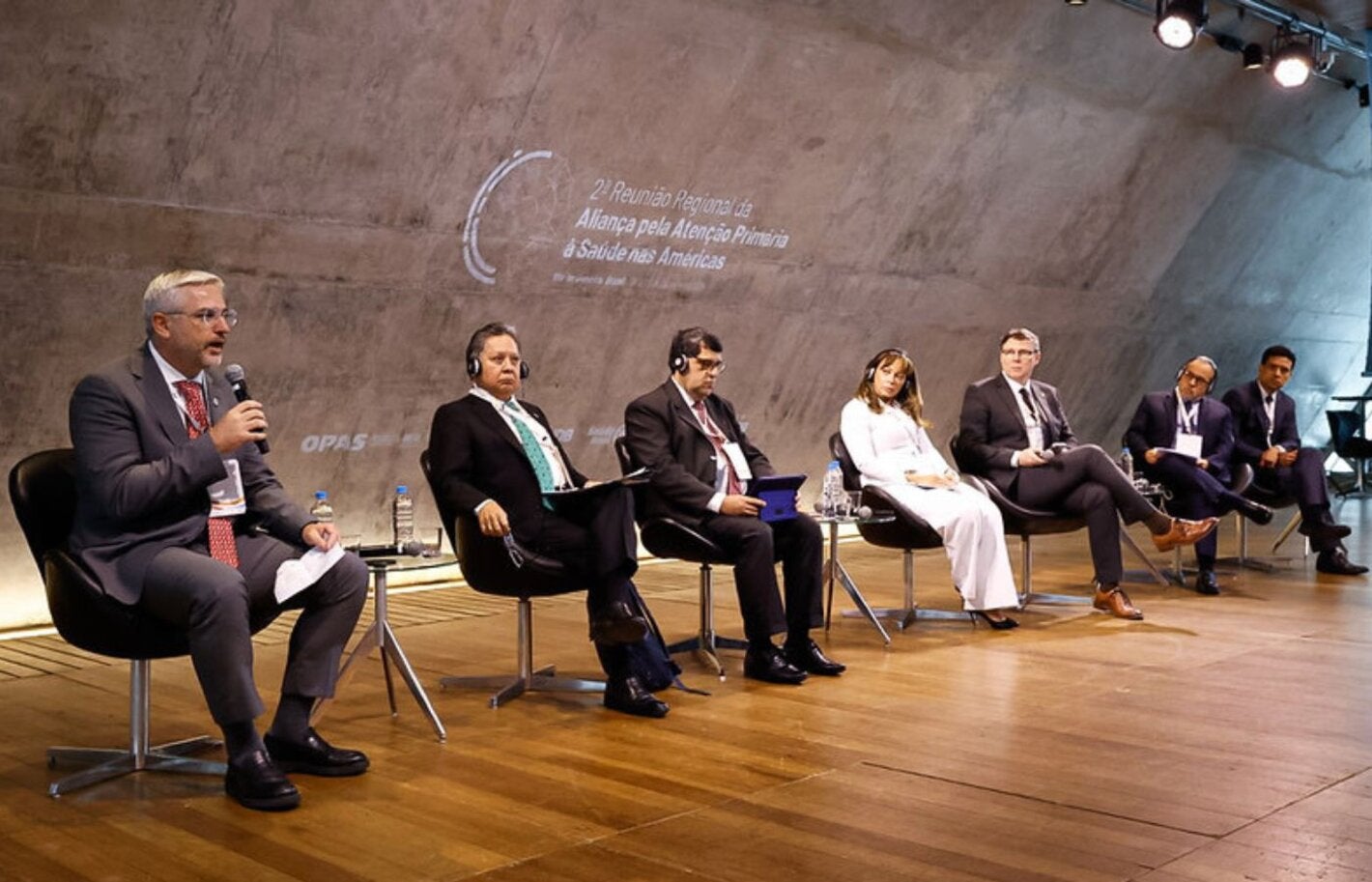
Rio de Janeiro, 26 January 2026 (PAHO) — As part of the II Regional Forum of the Alliance for Primary Health Care in the Americas, the panel “Two Years of the Alliance” was held as a space for reflection and assessment of the progress achieved since the launch of the initiative, as well as the main challenges to accelerating health system transformation across the Region.
The panel was moderated by Adriano Massuda, Executive Secretary of Brazil’s Ministry of Health, who highlighted the central role of primary health care in expanding access and transforming models of care, as well as the need to strengthen system responsiveness to emerging challenges. In this context, he underscored the importance of political leadership, innovation, and prioritizing health within public investment agendas, as well as the role of the Alliance in identifying shared challenges and country-specific priorities.
From the country perspective, Yudelka Batista, Vice Minister of Health of the Dominican Republic, presented the experience of the PHC Alliance’s Mesa Consultiva as a strategic instrument to align national priorities, technical cooperation, and investments. She highlighted the leadership of the Ministry of Health and coordination with the public insurer, with support from PAHO and multilateral organizations.
Manuel Zambrano, Vice Minister of Health of Panama, noted that the Mesa Consultiva has strengthened coordination among key health system actors, facilitating the alignment of technical and financial cooperation in priority areas such as institutional integration, digital transformation, and the elimination of communicable diseases.
Juan Marcelo Estigarribia, Chief of Staff of Paraguay’s Ministry of Health, described how the Mesa Consultiva functions as a permanent mechanism for coordination and follow-up, with governance that combines political leadership, technical steering, and aligned international cooperation. This approach, he noted, enables technical consensus to be translated into strategic decisions and operationalizes a comprehensive vision of primary health care.
In his remarks, James Fitzgerald, Director of the Department of Health Systems and Services at PAHO, emphasized that while progress has been made in strengthening primary health care in the Region, there are also limitations in the capacity to generate solutions to new challenges facing health systems, including those related to mental health, changes in epidemiological profiles, and the impacts of political, economic, and social crises. In this context, he noted that the Alliance plays a key role in helping to identify these challenges, make progress visible, and define country priorities to guide future work on primary health care.
Jaime Saavedra, Director of Human Development for Latin America and the Caribbean at the World Bank, underscored the need to recognize persistent gaps in quality and health spending between and within countries in the Region, and to position primary health care as a priority within the development agenda, supported by evidence-informed decision-making.
Javier Guzmán, Chief of the Health, Nutrition and Population Division at the Inter-American Development Bank, highlighted the value of the Alliance as a formal platform for collaboration that promotes joint work among institutions and countries, noting that the challenge ahead is to move from commitments to implementation, with clear priorities, monitoring mechanisms, and opportunities for cross-country learning.
The panel agreed that, two years after its creation, the Alliance for Primary Health Care in the Americas has consolidated its role as a key platform for strengthening governance, aligning investments, and accelerating concrete actions to advance toward more equitable, resilient, and people-centered health systems.