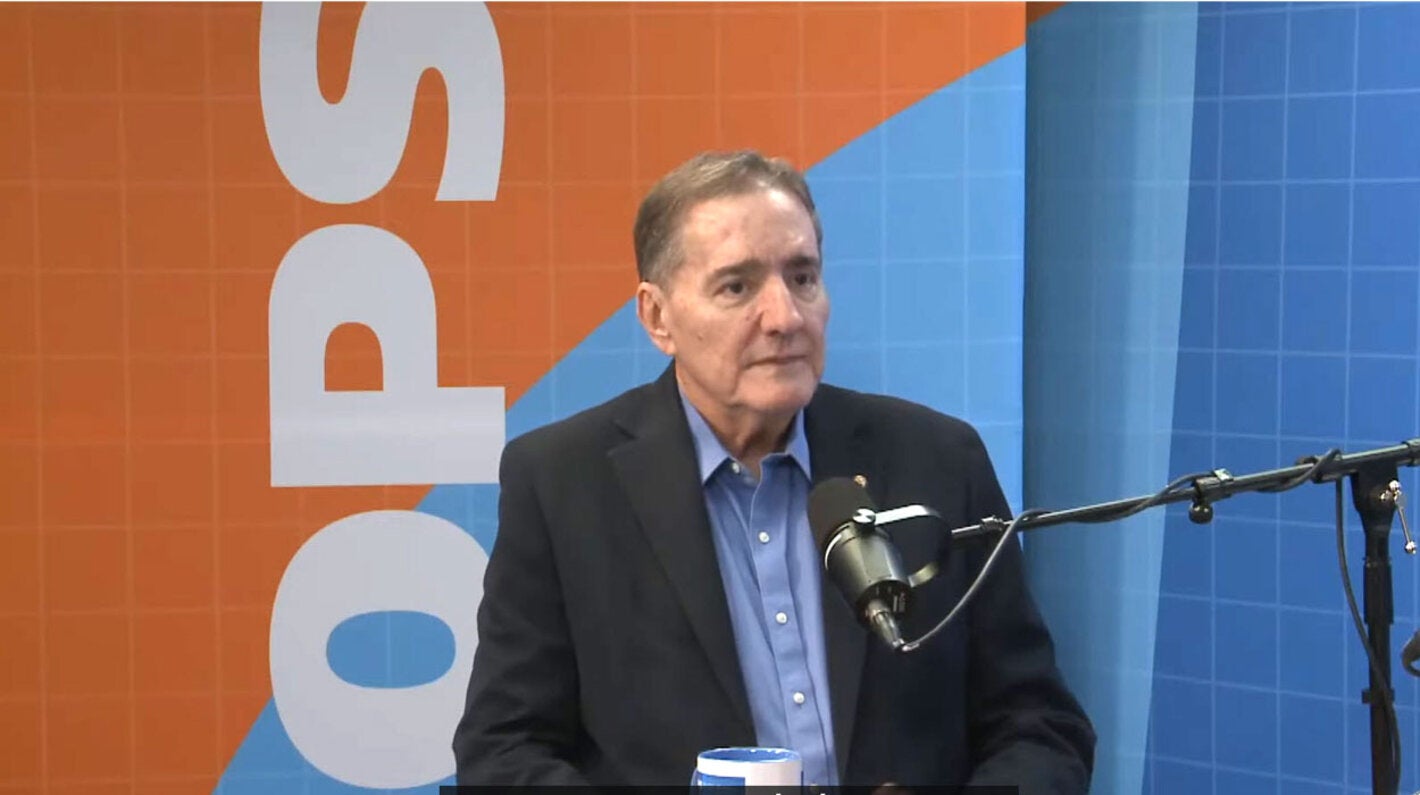
Washington, D.C., February 26, 2026 (PAHO) — In the latest episode of the podcast Let’s Talk About Health, the Director of the Pan American Health Organization (PAHO), Dr. Jarbas Barbosa, presented an overview of his first three years in office and analyzed health achievement and challenges in the Region of the Americas at the start of 2026.
“It is a very positive assessment, despite the challenges,” said Dr. Barbosa, highlighting progress in strengthening capacities for prevention, detection, and response to public health emergencies, including the consolidation of a regional genomic surveillance network with the participation of 30 countries.
He also underscored the partnership with the World Bank and the Inter-American Development Bank (IDB) to revitalize primary health care, an initiative that several countries in the Region are supporting. He also highlighted progress under the Elimination Initiative, with recent certifications of the interruption of vertical transmission of HIV in several countries, including Brazil, and the elimination of malaria in Suriname, the first country in the Amazon region to achieve this milestone.
Nevertheless, the PAHO Director warned that the epidemiological landscape remains complex. Outbreaks of communicable diseases such as measles, dengue, and chikungunya persist, while noncommunicable diseases continue to account for 80% of deaths in the Region. “Around 34% of those deaths could be prevented if we strengthen the problem-solving capacity of primary health care to diagnose and control conditions such as hypertension and diabetes,” he emphasized.
Dr. Barbosa also pointed to the widening gap between life expectancy and healthy life expectancy, challenges in maternal mortality and mental health, the need for increased public health financing, and a projected shortage of between 600,000 and one million health workers by 2030, with issues of distribution and training, especially in rural areas and the Caribbean.
“A major challenge is to add more healthy years to the years we are gaining in life expectancy,” he said.
To address this situation, he highlighted three strategic priorities:
- Strong emergency preparedness, with continuous surveillance and coordinated regional response to ensure health security.
- Resilient health systems, with strong, integrated, and problem-solving primary health care, and ideal public financing of at least 6% of GDP, compared to the current 4.3%.
- Effective stewardship by Ministries of Health in carrying out essential public health functions.
The PAHO Director also discussed progress made in the regional production of vaccines and medicines—key to reducing vulnerabilities in future emergencies—the ethical use of artificial intelligence in telehealth, and the training of health professionals on dengue through PAHO’s Virtual Campus for Public Health, which has contributed to a significant reduction in mortality.
He also referred to the impact of reductions in international cooperation funding, which, he noted, requires adaptation without compromising health priorities.
The full episode, in Spanish, is available on PAHO’s YouTube channel and on podcast platforms.