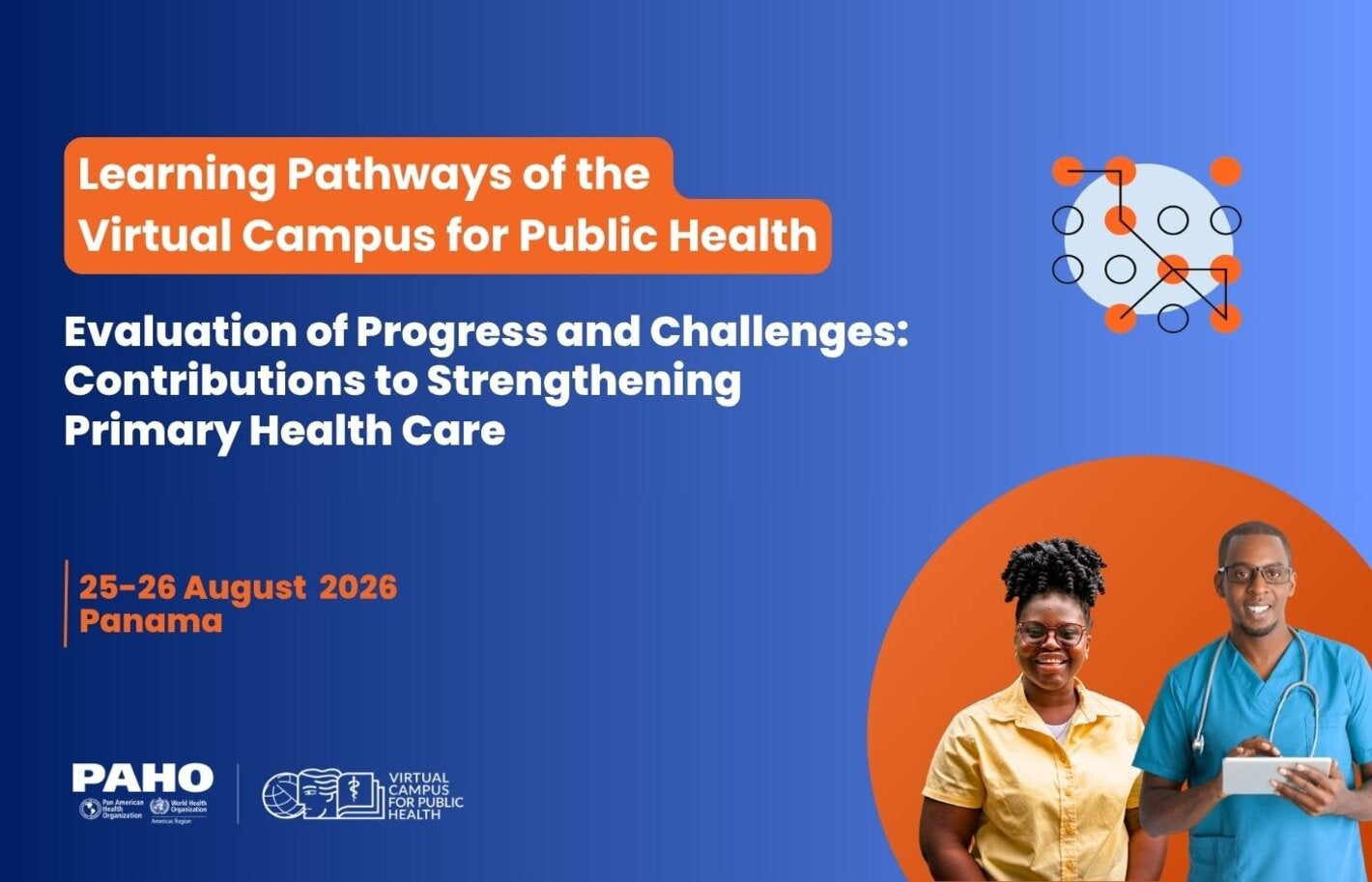
Panama City, 26 August 2026 (PAHO) – Representatives from countries, educational institutions, international organizations, and technical departments of the Pan American Health Organization (PAHO) met on 25 and 26 August in Panama City to review progress and challenges related to the Learning Pathways of the Virtual Campus for Public Health (VCPH) and develop recommendations to strengthen this lifelong learning strategy, with a particular focus on Primary Health Care (PHC).
The Workshop on the Evaluation of Progress and Challenges of the Virtual Campus for Public Health Learning Pathways: Contributions to Strengthening Primary Health Care was organized by PAHO with the support of the Spanish Agency for International Development Cooperation (AECID). The meeting aimed to analyze and validate the experience gained in the design and implementation of Learning Pathways and identify recommendations for their future development, incorporating progressive competency development, recognition of learning, and new approaches to certification.
Learning Pathways are a VCPH strategy for organizing continuing professional development through structured, progressive, competency-based learning experiences that can integrate courses, seminars, communities of practice, and other educational opportunities. Their development responds to a context in which the needs of health systems and the competencies required of the health workforce are constantly evolving.
During the opening session, Gabriel Listovsky, Chief of PAHO’s Special Program Virtual Campus for Public Health, highlighted that the strategy emerged from the need to rethink how best to support the professional development of health workers throughout their careers.
“Learning Pathways invite us to think about learning around competencies, through progressive pathways linked to the specific performance needs of health services. This workshop is an opportunity to review the progress made, identify opportunities for improvement, and work together to define the next steps,” Gabriel Listovsky said. He also expressed special appreciation for the support of AECID, which has supported PAHO’s work on lifelong learning over the past two years and has made it possible to further advance discussions on Learning Pathways, with a focus on Primary Health Care.
Lilian Reneau, PAHO/WHO Representative in Panama, a.i., noted that for more than two decades the Virtual Campus has served as a technical cooperation initiative to strengthen the capacities of health workers and teams.
“We need to move toward learning opportunities that accompany people throughout their professional careers. This workshop allows us to jointly review the progress made, share experiences and lessons learned, and identify the challenges ahead,” Lilian Reneau said.
The opening session also included Amélie Chenin, First Counsellor of the Embassy of France in Panama, who emphasized the importance of lifelong learning in the context of the transformations affecting health systems and the work of health professionals.
“Population needs are changing, professional practices are changing, and new tools are emerging that are transforming the way we work. Digitalization and artificial intelligence are part of this transformation, but their impact will depend above all on our capacity to train those who will use these tools and support these changes,” Chenin said.
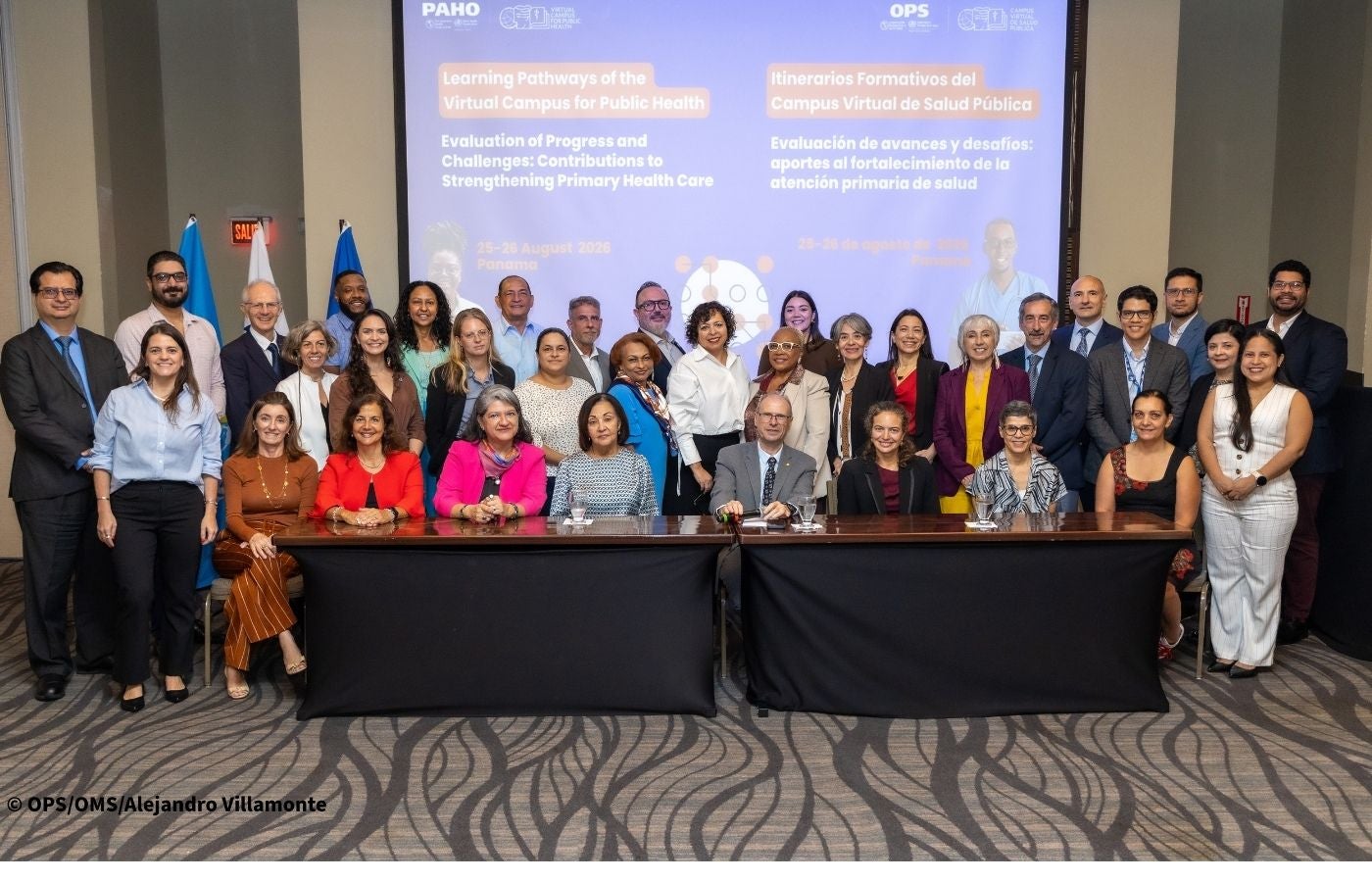
Over the two days, discussions addressed learning pathways for competency development, the integration of courses from different institutions, the use of artificial intelligence for competency mapping, microcredentials and progressive certification, the evaluation of the “Primary Health Care for the 21st Century” course, and perspectives from educational institutions, countries, and professional organizations on permanent and continuing education.
The meeting concluded with collaborative work to formulate recommendations and define a roadmap for strengthening the Virtual Campus Learning Pathways. The aim is to continue consolidating a regional educational strategy that supports countries in developing health teams with the competencies needed to address current and future health system challenges and contribute to strengthening Primary Health Care.