Villa Tunari, Cochabamba, Bolivia, 26 September 2025 (PAHO)- A diverse group of Bolivian professionals, primarily from nursing and laboratory backgrounds, has begun conducting the Trachoma Prevalence Survey in 30 indigenous communities that are part of the Indigenous Health Network in the tropics of Cochabamba, Bolivia. This surveillance and evidence collection work will make it possible to demonstrate and declare the elimination of trachoma throughout the Region, not just in some countries, thereby eliminating a disease that silently persists in vulnerable communities.
The Trachoma Prevalence Survey will be conducted over two months, starting in Chimoré, and then moving through communities in the municipality of Villa Tunari, before proceeding to Puerto Villarroel, crossing swift rivers and muddy roads. These communities, many of which are very remote, are a key link in the country’s epidemiological chain for trachoma.

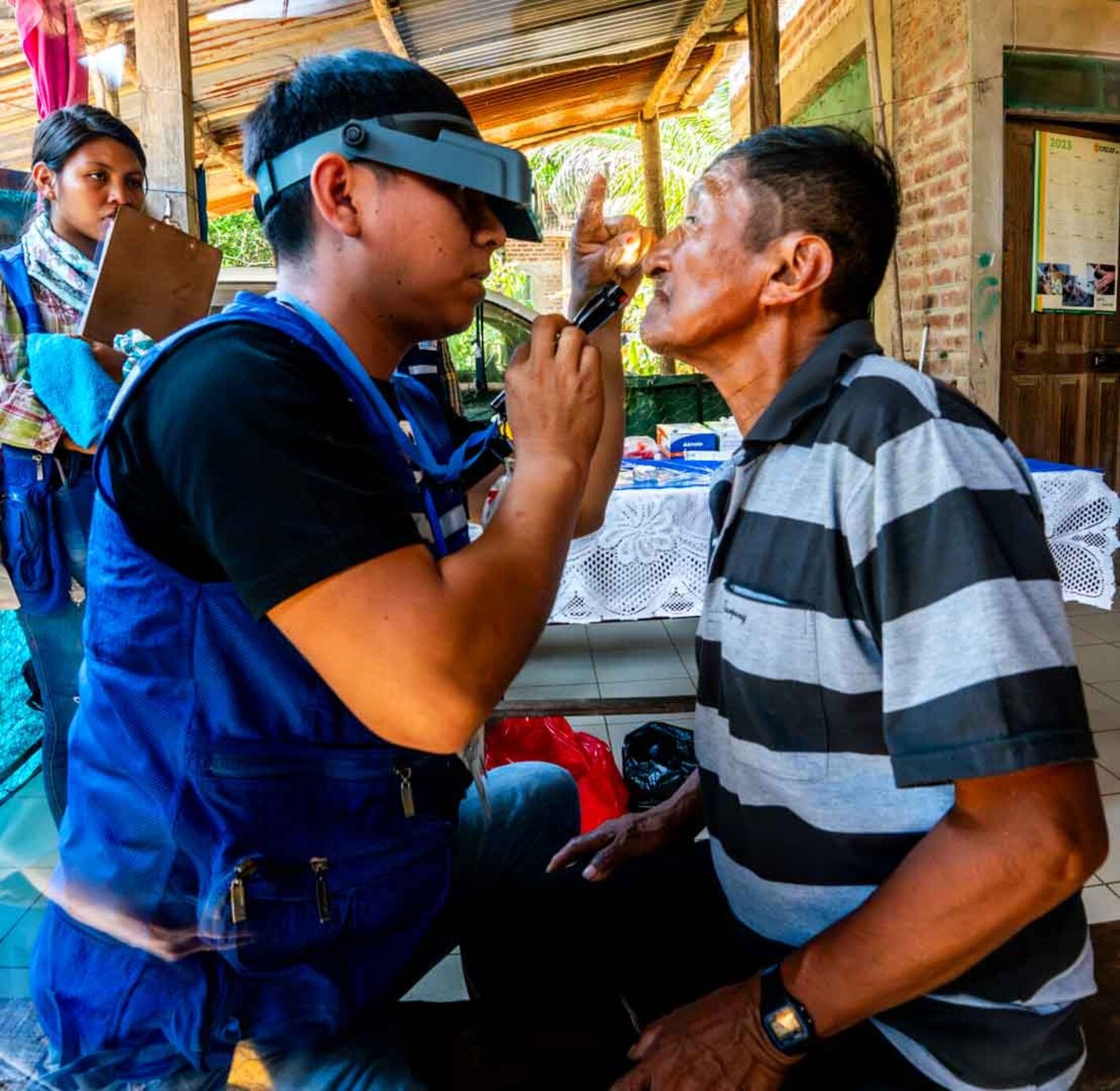
On the ground, the team of registrars, examiners, and local sample managers will conduct thorough clinical examinations in children, collect samples, and gather essential information for subsequent serological and microbiological analysis. In addition to the clinical component, each day in the field will be an opportunity for intercultural dialogue. The health teams, surrounded by dense vegetation and amid the constant murmur of the jungle, will need to gain the trust of the families, many of whom have never heard of trachoma.
“This is not just a technical challenge,” commented local sample manager, Yesenia Quiroga Cueva. “It is also about knowing how to communicate, respecting their customs, and making this work meaningful for them.”
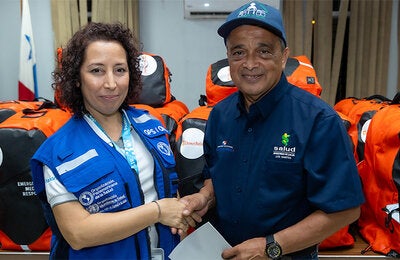
Before pushing into the communities, the registrars, examiners, and local sample managers met in Villa Tunari for training. For five days, they took part in rigorous technical and practical training to equip them to conduct the Trachoma Prevalence Survey in the communities of the region in the coming months. This phase is critical: Bolivia has already detected prevalences of up to 15% for follicular trachoma (TF) in children ages 1 to 9, in regions such as the Chaco and tropical Cochabamba. The data they gather will make it possible to determine, with greater certainty, the degree of intervention the country needs to combat this disease.

This intervention falls under the Initiative for the Elimination of Trachoma in the Americas, which is part of a joint effort between the Ministry of Health and Sports of Bolivia (MSyD), the Pan American Health Organization (PAHO), and a regional project funded by Global Affairs Canada. The goal is to eliminate trachoma as a public health problem throughout the region of the Americas by 2030.
Intensive training
International experts from the Tropical Data Initiative —from Mexico, Colombia, and Ecuador— along with technical staff from the PAHO regional office, conducted the training. Their job was to certify evaluators capable not only of detecting clinical signs of the disease but also of collecting specialized samples —conjunctival swabs and dried blood spots— to allow for more accurate diagnoses of eye infections caused by Chlamydia trachomatis.
“This is not just a training; it is an investment in health sovereignty,” said one facilitator, Valeria Torres, an epidemiologist specializing in Surveillance Systems from the Ministry of Public Health of Ecuador, during the opening session. “We are leaving behind installed capacity for Bolivia and generating knowledge that will last beyond the project,” she said.

The participants, many of whom have experience with community work in rural and indigenous areas, took on the challenge with palpable commitment. They learned to identify ophthalmological signs with precision tools, to apply standardized data collection protocols, and, above all, to work with cultural sensitivity and a gender approach. The collaboration was constant and the enthusiasm contagious. After the training, the teams went into the field for testing and practice.
A preventable disease
Trachoma, a preventable disease that can cause blindness, has remained a scourge, especially in indigenous populations of Latin America, primarily affecting women and children. While Mexico successfully eliminated it as a public health problem in 2017, the effort continues in countries like Brazil, Colombia, Peru, and now Bolivia.

In Bolivia, the initiative aligns with the hemispheric strategy to eliminate more than 30 neglected diseases by 2030, taking a comprehensive, sustainable approach. The intervention in Cochabamba marks a turning point: for the first time, Bolivia is generating solid epidemiological evidence to chart a path towards eliminating trachoma in its territory.
The commitment of the young people trained, international technical collaboration, and side-by-side work with the local communities have ignited hope. Now, the country has teams at the ready, validated scientific tools, and, above all, the political and community will to move towards closing a long-standing chapter of health inequality.