Quito, April 16, 2026. It all started with dead birds.
A manager at a livestock collection center in a rural area near the border reported the presence of dead wild birds in the vicinity. The site housed live animals, including poultry, horses, pigs, and cattle, and received producers and traders from various regions of the country and border areas. It was April 1st.
In the following days, that initial finding escalated into one of the most demanding scenarios that public health, animal health, and environmental systems could face in an articulated manner: the confirmation of influenza A(H5N1) in multiple species, including dairy cattle and domestic and feral dogs, and subsequently, the detection of severe human cases—a mother and her nursing infant hospitalized in critical condition. The scenario was deliberately designed to test intersectoral response capacities.
The event was fictitious. The response was real.
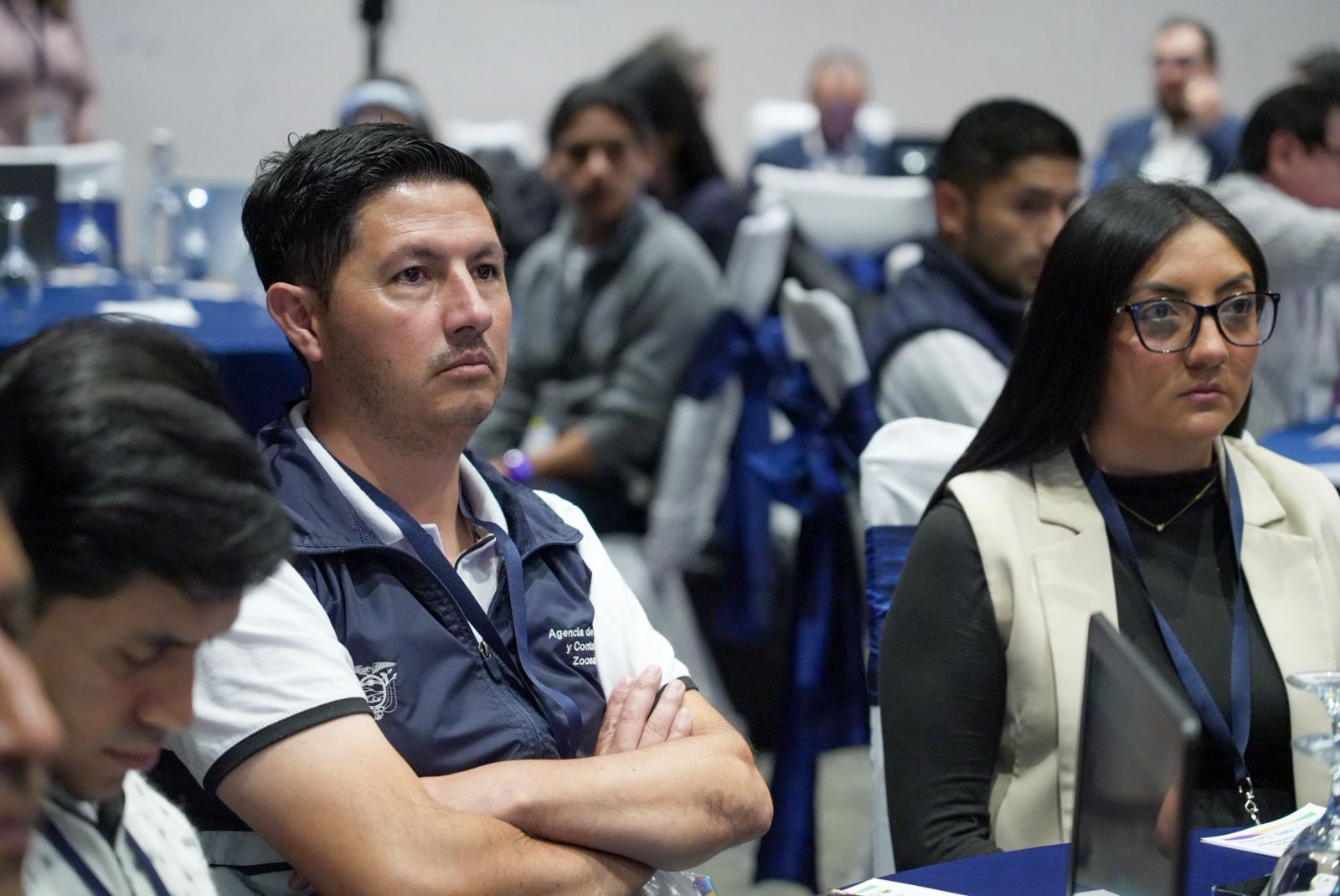
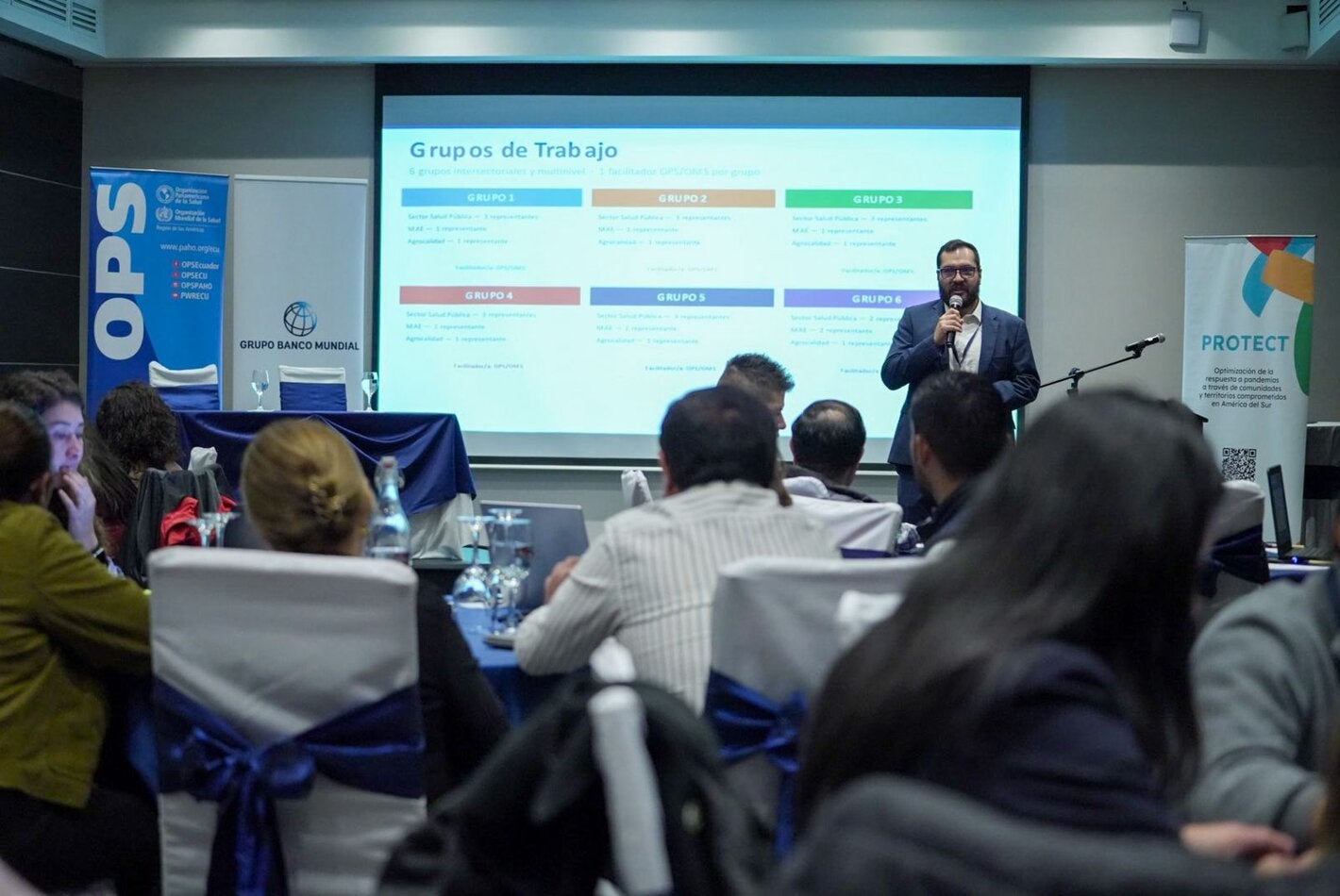
On April 16, 2026, as part of the PROTECT project, a joint initiative of PAHO/WHO and the World Bank, funded by the Pandemic Fund, Ecuador conducted a One Health simulation exercise. Representatives from public health, animal health, and the environment; at national, zonal, and provincial levels, participated in an intensive working session organized into five multisectoral groups, making decisions with incomplete information and coordinating actions in real-time in response to a rapidly evolving scenario.
The early days of the exercise tested a fundamental aspect of early surveillance: communication. Timely detection depended on an information exchange chain that, while functional and agile, relies heavily on direct contacts, such as phone calls, WhatsApp messages, and emails among focal points who know and trust each other. This network, strengthened over the past year, was confirmed as one of the country's most important operational assets. At the same time, the exercise highlighted the need to move toward its formalization, with clear protocols, standardized data, and defined roles.
As the scenario became more complex, so did the decisions. The confirmation of influenza A (H5N1) in dairy cattle coincided with the admission of a nursing infant to intensive care. Laboratories processed samples from different species, with varying requirements and capacities. The National Emergency Operations Committee (COE) was activated. Meanwhile, rumors circulated on social media about the consumption of dairy and poultry products.
At the working tables, decisions could not be postponed: who should serve as the initial spokesperson to the media, and how to communicate risks to a community demanding the elimination of feral dogs. The absence of simple answers was part of the exercise design and helped reveal the usual tension points in multi-species events.
The simulation also confirmed the existence of a solid institutional foundation. The Ministry of Public Health has its Multi-Hazard Plan (2025) and the SIVIALERTA Manual; Agrocalidad has a zoo-sanitary information system and emergency funds; and the Ministry of Environment maintains protocols for responding to unusual wildlife mortality events. All three sectors have normative instruments, reference laboratories, and committed technical teams, with an increasingly consolidated practice of working together.
The exercise also highlighted ongoing processes. The One Health decree, currently under development, seeks to formalize information flows and intersectoral roles. Interoperability among surveillance systems remains a challenge. Spokesperson coordination in infodemic contexts, planning for multi-species events, and protocols for the orderly closure of emergencies emerged as clear priorities.
At the end of the day, when the fictitious scenario stabilized with no new cases and controlled outbreaks, participants agreed on a central message: properly closing an emergency is as important as responding early. And lessons learned cannot depend solely on team memory; they must be documented, systematized, and transformed into procedures.
The multi-country project, PROTECT, is implemented across seven countries in South America: Bolivia, Brazil, Chile, Colombia, Ecuador, Paraguay, and Uruguay, strengthening surveillance and laboratory capacities, particularly in border areas. The selected scenario is not random: since 2022, influenza A(H5N1) has been detected in domestic and wild mammals in several countries in the region.
The next pandemic threat has no date. But preparedness can be built beforehand.