Tegucigalpa, Honduras, August 27, 2026 (PAHO) —Honduras has joined the Alliance for Primary Health Care (PHC) in the Americas, a regional initiative led by the Pan American Health Organization (PAHO), the Inter-American Development Bank (IDB), and the World Bank to support countries in strengthening primary health care through coordinated investments, innovation, and technical cooperation.
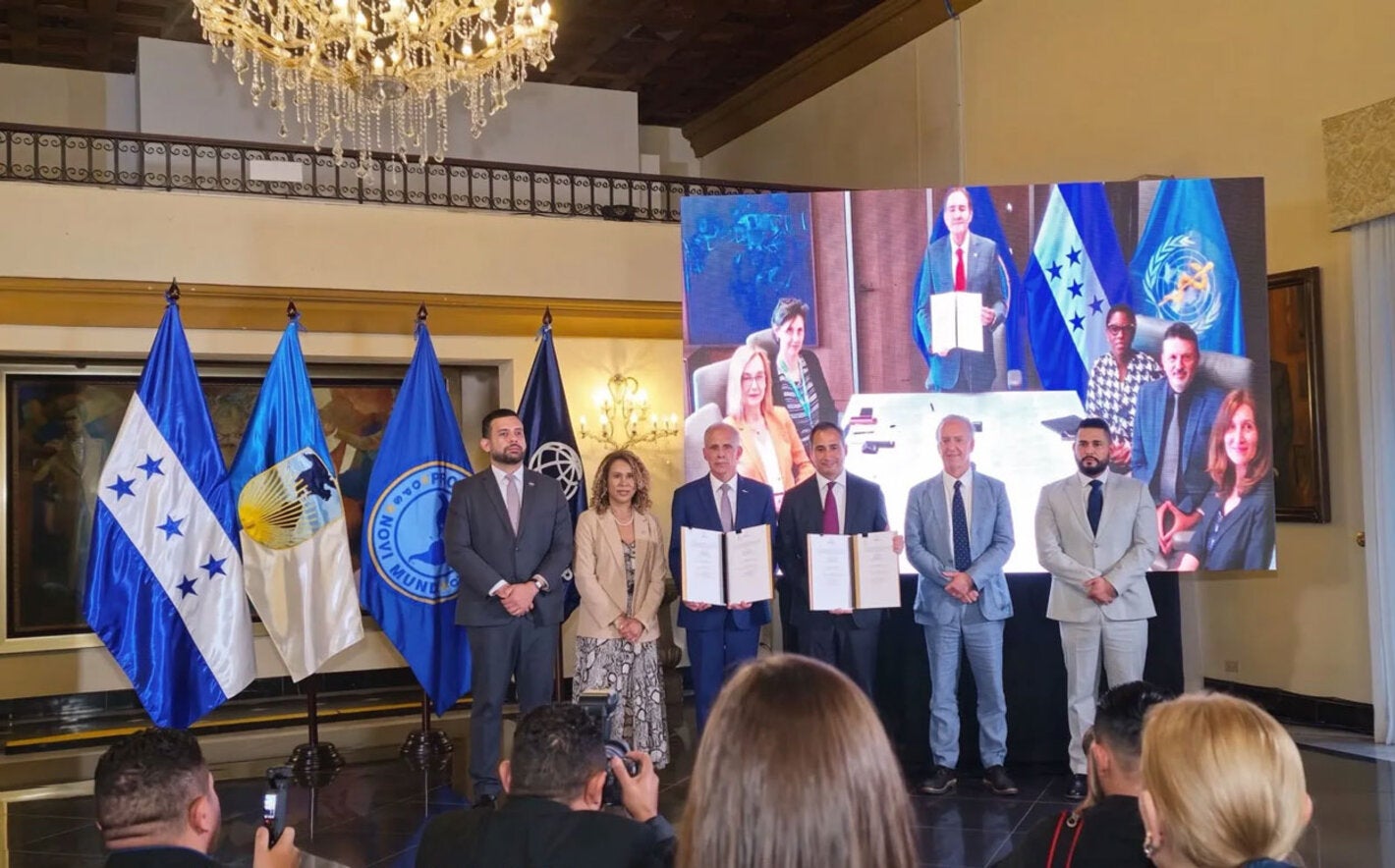
Honduras’s accession was formalized on August 26 in Tegucigalpa during a hybrid signing ceremony attended by the President of Honduras, Nasry Asfura; PAHO Director Dr. Jarbas Barbosa; World Bank Country Manager for Honduras Andrew Kircher; and IDB General Manager of the Regional Country Department for Central America, Haiti, Mexico, Panama, and the Dominican Republic, Tomás Bermúdez, among other senior officials.
As part of its accession to the Alliance, Honduras will establish a Coordinating Mechanism on Primary Health Care, bringing together national authorities and development partners to coordinate cooperation and investment around the country’s health priorities. The mechanism will support national efforts to strengthen integrated health service networks based on primary health care and advance the transformation of the national health system.
“We are not here simply to sign a document; we are here to work and seek results, to pursue the best results, so that people can feel that we truly care about them,” President Asfura said. “Without health, there is no way for a country to move forward. And we are very focused on changing the country’s health situation,” he added.
Honduras’s decision to join the Alliance for Primary Health Care in the Americas reflects “a vision that recognizes that health is built close to people, in their communities and territories, and that is consistent with the vision expressed in its own Government Plan,” Barbosa said from Washington, DC. “It also reaffirms a fundamental conviction: strengthening health is one of the most important investments a country can make in its development, the well-being of its population, and its future,” he added.
Through this Coordinating Mechanism, Honduras will be able to coordinate existing and future initiatives related to primary health care, promote greater coherence among investments and cooperation programs, and identify opportunities to strengthen the health system in line with national priorities.
The platform will also facilitate the exchange of evidence, innovation, and good practices, while supporting the country’s progress in digital transformation as a cross-cutting component of primary health care.
The partners will work together to develop and monitor a roadmap to guide the work of the mechanism.
“Every child who is vaccinated, every mother who receives timely care, and every health worker with better tools to care for the community represent concrete progress toward a healthier Honduras that is better prepared for the future,” Kircher said. “The World Bank is proud to work with the Government of Honduras, PAHO, and the IDB in this effort to strengthen primary health care and improve people’s lives,” he added.
“By joining the Alliance, Honduras is taking an important step toward aligning investments, technical cooperation, and innovation around its national health priorities. The IDB is committed to supporting the country in strengthening integrated primary health care networks that bring quality services closer to people and contribute to building a more equitable and resilient health system,” Bermúdez said.
Other senior officials present at the event included Honduras’s First Lady, Lissette del Cid de Asfura, and PAHO/WHO Representative in Honduras, Ana Solis Ortega.
Driving Disease Elimination
The ceremony also marked the launch of Honduras’s Roadmap for Disease Elimination and its Integrated Strategy for the Management of Arboviral Diseases. Both were developed through coordinated work with national and local stakeholders and reflect Honduras’s efforts to address health priorities through an intersectoral and territorial approach, involving municipalities and communities in the response.
These initiatives demonstrate how primary health care can bring prevention, surveillance, and health services closer to communities while strengthening intersectoral action. This approach is also reflected in other Honduran efforts to reduce maternal mortality, strengthen the response to noncommunicable diseases at the primary care level, and expand access to health services through digital tools.
The country’s accession to the Alliance will also help strengthen coordination among the various stakeholders involved in these efforts, promoting a more coordinated response to the country’s health priorities.
The Alliance for Primary Health Care in the Americas
The Alliance for Primary Health Care in the Americas was launched in December 2023 by PAHO, the IDB, and the World Bank to accelerate the transformation of health systems in the region by strengthening primary health care.
The initiative brings together policy dialogue, technical cooperation, and investments around national priorities, supporting countries in building more equitable, responsive, and people-centered health systems.
Primary health care is a comprehensive approach that responds to people’s health needs throughout their lives, brings quality services closer to communities, and addresses the broader factors that influence health and well-being.
With Honduras’s accession, the Alliance now brings together Argentina, Bolivia, Brazil, Chile, the Dominican Republic, El Salvador, Guatemala, Honduras, Panama, Paraguay, Peru, Uruguay, and The Bahamas.