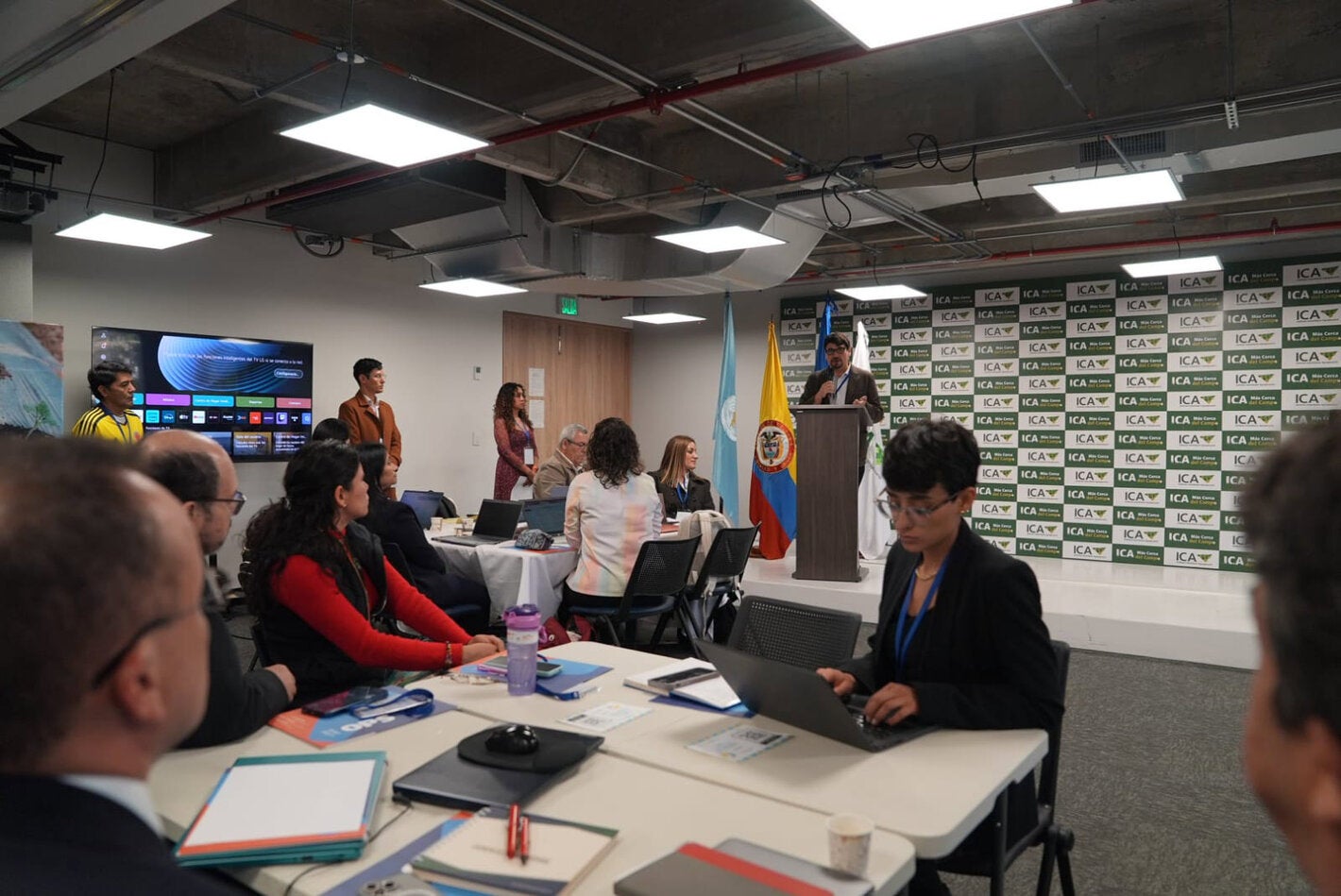
Bogotá, March 27, 2025. Colombia is intensifying its preparedness, surveillance, and intersectoral response to highly pathogenic zoonotic avian influenza (HPAI). The country brought together 46 specialists in public health, animal health, environmental sciences, and academia for the Intersectoral Risk Assessment Workshop (EVIR).
From early 2003 to December 12, 2024, 954 human cases of avian influenza A(H5N1) were reported to the World Health Organization (WHO), including 464 deaths (a 48.6% fatality rate) across 24 countries worldwide. Since 2020, the virus has impacted countries in Africa, Asia, and Europe. In 2021, it reached the Americas through migratory routes of aquatic birds. Between January 1, 2024, and March 27, 2025, the region has confirmed 71 human cases and one death, along with 807 outbreaks in wild and domestic birds and 1,068 outbreaks in mammals across 10 countries. In Colombia, outbreaks in domestic birds have been identified in eight departments since 2022, underscoring the need for a strong intersectoral response.
The event, organized by PAHO and its Pan American Foot-and-Mouth Disease and Veterinary Public Health Center (PANAFTOSA), took a comprehensive approach focused on risk reduction, within the framework of the “Pandemic Response Optimization Through Engaged Communities and Territories (PROTECT) project.
A Comprehensive Approach to Reducing Risks

During the EVIR workshop, specialists worked on identifying critical transmission points of the virus in the country. Using the EVIR tool developed by PANAFTOSA, real-time analysis was conducted to assess risks, pinpoint areas for improvement, and define mitigation strategies. This intersectoral approach clarified roles and responsibilities in surveillance, control, and response to potential outbreaks.
"While avian influenza outbreaks primarily affect animals, they pose a significant public health risk if sustained human-to-human transmission occurs. Collaboration between public health, animal health, and environmental sectors is key to early detection and timely response, helping to reduce the impact of a potential epidemic or pandemic and its economic consequences for the country," stated Mauricio Cerpa, Health Emergencies Advisor at PAHO in Colombia.
Preparedness and Response with Support from the Pandemic Fund

The EVIR workshop received financial support from the Pandemic Fund through the PROTECT project. The project, implemented by PAHO and the World Bank, aims to strengthen pandemic response capacities in seven South American countries, prioritizing the enhancement of epidemiological surveillance and laboratory capacities in border areas of Bolivia, Brazil, Colombia, Ecuador, Paraguay, Chile, and Uruguay.
The EVIR workshop received financial support from the Pandemic Fund through the PROTECT project. Implemented by PAHO and the World Bank, the project aims to strengthen pandemic response capacities in seven South American countries, with a focus on enhancing epidemiological surveillance and laboratory capacities in border areas of Bolivia, Brazil, Colombia, Ecuador, Paraguay, Chile, and Uruguay.
PAHO/WHO urges countries to strengthen avian influenza surveillance in farm animals, wildlife, and humans, prioritizing early detection in high-risk populations such as farmworkers, veterinarians, environmental authorities, and healthcare personnel. Additionally, it recommends monitoring symptoms such as acute respiratory illness, conjunctivitis, or encephalitis in individuals with recent exposure to infected animals.
With initiatives like the EVIR workshop, Colombia is advancing in developing evidence-based strategies to mitigate the risks of zoonotic diseases. Intersectoral cooperation and epidemiological surveillance will remain essential tools in combating avian influenza and other health threats in the future.
Learn more about the Pandemic Fund projects implemented by PAHO here.